Chablis vs Chardonnay: 5 Key Differences Explained
If you've ever wondered about the difference between Chablis and Chardonnay, you're not alone. It's one of the most common questions in the wine world—and the answer reveals fascinating insights about how terroir and winemaking transform a single grape into dramatically different wines.
In this comprehensive guide, we'll explain exactly how Chablis differs from other Chardonnays, why Chablis commands premium prices, and which style is right for your palate.
How to Pronounce Chablis
Chablis is pronounced "sha-BLEE" (the 's' is silent). It's a French wine region in northern Burgundy, about 100 miles southeast of Paris.
Further reading
- Discover the beauty of Chardonnay Wines in this insightful guide.
- Also chek out these elegant White Burgundy wines.
Chablis vs Chardonnay: At a Glance
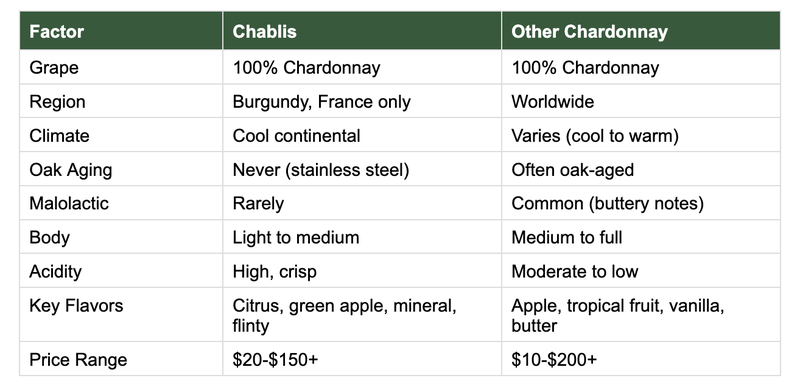
5 Key Differences Between Chablis and Chardonnay
1. Terroir: The Kimmeridgian Soil Difference
Chablis is grown on unique Kimmeridgian soil—ancient seabed limestone filled with fossilized oyster shells dating back 150 million years. This chalky, mineral-rich terroir gives Chablis its distinctive flinty, almost saline character that no other Chardonnay can replicate.
Chardonnays from California, Australia, or even other parts of Burgundy grow in completely different soils, resulting in dramatically different flavor profiles.
2. Oak vs Stainless Steel
This is perhaps the most significant difference. Chablis is always fermented and aged in stainless steel tanks, which preserves the grape's natural fruit character and minerality.
Most Chardonnays—especially those from California and Australia—are fermented in oak barrels, which adds vanilla, toast, and buttery notes. If you've ever had a "buttery" Chardonnay, that's the oak talking.
3. Malolactic Fermentation
Traditional Chardonnays typically undergo malolactic fermentation (MLF), a secondary process that converts sharp malic acid into softer lactic acid. This creates that creamy, buttery texture many associate with Chardonnay.
Chablis producers usually skip or limit MLF, preserving the wine's bright acidity and steely character.
4. Climate and Acidity
Chablis sits at the northern edge of where Chardonnay can ripen (latitude 48°N), resulting in a cool climate that produces grapes with higher acidity and less sugar than warmer regions.
Compare this to Napa Valley Chardonnay, where warm sunshine creates riper grapes with more tropical fruit flavors and lower acidity.
5. Flavor Profile
Chablis tastes like:
- Citrus (lemon, lime, grapefruit)
- Green apple and white flowers
- Mineral, flinty, chalky notes
- Clean, refreshing finish
Oaked Chardonnay tastes like:
- Ripe apple, peach, tropical fruit
- Vanilla, toast, caramel
- Butter, cream, hazelnut
- Rich, full-bodied finish
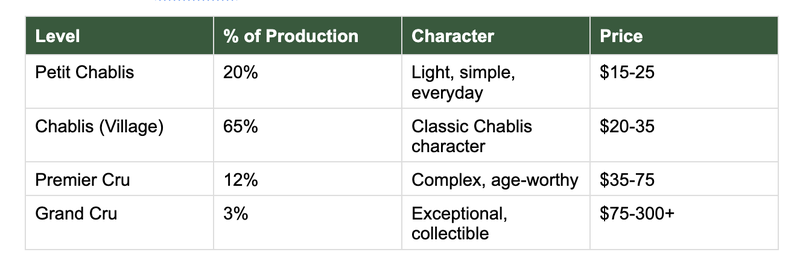
The 4 Levels of Chablis
Not all Chablis is created equal. The region has four quality tiers:
Food Pairing Guide
Chablis Pairs Best With:
- Oysters and shellfish (classic pairing due to shared mineral notes)
- Sushi and sashimi
- White fish (sea bass, sole, halibut)
- Goat cheese and fresh cheeses
- Light chicken dishes and Asian cuisine
Oaked Chardonnay Pairs Best With:
- Lobster with butter sauce
- Roast chicken with herbs
- Creamy pasta dishes
- Aged cheeses (Gruyere, Comte)
- Pork tenderloin and rich seafood
Chablis vs Chardonnay: Which Should You Choose?
Choose Chablis if you:
- Prefer crisp, dry white wines
- Enjoy Sauvignon Blanc or Pinot Grigio
- Want a food-friendly wine with high acidity
- Dislike oaky, buttery wines
Choose Oaked Chardonnay if you:
- Enjoy rich, full-bodied whites
- Love vanilla and buttery notes
- Pair with richer dishes and creamy sauces
- Prefer warmer-climate wine styles
Chablis Alternatives (If It's Unavailable)
Chablis production is limited due to the small region and frost risks. If you can't find Chablis, try these similar styles:
- Petit Chablis - entry-level from the same region
- Muscadet - Loire Valley, similar minerality
- Sancerre (white) - also Loire, crisp and mineral
- Gruner Veltliner - Austrian, similar acidity
- Unoaked California Chardonnay - labeled "steel-fermented"
Frequently Asked Questions
Is Chablis the same as Chardonnay?
Yes, Chablis is made from 100% Chardonnay grapes. The difference is that Chablis refers specifically to Chardonnay grown in the Chablis region of Burgundy, France, made in an unoaked, mineral-driven style.
Why is Chablis more expensive than regular Chardonnay?
Chablis production is limited by the small geographic region (about 12,000 acres) and frequent frost damage. High demand and low supply drive premium prices, especially for Premier Cru and Grand Cru wines.
Does Chablis age well?
Yes, quality Chablis ages beautifully. Village Chablis drinks best within 3-5 years, Premier Cru within 5-10 years, and Grand Cru can age 15-20+ years, developing honey and nutty complexity.
What temperature should Chablis be served?
Serve Chablis chilled at 45-50°F (7-10°C). Don't serve it too cold or you'll mute the delicate mineral and citrus aromas.
Is Chablis sweet or dry?
Chablis is always dry with minimal residual sugar. Its high acidity can make it taste even more crisp and lean compared to other Chardonnays.
The Bottom Line: Chablis vs Chardonnay
Understanding the difference between Chablis and Chardonnay comes down to one key insight: Chablis is what happens when Chardonnay meets Burgundy's unique Kimmeridgian terroir and is crafted without oak interference.
If you love crisp, mineral-driven white wines, Chablis belongs in your collection. For those interested in investing in fine Burgundy wines, Vinovest offers access to authenticated Premier Cru and Grand Cru Chablis with professional storage and provenance tracking.