How to Drink Red Wine: The Complete Expert Guide
Why Proper Wine Drinking Technique Matters
Red wine has been celebrated for thousands of years, from ancient Roman banquets to modern Michelin-starred restaurants. Yet many wine enthusiasts never learn the fundamentals of how to drink red wine properly. Understanding proper technique transforms an ordinary glass of wine into a multisensory experience that engages sight, smell, taste, and even touch.
Whether you're a complete beginner wondering what all the swirling is about, or an intermediate enthusiast looking to refine your palate, this comprehensive guide will teach you everything you need to know about drinking red wine like a true connoisseur. We'll cover the science behind each technique, explain why temperature and glassware matter so much, and help you develop the confidence to enjoy red wine in any social setting.
The good news? Learning how to drink red wine properly doesn't require expensive equipment or years of training. By following these eight essential steps, you'll immediately enhance your wine drinking experience and begin to appreciate nuances you never noticed before.
Further reading
- Discover all about Red Wine - best bottles to buy, winemaking techniques, and more.
- While you’re at it, take a look at The Basics Of Decanting Wine.
The 8 Essential Steps to Drinking Red Wine Like an Expert
Step 1: Check the Wine Label and Understand What You're Drinking
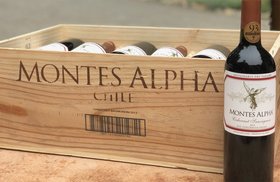
Before you even open the bottle, take a moment to examine the label. The information on a wine label tells you everything you need to know about how to approach the wine, from serving temperature to food pairing suggestions.
Key information to look for:
- Grape Variety: Cabernet Sauvignon, Merlot, Pinot Noir, and Syrah all have distinct characteristics that affect how you should serve and taste them.
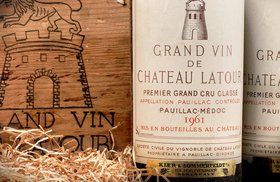
- Vintage Year: Older wines (10+ years) often need decanting, while younger wines benefit from more vigorous swirling.
- Region: Wines from cooler climates (Burgundy, Oregon) tend to be lighter and more delicate, while warmer climate wines (Napa, Australia) are typically bolder and more fruit-forward.
- Alcohol Content: Higher alcohol wines (14%+) often benefit from slightly cooler serving temperatures and should be sipped more slowly.
Understanding these basics helps you set appropriate expectations and prepares your palate for what you're about to experience. A delicate Pinot Noir requires a completely different approach than a bold Cabernet Sauvignon.
Step 2: Choose the Right Glass for Your Red Wine
The glass you use significantly impacts your wine drinking experience. While you can technically drink wine from any vessel, the right glass enhances both aroma and flavor perception. Wine glasses are designed with specific bowl shapes that concentrate aromas and direct wine to different parts of your palate.
Red Wine Glass Characteristics:
- Large Bowl: Provides ample surface area for swirling and releasing aromatic compounds
- Wide Opening: Allows wine to breathe and lets you fully experience the bouquet
- Long Stem: Prevents hand warmth from raising wine temperature
- Thin Rim: Creates a seamless transition from glass to lips for optimal tasting
Glass Types by Wine Style:
- Bordeaux Glass: Tall with a broad bowl, ideal for full-bodied wines like Cabernet Sauvignon and Merlot
- Burgundy Glass: Wider, more balloon-shaped bowl perfect for capturing the delicate aromas of Pinot Noir
- Universal Red Wine Glass: A versatile option that works well for most red wine styles
Pro Tip: Only fill your wine glass about one-third full. This leaves room for swirling and allows the aromas to collect in the upper portion of the glass.
Step 3: Serve at the Proper Temperature
Temperature dramatically affects how red wine tastes. Too cold, and the tannins become harsh while the aromas remain muted. Too warm, and the alcohol becomes overpowering while the wine tastes flat and flabby. The ideal serving temperature varies by wine style, but generally falls between 55-68°F (13-20°C).
Contrary to popular belief, "room temperature" is not the ideal serving temperature for red wine. This misconception dates back to European castles where rooms were naturally cool. In modern heated homes, room temperature (around 72°F) is actually too warm for most red wines.
Temperature Guidelines:
- Light Reds (Pinot Noir, Beaujolais): 55-60°F - slightly cooler to preserve delicate fruit flavors
- Medium Reds (Merlot, Chianti): 60-65°F - balanced temperature for medium tannins
- Full-Bodied Reds (Cabernet, Syrah): 63-68°F - slightly warmer to soften tannins
Quick Temperature Fix: If your wine is too warm, place it in the refrigerator for 15-20 minutes. If too cold, cup the bowl briefly with your hands or let it sit at room temperature for 10-15 minutes.
Step 4: Hold the Glass Correctly
How you hold your wine glass matters more than you might think. The proper technique preserves the wine's temperature and allows for effective swirling while avoiding unsightly fingerprints on the bowl that can obscure your view of the wine.
The Proper Technique:
- Pinch the stem between your thumb and first two fingers, approximately at the midpoint of the stem
- Rest your remaining fingers lightly on the base for stability
- Never cup the bowl in your palm - this quickly warms the wine beyond optimal temperature
- For stemless glasses, hold near the base where your hand has minimal contact with the wine
While casual settings don't require perfect etiquette, developing proper habits will serve you well at wine tastings, formal dinners, and professional events.
Step 5: Observe the Wine's Appearance
Before tasting, take a moment to examine your wine visually. The appearance tells you a lot about the wine's age, grape variety, and potential flavor profile. This is the "See" in the classic 5 S's of wine tasting.
What to Look For:
- Color Intensity: Hold the glass against a white background. Deep, opaque wines (like Cabernet) indicate thick skins and bold flavors. Lighter, translucent wines (like Pinot Noir) suggest a more delicate profile.
- Color Hue: Young reds display vibrant purple or ruby hues. As wines age, they develop brick, orange, or brown tones at the rim. A brownish core may indicate over-aged or oxidized wine.
- Clarity: Wine should generally be clear and bright. Cloudiness may indicate a fault, though some natural wines are intentionally unfiltered.
- Legs/Tears: The rivulets that form on the glass after swirling indicate alcohol content and body. Slow, thick legs suggest higher alcohol and fuller body.
Step 6: Smell the Aromas (Swirl and Sniff)
Up to 80% of what we perceive as taste actually comes from our sense of smell. Properly smelling your wine before tasting is essential for experiencing its full complexity. This step combines the "Swirl" and "Sniff" of the 5 S's.
The Swirling Technique:
- Keep the base of the glass on the table for stability (or practice carefully if holding)
- Move your hand in small circular motions to create a whirlpool effect
- Swirl for 5-10 seconds to aerate the wine and release volatile compounds
- Avoid over-swirling, which can dissipate delicate aromas
How to Smell Wine:
- First, take a quick sniff from several inches away to get initial impressions
- Then insert your nose into the glass and inhale deeply
- Try different positions - left nostril, right nostril, both together - each may detect different compounds
- Look for primary aromas (fruit, flowers), secondary aromas (yeast, oak), and tertiary aromas (leather, earth, tobacco from aging)
Common red wine aromas include: cherry, blackberry, plum, raspberry, cassis, vanilla, cedar, leather, tobacco, earth, mushroom, pepper, clove, and chocolate.
Step 7: Taste Properly - The Sip and Savor
Now comes the moment you've been preparing for - actually tasting the wine. The final two S's of wine tasting, "Sip" and "Savor," involve more than simply drinking. Proper tasting technique helps you identify flavors, assess quality, and determine if the wine suits your preferences.
The Tasting Process:
- Take a small sip - about a teaspoon - and let it coat your entire mouth
- Draw a small amount of air through pursed lips (this is called "aspiration") to volatilize the aromas
- Move the wine around your mouth, coating your tongue, cheeks, and gums
- Hold for 5-10 seconds before swallowing to fully experience the flavors
What to Evaluate:
- Sweetness: Detected on the tip of the tongue. Most red wines are dry (not sweet).
- Acidity: Creates a mouth-watering sensation on the sides of your tongue. Higher acidity feels crisp and refreshing.
- Tannins: The drying, astringent sensation on your gums and inner cheeks. Tannins come from grape skins and oak aging.
- Body: The weight and texture of the wine in your mouth - light (like skim milk), medium, or full (like whole milk).
- Finish: The flavors and sensations that linger after swallowing. Quality wines have long, pleasant finishes.
Step 8: Pair with the Right Food
The right food pairing can elevate both the wine and the meal. Red wines generally pair best with heartier dishes that can stand up to their bold flavors and tannins. The key principles are matching intensity and complementing or contrasting flavors.
Classic Red Wine Food Pairings:
- Cabernet Sauvignon: Grilled ribeye, lamb chops, aged cheddar, dark chocolate
- Merlot: Roast chicken, pork tenderloin, mushroom risotto, brie cheese
- Pinot Noir: Duck breast, salmon, wild mushrooms, gruyere cheese
- Syrah/Shiraz: BBQ ribs, spiced lamb, smoked meats, blue cheese
- Malbec: Grilled steak, empanadas, hard cheeses, herb-crusted meats
- Zinfandel: BBQ, pizza, spicy pasta, tomato-based dishes
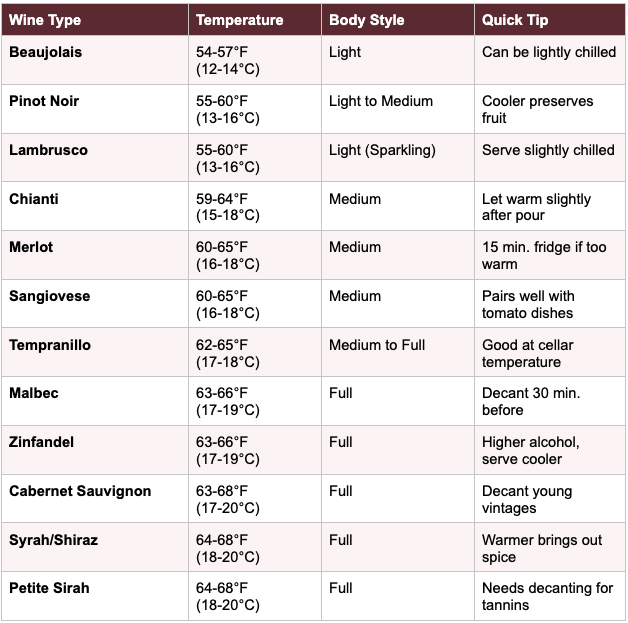
General Rule: High-tannin wines pair best with fatty, protein-rich foods because the fat softens the tannins. Acidic wines complement rich, creamy dishes by cutting through the fat.Red Wine Serving Temperature Chart
Use this comprehensive chart to find the ideal serving temperature for any red wine variety:
Best Red Wines for Beginners
If you're just starting your red wine journey, some varieties are more approachable than others. These beginner-friendly wines offer fruit-forward flavors, softer tannins, and easily recognizable characteristics that help you develop your palate without overwhelming it.
Top 5 Red Wines for New Wine Drinkers
- Pinot Noir - The Gateway Red
Pinot Noir is often recommended as the perfect first red wine because of its lighter body and smooth, silky texture. It's less tannic than bold reds like Cabernet, making it more accessible for palates accustomed to white wines or lighter beverages.
- Flavor Profile: Red cherry, raspberry, strawberry with subtle earthy notes
- Regions to Try: Oregon's Willamette Valley, California's Russian River, New Zealand's Central Otago
- Price Range: $15-30 for quality beginner bottles
2. Merlot - Smooth and Versatile
Merlot offers a step up in body from Pinot Noir while maintaining a soft, approachable character. Its plush fruit flavors and round texture make it incredibly food-friendly and easy to enjoy on its own.
- Flavor Profile: Plum, black cherry, chocolate, soft herbs
- Regions to Try: Washington State, California, Chile (great value)
- Price Range: $12-25 for enjoyable everyday bottles
3. Malbec - Bold Fruit Without Harsh Tannins
Argentine Malbec has become a global phenomenon for good reason. It delivers intense fruit flavors and a full-bodied experience without the aggressive tannins that can be off-putting to newcomers. It's an excellent choice for those who want a bigger wine without the bite.
- Flavor Profile: Blackberry, plum, violet, cocoa, vanilla
- Regions to Try: Mendoza (Argentina), Cahors (France for a different style)
- Price Range: $10-20 - exceptional value at this price point
4. Garnacha/Grenache - Fruity and Approachable
Garnacha (Grenache in French) is known for its bright, jammy fruit character and medium body. It's lower in tannins than many reds and often has a slight sweetness from its ripe fruit flavors, making it very beginner-friendly.
- Flavor Profile: Strawberry jam, orange zest, white pepper, cinnamon
- Regions to Try: Spain (especially Campo de Borja), Southern Rhone (France)
- Price Range: $8-18 - incredible value wines available
5. Beaujolais - Light and Refreshing
Made from the Gamay grape, Beaujolais is one of the lightest red wines available and can even be served slightly chilled. Its fresh, fruity character and almost complete absence of tannins make it perfect for those transitioning from white wine to red.
- Flavor Profile: Fresh cherry, banana, bubble gum (from carbonic maceration), violet
- Regions to Try: Beaujolais-Villages, Cru Beaujolais (Morgon, Fleurie) for more complexity
- Price Range: $12-25 for excellent quality
Beginner Tip: Start with wines from the New World (US, Australia, Chile, Argentina) as they tend to be more fruit-forward and approachable than Old World wines (France, Italy, Spain), which often emphasize terroir and earthiness.
Health Benefits of Red Wine
When consumed in moderation (generally defined as one glass per day for women and up to two for men), red wine may offer several potential health benefits. These benefits are largely attributed to compounds found in grape skins, particularly resveratrol and other polyphenols.
Resveratrol: The Star Compound
Resveratrol is a polyphenol found in the skin of red grapes. Because red wine involves extended contact with grape skins during fermentation, it contains significantly more resveratrol than white wine or grape juice. Research suggests resveratrol may:
- Act as a powerful antioxidant, protecting cells from free radical damage
- Support healthy aging at the cellular level
- Help maintain cognitive function as we age
Cardiovascular Health Benefits
The "French Paradox" - the observation that French people have relatively low rates of heart disease despite a diet rich in saturated fats - has long been partially attributed to moderate red wine consumption. Research suggests that red wine may:
- Increase HDL ("good") cholesterol levels
- Help protect the lining of blood vessels in the heart
- Reduce the formation of blood clots
- Lower LDL ("bad") cholesterol through antioxidant action
Gut Health and the Microbiome
Emerging research suggests that moderate red wine consumption may positively influence gut health. The polyphenols in red wine act as prebiotics, feeding beneficial gut bacteria and promoting a healthier microbiome. Studies have found:
- Increased gut bacterial diversity among moderate red wine drinkers
- Higher levels of beneficial bacteria associated with lower obesity rates
- Improved gut barrier function, potentially reducing inflammation
Important Disclaimer: While moderate red wine consumption may offer health benefits, excessive alcohol consumption is harmful. These potential benefits do not justify starting to drink if you don't already, and anyone with health conditions should consult their physician. The healthiest choice is always moderation.
Frequently Asked Questions About Drinking Red Wine
Q: Should I let red wine "breathe" before drinking?
A: Yes, many red wines benefit from aeration. Young, tannic wines (like Cabernet Sauvignon or Barolo) can be harsh when first opened. Decanting for 30 minutes to 2 hours softens the tannins and allows flavors to develop. Lighter wines like Pinot Noir need less time (15-30 minutes). Very old wines should be decanted carefully just before serving to avoid losing their delicate aromas.
Q: Can I store opened red wine, and for how long?
A: Once opened, red wine begins to oxidize. Re-cork the bottle and store it in the refrigerator. Most red wines remain drinkable for 3-5 days after opening, though they'll taste best in the first 2-3 days. Fuller-bodied wines with more tannins (Cabernet, Syrah) tend to last longer than lighter wines (Pinot Noir, Beaujolais). Consider using a vacuum pump wine preserver to extend freshness.
Q: Why does red wine give some people headaches?
A: Red wine headaches can be caused by several factors: histamines (found in grape skins), tannins, sulfites, or simply alcohol-induced dehydration. To minimize headaches, try drinking a full glass of water for every glass of wine, choose lower-tannin wines like Pinot Noir, opt for wines with lower alcohol content, or try organic/natural wines with fewer additives.
Q: What's the difference between Old World and New World red wines?
A: Old World wines (Europe: France, Italy, Spain) tend to be more terroir-driven, meaning they emphasize the characteristics of where the grapes were grown. They're often more subtle, earthy, and mineral. New World wines (US, Australia, Chile, Argentina) are typically more fruit-forward, bolder, and higher in alcohol. Neither style is "better" - it's a matter of personal preference.
Q: Do I need to decant all red wines?
A: No, not all red wines need decanting. Light-bodied wines like Beaujolais, simple everyday reds, and wines meant to be consumed young don't require decanting. However, young tannic wines, aged wines with sediment, and premium wines generally benefit from decanting. If you don't have a decanter, simply pouring the wine into the glass and letting it sit for 15-20 minutes achieves a similar effect.
Q: How many calories are in a glass of red wine?
A: A standard 5-ounce (150ml) glass of red wine contains approximately 125-150 calories, though this varies by wine type. Higher alcohol wines have more calories because alcohol contains 7 calories per gram. Sweeter red wines also have more calories due to residual sugar. Dry red wines with moderate alcohol (12-13.5%) are on the lower end of the calorie spectrum.
Q: What causes the "legs" or "tears" on my wine glass?
A: Wine legs (the droplets that run down the inside of your glass after swirling) are caused by the Gibbs-Marangoni effect - essentially, the different evaporation rates of alcohol and water. Thicker, slower-moving legs generally indicate higher alcohol content and fuller body, though they're not an indicator of quality. Many factors affect legs including glass cleanliness, humidity, and temperature.
Q: Is expensive wine actually better than cheap wine?
A: Not necessarily. Price reflects many factors including production costs, rarity, brand reputation, and marketing - not just quality. In blind taste tests, many affordable wines perform as well as expensive bottles. For beginners, wines in the $15-25 range often offer the best quality-to-price ratio. As your palate develops, you may appreciate subtle differences that justify higher prices, but delicious wines exist at every price point.