New Zealand Wine Investment: Felton Road, Ata Rangi and the Rise of Central Otago Pinot Noir
Ask most wine drinkers about New Zealand and they’ll say Sauvignon Blanc — the crisp, zesty Marlborough style that reshaped an entire wine category in the 1980s. But the story that matters to investors is happening 500 kilometres south, in the glacially carved valleys of Central Otago, where a handful of producers are making Pinot Noir good enough to be mentioned in the same breath as Burgundy — at a fraction of the price. New Zealand is a small, young wine country, but its top names have quietly built a real secondary market, and the gap between quality and price recognition remains wide.
New Zealand’s investment-grade wine centres on Central Otago and Martinborough Pinot Noir, led by Felton Road — twice named Winery of the Year by The Real Review — alongside Ata Rangi, Rippon, Dry River, and Mt Difficulty. These wines combine genuine scarcity (small, allocation-driven production), rising critical recognition, and documented appreciation: a 2017 Ata Rangi Pinot Noir rose from a $75 release price to an average $105 on the secondary market within six years, a 40% gain, while a rare 3-litre Felton Road Block 3 has sold for over $2,400 at auction.
Further reading
Check out our other posts on New Zeland wine:
Why New Zealand Belongs in an Investment Conversation
New Zealand is one of the youngest serious wine-producing nations in the world — fine wine production only took off in the 1980s, and Central Otago’s reputation as a world-class Pinot Noir region is barely three decades old. That youth is precisely what makes it interesting: the country’s best producers are still building international recognition, which means the pricing gap between quality and reputation has not yet closed the way it has in Burgundy or Bordeaux.
Several factors support the investment case:
- Extreme, allocation-driven scarcity. New Zealand’s top estates are tiny by global standards. Felton Road sells primarily through allocation and mailing lists; visits require booking well in advance. Demand consistently outstrips supply for the benchmark names.
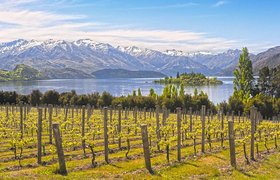
- A distinctive, defensible terroir story. Central Otago is the world’s southernmost wine region, with a continental climate and diurnal temperature swings of up to 20°C that produce concentrated, structured Pinot Noir unlike anywhere else — a genuine point of difference rather than a copy of Burgundy.
- Documented secondary market activity. Specialist auction houses now run dedicated New Zealand Pinot Noir sales, with three producers — Felton Road, Ata Rangi, and Rippon — accounting for over 73% of lots selling above $200.
- Growing critical recognition. Felton Road was named The Real Review’s Winery of the Year in both 2024 and 2025 — back-to-back recognition that signals rising international critical attention.
- Biodynamic and organic credibility. Felton Road, Rippon, and several other top estates are certified biodynamic — appealing to a growing segment of quality-focused, sustainability-minded collectors.
The Regions That Matter
New Zealand has 12 recognised wine regions, but investment interest concentrates in three.
- Central Otago — the world’s southernmost wine region and New Zealand’s premier Pinot Noir zone. Its alpine, continental climate produces silky, dark-fruited, structured wines that critics increasingly compare to Burgundy — at a fraction of the price. Home to Felton Road, Mt Difficulty, Rippon, and Burn Cottage.
- Martinborough (Wairarapa) — a small, historic Pinot Noir region near Wellington, producing more Burgundian, earth-driven, silkier wines than Central Otago’s riper style. Home to Ata Rangi and Dry River, two of the country’s most collected names.
- Marlborough — by far New Zealand’s largest region (around 70–77% of national plantings) and the source of the Sauvignon Blanc that made New Zealand famous. While most Marlborough Sauvignon is a drink-now category, single-vineyard bottlings from producers like Dog Point and Greywacke have developed a real collector following.
Top New Zealand Producers for Investors
Felton Road — The Benchmark
Founded in 1991 in Bannockburn, Central Otago, and releasing its first commercial vintage in 1997, Felton Road is the name international wine writers reach for first when explaining what the region can achieve. Farmed biodynamically across four estate vineyards, its single-vineyard bottlings — Block 3, Block 5, and Cornish Point — trade well above general Central Otago pricing and are largely allocation-only. A rare 3-litre format of the 2018 Block 3 sold for $2,408.75 at auction in October 2021, the highest price recorded for New Zealand Pinot Noir at that specialist sale. Back-to-back Winery of the Year honours from The Real Review in 2024 and 2025 confirm the critical consensus.
Ata Rangi — The Value Benchmark
Founded in Martinborough by the Paton family, Ata Rangi (“dawn sky” or “new beginning”) is one of New Zealand’s most internationally respected producers, making silkier, more Burgundian-styled Pinot Noir than the riper Central Otago wines. It is also the clearest value story in New Zealand wine investing: the well-traded 2017 vintage was released at $75 and has sold for an average of $105 between 2023 and 2025 — a 40% gain in under six years. Retailing under $90 across recent vintages, it remains one of the more accessible entry points into serious New Zealand Pinot Noir.
Rippon — The Biodynamic Icon
Overlooking Lake Wanaka in Central Otago, Rippon’s dramatically sited vineyards produce some of the country’s most sought-after biodynamic Pinot Noir. Its Rippon Mature Vine and single-vineyard Emma’s Block bottlings regularly feature among the top lots at specialist New Zealand wine auctions, and the estate’s combination of location, farming philosophy, and small production makes it a genuine collector’s name.
Dry River — The Cult Rarity
A small, intensely allocated Martinborough producer, Dry River makes some of New Zealand’s most sought-after and hardest-to-find wines across Pinot Noir, Riesling, and Gewürztraminer. Its scarcity rivals anything in the country, and its wines regularly command premium prices when they do appear at auction — a genuine cult name for collectors willing to hunt.
Mt Difficulty — The Established Scale Player
Founded in 1992 by a syndicate of Central Otago growers, Mt Difficulty has grown into a major premium producer of Bannockburn Pinot Noir while maintaining quality that keeps it firmly in the region’s top tier. Its scale, relative to the boutique producers above, makes it a more accessible and more liquid entry point into serious Central Otago Pinot Noir.
Honourable mentions: Burn Cottage (biodynamic, Central Otago), Kumeu River (Auckland’s benchmark Chardonnay producer), Te Mata Estate (Hawke’s Bay, New Zealand’s oldest continuously operating fine wine producer, founded 1896), and Dog Point (single-vineyard Marlborough Sauvignon Blanc worth watching within that broader category).
New Zealand Investment Wines at a Glance
| Producer | Region | Style |
Investor Note |
|---|---|---|---|
| Felton Road | Central Otago | Structured, biodynamic Pinot Noir | Benchmark; allocation-only; auction record holder |
| Ata Rangi | Martinborough | Silky, Burgundian-styled Pinot Noir | Best value story; documented 40% appreciation |
| Rippon | Central Otago | Biodynamic, site-driven Pinot Noir | Cult status; Lake Wanaka terroir |
| Dry River | Martinborough | Ultra-scarce, multi-varietal | Hardest to find; premium at auction |
| Mt Difficulty | Central Otago | Established, consistent Pinot Noir | More liquid, accessible entry point |
New Zealand wine investment carries genuine risks. The market is small and considerably less liquid than Bordeaux, Burgundy, or even Italy — there is no equivalent of Liv-ex tracking New Zealand wine, and selling outside specialist channels can be slow. Value concentrates very heavily in a handful of producers; wines outside the small circle of Felton Road, Ata Rangi, Rippon, and a few others carry far less collector recognition and resale liquidity. Access itself is a genuine constraint — many of the best wines are allocation-only, making it difficult to build meaningful positions quickly. And as a young investment category, price history is shorter and less battle-tested than established regions. As with any emerging wine region, New Zealand should form one small, diversifying part of a broader portfolio, approached with patience.
Frequently Asked Questions
Is New Zealand wine a good investment?
Top New Zealand Pinot Noir — led by Felton Road, Ata Rangi, and Rippon — has shown genuine secondary market appreciation and growing critical recognition, at prices still well below comparable Burgundy. The market is small and illiquid relative to established regions, making this a patient, diversification-focused allocation rather than a core holding.
Which New Zealand wine is the best investment?
Felton Road is the clearest benchmark, with the strongest auction track record and back-to-back Winery of the Year recognition. Ata Rangi offers the best documented value story, with its well-traded 2017 vintage appreciating roughly 40% from release. Rippon and Dry River offer more scarcity-driven upside for patient collectors.
Is New Zealand Pinot Noir comparable to Burgundy?
Critics increasingly draw the comparison, particularly for Central Otago’s structured, concentrated style and Martinborough’s more Burgundian, earth-driven wines. The comparison is about complexity and ageing potential rather than an exact stylistic match — New Zealand Pinot Noir has its own distinct character, but the value gap versus Burgundy is real and part of the investment thesis.
How long does New Zealand Pinot Noir age?
Most New Zealand Pinot Noir is best from around 5 years of age, with top wines from strong vintages capable of ageing 10 years or more. This is shorter than the multi-decade ageing curves of top Burgundy, which suits investors looking for a somewhat faster-turning position within a broader portfolio.
New Zealand’s fine wine story is still being written — a young region producing world-class Pinot Noir at prices that have not yet caught up with the quality in the bottle. For investors willing to be patient with a smaller, allocation-driven market, that gap is the opportunity. To see how New Zealand could fit alongside more established regions in a managed portfolio, explore how wine investing works.
This article is for informational purposes only and does not constitute financial advice. Past performance is not a guarantee of future results. All investments carry risk, including the potential loss of capital.