Burgundy Wine: The Complete 2026 Guide to the World's Most Coveted Wine Region
Burgundy is the most revered — and most expensive — wine region on earth. A single bottle of Romanée-Conti Grand Cru can sell for over $20,000, and a case from the legendary 1945 vintage once fetched more than half a million dollars. No other region inspires the same combination of obsession, scholarly devotion, and financial mania.
But Burgundy's appeal extends far beyond trophy bottles. The region produces some of the world's most profound expressions of Pinot Noir and Chardonnay across a dizzying spectrum of quality and price. A well-chosen village-level red from a rising producer can cost under $50 and deliver extraordinary pleasure — while also appreciating in value as the producer's reputation builds.
In the investment market, Burgundy accounts for nearly 69% of wines in the highest-value tier of the 2025 Liv-ex Classification. The Burgundy 150 index, despite a correction from its 2022 peak, still posted nearly 17% growth over five years through early 2025 — and the blue-chip names (DRC, Rousseau, Leroy, Leflaive) are showing renewed demand as prices stabilize at more rational levels. For investors who missed the pre-2022 run, the current market may represent the best entry point in years.
Whether you're a wine lover seeking to understand Burgundy's labyrinthine classification system or an investor evaluating the region's long-term potential, this guide covers everything you need to know.
Further reading
- Discover Why White Burgundy Wines are so Irresistible and the Best Bottles to Add to Your Wine Collection.
- Contrast and compare the Iconic Burgundy Bottles with the Prestigious Wines of Bordeaux.
What Makes Burgundy Unique
Terroir Above Everything
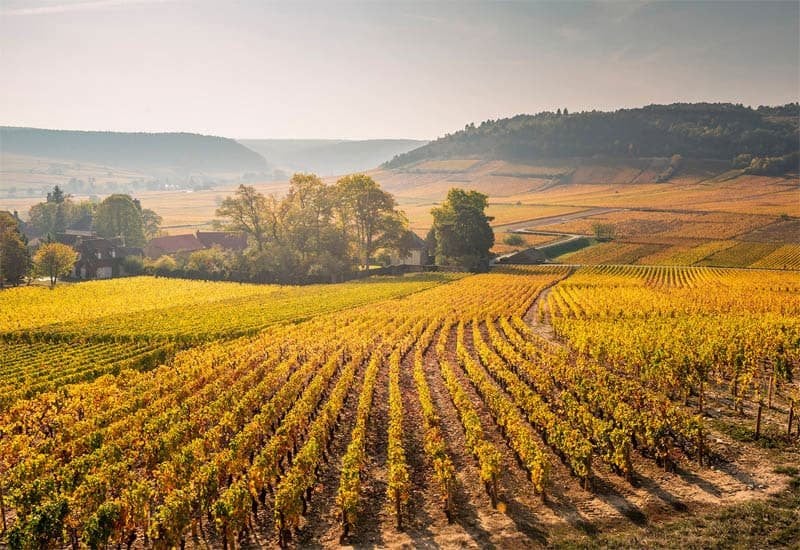
Burgundy's fundamental philosophy is terroir — the belief that a wine's character should express the specific piece of land where the grapes were grown. While Bordeaux emphasizes the château brand and blending skill, and Napa Valley celebrates the winemaker's vision, Burgundy places the vineyard above all else.
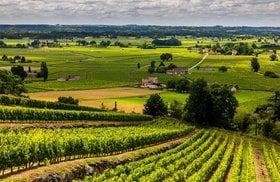
This philosophy is rooted in geography. The region stretches approximately 150 kilometers (about 93 miles) from Chablis in the north to the Mâconnais in the south, but its most celebrated vineyards are concentrated in a narrow strip of hillside — rarely wider than a few hundred meters — running through the Côte d'Or (the "Golden Slope"). Within this slim corridor, soil composition, elevation, aspect, and microclimate vary dramatically from one plot to the next, producing wines of markedly different character from vineyards separated by mere footsteps.
A Chambertin from the Côte de Nuits tastes fundamentally different from a Corton five kilometers to the south — even though both are Grand Cru, both made from Pinot Noir, and both might be produced by the same winemaker. This specificity is Burgundy's greatest asset and the source of its endless fascination.
One Grape, Infinite Expressions
Unlike Bordeaux's complex blends, Burgundy keeps things deceptively simple. Red Burgundy is made from Pinot Noir. White Burgundy is made from Chardonnay. (Gamay is used in Beaujolais to the south, and Aligoté appears in modest quantities, but the prestige wines are exclusively Pinot Noir and Chardonnay.)
This simplicity is Burgundy's genius: with a single grape variety and no blending to mask terroir differences, the wine becomes a transparent lens onto the soil. The same winemaker, using the same techniques, will produce dramatically different wines from two adjacent vineyards — and both will be recognizably, unmistakably Burgundian.
Red Burgundy at its best offers ethereal aromas of red cherry, raspberry, and rose petal that evolve with age into complex layers of earth, leather, truffle, and dried herbs. The texture is silky rather than powerful, and the wine's acidity gives it a lifted, vibrant quality that can persist for decades. Great red Burgundy has an almost weightless intensity — it seems to float on the palate while delivering profound flavor.
White Burgundy from Chardonnay ranges from the steely, mineral-driven precision of Chablis to the rich, golden opulence of Meursault and Puligny-Montrachet. Top examples can age 20-30 years, developing nutty, honeyed complexity while retaining the piercing acidity that defines the region.
The Burgundy Classification System
Understanding Burgundy's classification is essential for both drinking and investing. The system ranks vineyards — not producers — into four tiers, from broadest to most prestigious.
Regional (Bourgogne)
The entry level. These wines carry the broad "Bourgogne" appellation and can come from grapes grown anywhere in the region. Bourgogne Rouge (Pinot Noir) and Bourgogne Blanc (Chardonnay) are everyday drinking wines, typically priced between $15-$30. However, from top producers like Leroy or DRC, even regional wines command premium prices and can appreciate in value.
Village (Commune)
Wines named after a specific village — such as Gevrey-Chambertin, Vosne-Romanée, Meursault, or Puligny-Montrachet. Grapes must come from vineyards within that commune's boundaries. These wines express the broader character of their village and typically cost $30-$150 from quality producers. Village wines from rising stars represent some of Burgundy's best value investments, as prices can multiply rapidly when a producer gains critical recognition.
Premier Cru (1er Cru)
The second-highest classification, covering approximately 640 vineyards across Burgundy that have demonstrated superior terroir over centuries of observation. Premier Cru wines carry both the village name and the vineyard name on the label — for example, "Gevrey-Chambertin Les Cazetiers" or "Meursault Genevrières." Prices range from $60 to $500+, depending on the producer and specific vineyard. Premier Cru wines from elite producers are among the most attractive investment targets: they offer genuine terroir expression and scarcity at prices well below Grand Cru.
Grand Cru
The pinnacle. Only 33 vineyards in all of Burgundy carry Grand Cru status, representing roughly 1.5% of total vineyard area. These are the names that define fine wine: Romanée-Conti, Chambertin, Musigny, Montrachet, Clos de Vougeot, Corton-Charlemagne. Grand Cru wines carry only the vineyard name on the label — the village is not needed because the vineyard's prestige speaks for itself.
Prices for Grand Cru wines vary enormously, from $100 for basic Clos de Vougeot to over $20,000 for a bottle of Romanée-Conti. Grand Cru wines from top producers are the backbone of fine wine investment, and the scarcity of production (sometimes just a few hundred cases per year) creates intense price pressure as bottles are consumed.
Key Burgundy Sub-Regions
Chablis
The northernmost outpost of Burgundy, located approximately 100 kilometers northwest of the Côte d'Or. Chablis produces exclusively Chardonnay in a style radically different from the fuller-bodied whites of the south — these are lean, mineral, and electric, with flavors of citrus, green apple, and a distinctive flinty, oyster-shell quality that comes from the region's ancient Kimmeridgian limestone soils.
Chablis Grand Cru (from seven designated vineyards, including Les Clos and Vaudésir) can rival Puligny-Montrachet Grand Cru in quality and longevity. For investment, Premier Cru and Grand Cru Chablis from producers like William Fèvre, Raveneau, and Dauvissat offer excellent value relative to Côte d'Or whites.
Côte de Nuits
The northern half of the Côte d'Or, stretching from Marsannay in the north to Nuits-Saint-Georges in the south. This is red Burgundy's heartland and home to most of the region's most famous Grand Cru vineyards.
Key villages include Gevrey-Chambertin (home to Chambertin and eight other Grand Crus), Morey-Saint-Denis (Clos de la Roche, Clos Saint-Denis), Chambolle-Musigny (Musigny, Bonnes Mares), Vougeot (Clos de Vougeot), Vosne-Romanée (Romanée-Conti, La Tâche, Richebourg, Romanée-Saint-Vivant, La Romanée, Grands Échézeaux, Échézeaux), and Nuits-Saint-Georges.
For investors, the Côte de Nuits is where the most valuable wines originate. DRC's holdings are concentrated here, as are those of Armand Rousseau (Chambertin), Georges Roumier (Musigny, Bonnes Mares), and Méo-Camuzet (Richebourg, Cros Parantoux).
Côte de Beaune
The southern half of the Côte d'Or, known for producing Burgundy's greatest white wines alongside excellent reds. Key villages include Pommard, Volnay, Beaune (for reds), and Meursault, Puligny-Montrachet, and Chassagne-Montrachet (for whites).
The Grand Cru Montrachet — straddling Puligny and Chassagne — is widely considered the world's greatest white wine vineyard. Corton and Corton-Charlemagne, on the hill of Corton, produce both Grand Cru reds and whites.
White Burgundy investment has been a standout story. Liv-ex noted that their white Burgundy index outperformed the broader Burgundy 150, as well as red Burgundy indices, over several years — defying historical skepticism about white wine's investment potential.
Côte Chalonnaise and Mâconnais
South of the Côte d'Or, these regions offer more accessible Burgundy. The Côte Chalonnaise (Mercurey, Givry, Rully) produces village-level Pinot Noir and Chardonnay at attractive prices. The Mâconnais (Pouilly-Fuissé, Saint-Véran) specializes in Chardonnay and recently gained Premier Cru designations for the first time. These regions are drinking wines rather than investment wines, but they provide excellent introduction to Burgundy's style.
Top Burgundy Producers for Collectors and Investors
The Ultra-Premium Tier
Domaine de la Romanée-Conti (DRC) — The undisputed pinnacle. DRC's Romanée-Conti Grand Cru is the most expensive wine in the world, with an average price of approximately £172,461 per case in the 2025 Liv-ex Classification. The domaine produces eight wines from Grand Cru vineyards in Vosne-Romanée and a Montrachet white, all in tiny quantities. DRC bottles have delivered compound annual growth rates exceeding 10% over the past decade, and demand from Asia (particularly China and Hong Kong) continues to intensify. DRC's 2023 vintage is anticipated for release in early 2026.
Domaine Leroy — Founded by Lalou Bize-Leroy (who also co-directed DRC until 1992), this domaine practices biodynamic viticulture and produces wines of extraordinary concentration and longevity. Leroy's Musigny, Romanée-Saint-Vivant, and Richebourg are among the most sought-after wines on earth. Aggregate sales exceeding £1 million in Leroy wines were reported in late 2025, reflecting sustained appetite for the producer's scarce bottlings.
Domaine Armand Rousseau — The benchmark for Chambertin and Gevrey-Chambertin. Rousseau's wines combine power with finesse in a way that defines the northern Côte de Nuits. Recent trading data shows renewed positive sentiment around this producer as prices stabilize from their 2022 peaks.
The Collector's Tier
Domaine Georges Roumier — Musigny and Bonnes Mares from Roumier are among the rarest and most prized reds in all of Burgundy. Allocation is extremely limited, and secondary market premiums are enormous. The domaine's Chambolle-Musigny Les Amoureuses (Premier Cru) trades at prices exceeding many Grand Crus.
Domaine Coche-Dury — Perhaps the most revered white Burgundy producer. Coche-Dury's Corton-Charlemagne and Meursault Perrières are the gold standard for Chardonnay. Production is tiny, and prices have surged — a single bottle of Corton-Charlemagne can exceed $2,000.
Domaine Leflaive — The reference point for Puligny-Montrachet. Biodynamic since 1997, Leflaive produces white Burgundies of piercing purity and extraordinary aging potential. The Montrachet and Chevalier-Montrachet Grand Crus are among white Burgundy's greatest investment wines.
Rising Stars to Watch
Domaine Arnoux-Lachaux (formerly Robert Arnoux) — Under Charles Lachaux's direction, this domaine has shot from relative obscurity to become one of Burgundy's most talked-about producers. Prices have appreciated rapidly and continue climbing as critical recognition builds.
Domaine Dujac — Established in 1968 by Jacques Seysses, Dujac produces elegant, terroir-driven wines from some of the Côte de Nuits' best vineyards. Strong and growing secondary market presence.
Domaine de la Romanée-Conti's neighbor producers — Domaines like Méo-Camuzet, Sylvain Cathiard, and Emmanuel Rouget benefit from proximity to the same legendary terroir and represent more accessible (though still expensive) entry points into Vosne-Romanée collecting.
Burgundy as an Investment
The Investment Case
Burgundy's investment appeal rests on an unassailable structural advantage: supply is permanently constrained while demand continues to grow globally.
The total vineyard area classified as Grand Cru in Burgundy is approximately 525 hectares — roughly the size of a single large Bordeaux estate. This land cannot be expanded; the classification boundaries were set by centuries of observation and cannot be changed. Meanwhile, global demand for the finest Burgundies has surged as collectors from Asia, the Middle East, and the Americas have entered the market. The number of individual Burgundy wines trading on Liv-ex more than doubled between 2018 and 2022 — from 829 to 1,924 — reflecting the broadening collector base.
Certain vintages and producers have delivered extraordinary returns. DRC Grands Échézeaux 2021 rose 13.3% in 2025 alone, even as broader indices declined. Over ten years, prices for top DRC wines have increased approximately 300%. Domaine Roumier's Bonnes Mares 1988 realized £68,250 at the Bill Koch auction in 2025 — far exceeding its Liv-ex market valuation.
Current Market Conditions (2025-2026)
The Burgundy market has undergone a significant correction since its 2022 peak. The Liv-ex Burgundy 150 index dropped approximately 30% from its high over two years — the largest decline of any regional index, reflecting the fact that Burgundy prices had risen the most aggressively during the 2020-2022 bull run.
However, stabilization is clearly emerging. The Burgundy 150 rose 1.1% in November 2025, with a rising bid-to-offer ratio that suggests buyer confidence is returning. Blue-chip producers — DRC, Rousseau, Leflaive — have seen particularly strong demand recovery, as their wines had dropped 25-40% from peaks and now trade at levels many consider attractive relative to their scarcity and prestige.
The upcoming 2024 Burgundy vintage release (expected in early 2026) adds another catalyst. The 2024 harvest was exceptionally small — down approximately 25% from 2023 — which will further tighten supply and could accelerate price recovery for back vintages already in the market.
For investors, this correction has created what many analysts describe as the best entry point for Burgundy in several years. The market has repriced from speculative excess to more sustainable levels, while the structural drivers of long-term appreciation — permanent scarcity, growing global demand, and the irreplaceable prestige of Grand Cru terroir — remain fully intact.
Building a Burgundy Investment Portfolio
Burgundy investing requires more careful selection than Bordeaux or Italy, given the wide range of quality and liquidity across the region's thousands of individual wines.
For new investors, Premier Cru wines from established producers offer the best risk-adjusted entry point. A case of Rousseau Gevrey-Chambertin Clos Saint-Jacques or Leflaive Puligny-Montrachet Les Pucelles provides genuine Grand Cru-level quality at Premier Cru prices, with strong secondary market liquidity.
For serious collectors, Grand Cru wines from the top tier (DRC, Leroy, Roumier, Coche-Dury) represent the ultimate scarcity play — production is so limited that these wines function almost like luxury goods, with prices supported by collector demand regardless of broader market conditions.
Through Vinovest, you can build a portfolio that includes investment-grade Burgundy alongside other regions for proper diversification. The platform handles the critical logistics — sourcing, authentication, bonded storage, and insurance — that are particularly important for Burgundy, where provenance and storage conditions dramatically affect both quality and resale value.
Best Burgundy Vintages
Outstanding Red Vintages
- 2019 — Widely considered one of the finest modern vintages. Excellent concentration, precision, and balance. Strong investment demand.
- 2020 — Another exceptional year. Rich and structured with excellent aging potential. Still available at attractive pricing relative to quality.
- 2015 — A warm vintage that produced generous, approachable wines with impressive depth. Entering its drinking window, which typically tightens supply.
- 2005 — A legendary vintage now showing beautifully with age. Prices for top producers have appreciated significantly.
- 2010 — Classic structure and longevity. The finest examples will age for decades.
Outstanding White Vintages
- 2020 — Energetic, precise, and mineral. Excellent aging potential.
- 2017 — A warm year that produced rich, generous whites that have aged better than expected.
- 2014 — Classic, balanced, and elegant. Increasingly appreciated by collectors.
Frequently Asked Questions
What is Burgundy wine?
Burgundy wine comes from the Burgundy (Bourgogne) region of eastern France. Red Burgundy is made from Pinot Noir grapes, while white Burgundy is made from Chardonnay. The region is famous for producing some of the world's most complex, terroir-expressive, and expensive wines.
Why is Burgundy so expensive?
The combination of permanently limited supply (the Grand Cru vineyards total only about 525 hectares), growing global demand (especially from Asian collectors), and the region's unmatched prestige drives prices. For the top producers, production is measured in hundreds of bottles per vintage — against a global pool of buyers numbering in the tens of thousands.
What's the difference between Burgundy and Bordeaux?
Burgundy uses single grape varieties (Pinot Noir for reds, Chardonnay for whites), while Bordeaux blends multiple varieties. Burgundy classifies vineyards; Bordeaux classifies estates (châteaux). Burgundy plots are typically tiny (often under one hectare); Bordeaux properties span dozens of hectares. Burgundy emphasizes subtlety and terroir expression; Bordeaux emphasizes power and structure.
Is Burgundy a good investment?
Burgundy has delivered exceptional long-term returns — the Burgundy 150 index posted nearly 17% growth over five years through early 2025, despite a significant recent correction. The structural scarcity of Grand Cru production and growing global collector demand make Burgundy one of the strongest long-term plays in fine wine investment.
How should I start investing in Burgundy?
Premier Cru wines from established producers offer the best entry point — they provide genuine scarcity and terroir expression at more accessible prices than Grand Cru. Proper storage and verified provenance are essential for Burgundy investment, making platforms like Vinovest particularly valuable for handling these logistics.
Ready to add Burgundy to your investment portfolio? Start building your wine collection with Vinovest and access investment-grade wines from the world's most coveted region.