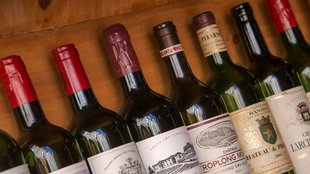
Investing in Bordeaux Wine: The Complete 2026 Guide
Bordeaux is the foundation of fine wine investment. No other region comes close in terms of market share, trading volume, historical track record, or global institutional demand. About half of the Liv-ex Fine Wine 1000, the benchmark index for fine wine investment, consists of Bordeaux wines. Château Lafite Rothschild alone accounts for nearly 5% of all value traded on the exchange, meaning a single wine commands a larger share of the global wine trading market than many entire regions combined.
For investors considering wine as an alternative asset, Bordeaux is the place to start. Its structured classification system, deep liquidity, large production volumes relative to other premium regions, and centuries of established global demand create an investment profile unlike anything else in the fine wine world. This guide covers everything you need to know about investing in Bordeaux in 2026, from the classification system and top châteaux to the current market conditions that make this an especially compelling entry point.
Further reading
- Delve deeper into the fascinating Bordeaux Wine Region and Discover the Best Bottles and Wine Prices.
- Interested in fine wine investment? Check out this Detailed Guide on Investing in Wine.
Why Bordeaux Dominates Wine Investment
The Classification System
Bordeaux’s investment advantage begins with its classification system, a formal hierarchy of quality established in 1855 that still anchors the market 170 years later. The 1855 Classification ranked the top estates of the Left Bank, mainly the Médoc and Sauternes, into tiers based on the prices their wines commanded. It created an official quality ladder the market still uses today.
At the top sit the five First Growths, or Premiers Crus: Château Lafite Rothschild, Château Latour, Château Margaux, Château Mouton Rothschild, and Château Haut-Brion. These estates produce some of the most liquid, most actively traded, and most consistently valuable investment wines in the world. Their prices often act as signals for the broader fine wine market. When First Growths rise, the market tends to follow. When they pull back, other regions often fall further.
Below the First Growths, the Second through Fifth Growths, or Deuxièmes through Cinquièmes Crus, create a clear quality and price ladder. Many Second Growths, especially the so-called Super Seconds like Léoville Las Cases, Pichon Comtesse, and Cos d’Estournel, can rival First Growths in quality while trading at meaningful discounts. That pricing gap is why many investors see them as some of the best risk-adjusted value in Bordeaux.
The Right Bank operates under a separate system. Saint-Émilion’s classification, most recently updated in 2022, places Premier Grand Cru Classé A estates at the top, including Château Cheval Blanc and Château Ausone, followed by Premier Grand Cru Classé B and Grand Cru Classé. Pomerol, home to Château Pétrus and Le Pin, has never had a formal classification, yet its top wines can command prices above most First Growths.
This structure matters for investors because it creates shared quality benchmarks, reduces information gaps, and supports clearer price discovery. When you buy a First Growth Bordeaux, the market understands exactly what you own and can price it quickly. That level of institutional clarity is hard for newer wine regions to match.
Liquidity
Bordeaux’s liquidity is unmatched. The Liv-ex exchange processes billions of dollars in wine trades annually, and Bordeaux consistently represents the largest share of that volume. A well-positioned Bordeaux, such as a First Growth from a strong vintage in standard bottle format, can often be sold within days through merchant networks or the exchange.
This liquidity comes from Bordeaux’s global demand base. Collectors in London, Hong Kong, New York, Tokyo, and Singapore actively trade the same wines. When Asian demand softens, European and American buyers can provide support, and vice versa. That geographic spread of demand creates resilience that single-market wines struggle to match.
For investors, liquidity reduces risk. You can adjust positions, take profits, or exit without long waiting periods or the steep discounts that often come with less liquid wine holdings. That makes Bordeaux a strong core holding, the anchor of a wine portfolio, with room to add smaller positions in less liquid but potentially higher-upside regions.
Production Scale
A top Bordeaux château may produce 10,000 to 25,000 cases annually, far more than a Burgundy domaine, which is often 200 to 500 cases, or a cult California wine, which might be 500 to 1,000 cases. That production scale is an investment advantage, even if it feels counterintuitive.
Higher production puts more bottles into circulation, which supports active secondary market trading and more reliable price discovery. It also lets investors build meaningful positions without moving the market. And it gives institutional buyers, including funds, family offices, and high-end collectors, enough volume to participate at scale.
The key point is that Bordeaux is still finite. A Château Margaux 2016 will never be produced again. Every bottle consumed permanently reduces global supply. And 25,000 cases spread across global collectors and consumers disappears faster than most people expect, especially for great vintages that hit their prime drinking windows decades after release.
The Bordeaux Market in 2026
Current Conditions
The Bordeaux market has seen a meaningful correction from its September 2022 peak. After a strong bull run from 2020 through late 2022, driven by pandemic-era savings, low interest rates, and rising collector demand, prices fell roughly 25% to 30% as interest rates climbed, the dollar strengthened, and consumer spending shifted from collectibles back to travel and dining.
The final months of 2025 showed clearer signs that the correction may have bottomed and a recovery is starting. The Liv-ex Bordeaux 500 index stabilized, and the broader Fine Wine 50 and 100 indices, both heavily weighted toward Bordeaux, rose about 2.5% over the last four months of the year. Most notably, bids exceeded offers on Liv-ex for the first time since May 2023, which signals buyer demand is starting to outpace seller supply.
Buyer activity reached 38% of the market in 2025, the highest share since the correction began. This metric matters because it suggests more participants are stepping in as buyers rather than sellers, which is often an early signal of a sustained recovery.
For investors, the setup is attractive. Prices are still about 25% to 30% below 2022 highs, which in many cases creates entry points not seen since 2020. At the same time, market signals such as rising buyer activity, bids exceeding offers, and consecutive months of index gains suggest the market has likely found a floor and begun to improve. Historically, buying during corrections and holding through recoveries has been one of the more reliable ways to generate strong returns in Bordeaux.
2024 En Primeur
The 2024 en primeur campaign (where wines are sold as futures before bottling, typically 18–24 months before delivery) saw significant price cuts from major châteaux, reflecting the corrected market environment. First Growths released at notably lower prices than recent campaigns, with Lafite Rothschild and Mouton Rothschild 2024 becoming the cheapest iterations of these wines available on the market.
This pricing strategy acknowledges the reality that en primeur must offer genuine value to attract buyers in a corrected market. The days of ever-rising release prices that characterized the 2009–2022 era are over, at least for now. Whether the 2024 en primeur represents a compelling investment depends on vintage quality assessment, which is still being evaluated through barrel tastings and early critical reviews.
However, buyers should approach en primeur cautiously. Among recent campaigns, only the 2019 vintage has clearly proven a worthwhile en primeur investment, with current market prices above release levels. Most other vintages from the 2020–2023 campaigns are now available on the secondary market at or below their original en primeur prices. En primeur works best when you are buying a clearly outstanding vintage at a price that reflects a real discount, not as a default way to buy Bordeaux.
Top Bordeaux Châteaux for Investment
The First Growths
Château Lafite Rothschild is the most liquid investment wine in the world. Its brand carries major cachet in Asian markets, especially China and Hong Kong, where Lafite has become synonymous with prestige wine. Lafite accounted for nearly 5% of all value traded on Liv-ex in 2025. For investors who want maximum liquidity and the deepest global demand, Lafite is often the default choice. Best investment vintages include 2010, 2009, 2005, 2000, and 1996.
Château Latour withdrew from the en primeur system in 2012 and now releases wines only when the château considers them ready to drink. That shift created a distinct market dynamic. Latour vintages sold en primeur, meaning 2011 and earlier, trade on the secondary market, while newer vintages are released directly by the château at higher price points. The move has strengthened Latour’s positioning and supported secondary market pricing for older vintages. Best investment vintages include 2010, 2009, 2005, 2003, and 2000.
Château Margaux produces what many consider the most elegant of the First Growths, with wines known for finesse, perfume, and texture. The 2015 and 2016 vintages are often cited among the greatest Margaux releases. Best investment vintages include 2016, 2015, 2010, 2009, 2005, and 2000.
Château Mouton Rothschild stands out for its artist-commissioned labels, a tradition dating to 1945 that has created a parallel collecting market. Labels by artists such as Picasso in 1973, Warhol in 1975, and Chagall in 1970 attract art collectors as well as wine investors, adding a demand driver that is unique in the category. Best investment vintages include 2016, 2010, 2009, 2006, and 2000.
Château Haut-Brion is the oldest of the First Growths, with records dating back to the 1660s. It is also the only First Growth located outside the Médoc, in Pessac-Léognan. Haut-Brion often trades at a slight discount to the other First Growths, which some analysts view as a gap given its quality and heritage. Best investment vintages include 2016, 2010, 2009, 2005, and 2000.
The Super Seconds
The most compelling risk-adjusted returns in Bordeaux often come from the “Super Second” châteaux, meaning Second and Third Growth estates whose quality can approach or match the First Growths while trading at 30% to 60% lower prices.
Château Léoville Las Cases: Often described as the Super Second closest in quality to the First Growths. In great vintages, its wines can rival Latour in structure and longevity at roughly half the price.
Château Pichon Comtesse de Lalande: Known for opulent, generous wines from vineyards next to Château Latour. Under the Rouzaud family, who also own Roederer Champagne, quality has remained consistently strong.
Château Cos d’Estournel: Recognizable for its pagoda-style chai and known for structured, age-worthy wines from Saint-Estèphe. The 2016 is often cited as one of the wines of the vintage.
Château Ducru-Beaucaillou: One of the more reliable performers in Bordeaux, with consistently high quality in recent vintages and steady price appreciation.
Château Palmer: A Third Growth that often trades at Super Second pricing and can sometimes approach First Growth territory. Its higher Merlot component gives it a distinctive style with broad appeal.
For investors building a Bordeaux portfolio, Super Seconds offer a strong mix of quality, liquidity, and appreciation potential. They trade actively, attract serious collectors, and often start at price levels that leave room for upside.
Right Bank Icons
Château Pétrus: The most expensive and most sought-after wine in Bordeaux, despite never being formally classified. Produced entirely from Merlot on Pomerol’s clay plateau, Pétrus is made in small quantities, around 2,500 to 3,000 cases per year, and often commands prices above any First Growth. It is the ultimate trophy wine, and its pricing has held up well even during the broader market correction.
Château Le Pin: Even rarer than Pétrus, with production around 500 to 700 cases per year. Prices reflect that scarcity. Le Pin is more of a collector’s piece than a core portfolio holding and tends to fit investors with significant capital and long time horizons.
Château Cheval Blanc: A Premier Grand Cru Classé A from Saint-Émilion that produces one of Bordeaux’s most distinctive wines, driven by an unusual blend of Cabernet Franc and Merlot. The 2016 and 2010 are often considered modern legends.
Château Ausone: Another Premier Grand Cru Classé A, producing only about 2,000 cases from its historic Saint-Émilion hillside vineyard. Ausone withdrew from the 2022 Saint-Émilion classification, which created controversy, but demand for the wine remains strong.
Best Bordeaux Vintages for Investment in 2026
Vintage selection is paramount in Bordeaux. The difference in appreciation between a great vintage and an average one can be enormous. Focus investment capital on vintages with broad critical acclaim, proven market demand, and long aging potential.
Outstanding Vintages (Primary Investment Focus)
2022: A powerful, concentrated vintage produced under extreme heat and drought. Early critical reception has been strong, though the wines need time for full assessment. En primeur pricing was relatively aggressive, so secondary market entry points may look better once the wines are bottled.
2019: The best recent en primeur investment. Current market prices are above release levels, validating buyers who purchased futures. The 2019s are generous, accessible wines with broad appeal and strong aging potential.
2016: Widely considered one of the greatest modern Bordeaux vintages. Classic in structure, with standout freshness, precision, and longevity potential. The 2016s are still years from their drinking peaks, which makes them well suited for long-term investment.
2015: A warm, generous vintage that produced immediately appealing wines with depth and complexity. The 2015s are starting to enter their drinking windows, which can drive consumption and tighten supply over the coming years.
2010: A monumental vintage, dense, structured, and built for decades of cellaring. Many 2010s are still well short of their prime. For patient investors, this may be the best long-term hold since consumption should begin drawing down supply more meaningfully over the next decade.
2009: Opulent, generous, and widely acclaimed. The 2009s helped ignite the fine wine boom. They are now moving into optimal drinking windows, which can accelerate supply reduction through consumption.
Historic Vintages (Mature Market)
2005, 2000, 1996, 1990, 1989, 1982: These vintages are established benchmarks with proven investment track records. Prices are higher, but returns are supported by genuine scarcity since decades of consumption have meaningfully reduced available supply. They are best suited for investors seeking blue-chip stability rather than rapid growth.
Building a Bordeaux Investment Portfolio
Allocation Strategy
A well-constructed Bordeaux portfolio balances the stability of First Growths with the growth potential of Super Seconds and the scarcity premium of Right Bank icons.
First Growths (40–50%): The core holding. Maximum liquidity, deepest demand, most predictable trading patterns. Diversify across all five estates and multiple vintages. This is your portfolio’s anchor, the position you can hold through market cycles with confidence.
Super Seconds (30–35%): The growth engine. Superior risk-adjusted return potential due to the quality-price gap. Focus on the top Super Seconds (Léoville Las Cases, Pichon Comtesse, Cos d’Estournel, Ducru-Beaucaillou, Palmer) from outstanding vintages. These wines offer the best combination of upside potential and trading liquidity.
Right Bank (15–20%): The scarcity premium. Smaller allocation to Pétrus, Cheval Blanc, and top Saint-Émilion estates. Higher prices and thinner liquidity mean these are satellite positions rather than core holdings, but their scarcity dynamics can drive outsized appreciation.
Vintage Diversification
Spread investment across at least three to four vintages to reduce concentration risk. A portfolio concentrated in a single vintage is vulnerable to negative reassessment of that year’s quality or to market-specific demand shifts. Vintage diversification also creates a ladder of drinking windows, supporting consumption-driven scarcity across different time horizons.
Format Considerations
Standard bottles, meaning 750ml, offer the deepest liquidity and are the default format for investment. Magnums, which are 1.5L, often trade at two to two and a half times the single-bottle price and are prized for their aging potential. The larger volume-to-surface-area ratio means magnums tend to evolve more slowly and more evenly. For investors who can handle the higher entry price per unit, magnums can offer an appealing mix of collectability and liquidity.
Larger formats (double magnums, jeroboams, imperials) are rarer and command significant premiums, but liquidity is thin. They’re collector pieces rather than liquid investment positions.
En Primeur: How It Works and When It Makes Sense
En primeur (or “wine futures”) is the Bordeaux tradition of selling wines before they’re bottled, typically in the spring following the harvest. Buyers pay the release price immediately but don’t receive the wine for 18–24 months, after it has been bottled, shipped, and cleared through customs.
The Process
Standard bottles, meaning 750ml, offer the deepest liquidity and are the default format for investment. Magnums, which are 1.5L, often trade at two to two and a half times the single-bottle price and are prized for their aging potential. The larger volume-to-surface-area ratio means magnums tend to evolve more slowly and more evenly. For investors who can handle the higher entry price per unit, magnums can offer an appealing mix of collectability and liquidity.
When En Primeur Works
En primeur is compelling when three conditions align: the vintage is genuinely outstanding (broad critical acclaim, strong aging potential), release prices represent genuine value (meaningfully below where the wine is likely to trade upon physical release), and you have the expertise to evaluate vintage quality from barrel samples.
The 2019 vintage is the poster child for successful en primeur investment. Release prices were attractive relative to quality, and the wines now trade above their en primeur levels, rewarding early buyers.
When to Avoid En Primeur
In most recent campaigns, en primeur has not been the best strategy. Wines from the 2020, 2021, 2022, and 2023 campaigns are generally available on the secondary market at or below their original release prices. This means you could have waited, avoided tying up capital for two years, and purchased the same wines at the same or lower prices with the advantage of third-party authentication and immediate delivery.
The general guidance: unless a vintage is clearly exceptional and release prices are genuinely compelling, buying mature Bordeaux on the secondary market typically offers better value and lower risk than en primeur.
Frequently Asked Questions
How much money do I need to start investing in Bordeaux?
Meaningful Bordeaux investment begins around $5,000–$10,000, which allows a diversified position across multiple châteaux and vintages. Super Seconds from strong vintages are available for $80–$200 per bottle, while First Growths typically range from $300–$800+. Platform-based investment through Vinovest starts at $1,000, providing professionally managed diversified exposure at lower minimums.
What returns can I expect from Bordeaux investment?
Historical returns for well-constructed Bordeaux portfolios have averaged 8–12% annually over full market cycles. However, returns vary significantly by château, vintage, and timing. Buying during corrections (like the current environment) and holding through recoveries has historically produced the strongest results. Individual wines from outstanding vintages can appreciate substantially more.
Is Bordeaux better than Burgundy for investment?
They serve different portfolio roles. Bordeaux offers deeper liquidity, lower entry prices, and more predictable trading patterns, which makes it a strong core holding. Burgundy offers higher appreciation ceilings driven by extreme scarcity, but it comes with higher entry prices and thinner liquidity. Many well-constructed wine portfolios include both, with Bordeaux as a 40% to 50% foundation and Burgundy as a 20% to 25% growth allocation.
How long should I hold Bordeaux wines?
Plan for at least 5 to 10 years for investment-grade Bordeaux. That timeline gives the wines time to move toward their drinking windows, allows markets to cycle through corrections and recoveries, and lets scarcity build as bottles are consumed. Some of the strongest returns have come from investors who held through full market cycles, often 10 to 15 years or longer, so the compounding effect of shrinking supply works in their favor.
What is the best First Growth to invest in?
Lafite Rothschild offers the deepest liquidity and strongest Asian demand. Margaux often represents the best value relative to quality. Latour’s withdrawal from en primeur has supported its secondary market positioning. Mouton’s artist labels add a unique collector dimension. Haut-Brion typically trades at a slight discount that some view as undervaluation. The strongest approach is diversifying across all five rather than concentrating in one.
Start Your Bordeaux Investment
With prices 25–30% below their 2022 peaks and clear recovery signals emerging, 2026 presents what may be the most attractive entry point for Bordeaux investment in the past five years. The combination of discounted pricing across all quality tiers, improving market fundamentals, and the structural scarcity that underpins every great vintage makes Bordeaux the essential foundation for any serious wine investment portfolio.
Build your Bordeaux portfolio with Vinovest. Our experts source, authenticate, and store investment-grade Bordeaux from top châteaux and vintages, managing every aspect of wine investment so you can benefit from this asset class.