Douro Red Wine Investment: Barca Velha, Niepoort and Portugal's Table Wine Revolution
For nearly two centuries, the Douro Valley existed for one purpose: growing grapes for Port. The idea of making a serious, dry, age-worthy red table wine from the same terraced, schist-soil vineyards seemed almost beside the point — until the 1950s, when a Portuguese wine company sent its head winemaker to Bordeaux to study, inspired by a simple question: if this land could produce world-class fortified wine, why couldn't it produce world-class dry wine too? The answer became Barca Velha, “the Old Boat” — Portugal's most legendary red table wine, and the founding moment of an investment category still often overshadowed by Vintage Port, but genuinely distinct from it.
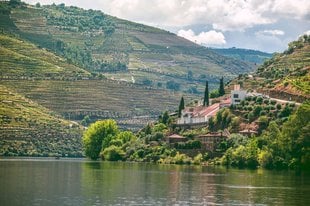
Douro red table wine — as opposed to fortified Port — is a genuinely separate investment category built on the same schist-soil terraces and indigenous grapes (Touriga Nacional, Touriga Franca, Tinta Roriz) that produce the region's famous Port. The founding wine, Barca Velha, remains the benchmark, produced only in exceptional years since the 1950s. Modern leaders include Quinta do Vale Meão, Niepoort's Redoma and Batuta, and the collaborative “Douro Boys” group of five family estates. Prices remain notably accessible relative to comparable Bordeaux or Rhône reds, given the category's still-developing international recognition.
Further reading
Interested in other wine investment content? Check out these posts:
Vintage Port Investment Guide, A Complete Guide to Investing in Spanish Wine
From Port Grapes to Table Wine: The Barca Velha Story
In the early 1950s, the Douro's dominant Port house A.A. Ferreira sent its winemaker on a study trip to Bordeaux, hoping to prove that the region's grapes — grown for centuries purely to make fortified wine — could also produce a serious, age-worthy dry red. The result, first released commercially in the 1950s and named Barca Velha (“the old boat”), became Portugal's most celebrated wine of any style. Crucially, Barca Velha is still made only in exceptional vintages — declared roughly as selectively as a great Port vintage — which has made it one of the most collected and scarce Portuguese wines in existence.
Several factors underpin the category's investment case:
- The same world-class terroir as Port, applied differently. Douro's ancient schist terraces, extreme heat, and century-old vines that produce legendary Port are equally capable of producing serious dry wine — a fact only fully exploited in the last few decades.
- Genuine scarcity at the top. Barca Velha is declared only in exceptional years, following the same selective philosophy as declared-vintage Port.
- A collaborative marketing push behind the category. Five leading family estates — including Quinta do Vale Meão, Niepoort, Quinta do Crasto, and Quinta do Vallado — formed the “Douro Boys” in 2003 specifically to raise international awareness of Douro table wine as a serious category in its own right.
- A genuine value gap. Despite real critical acclaim (Quinta do Vale Meão's wines have twice landed in Wine Spectator's Top 100), prices remain well below comparable-quality Bordeaux or Rhône reds — the core of the investment thesis.
Top Douro Red Wine Producers for Investors
Casa Ferreirinha (Barca Velha) — The Founding Legend
Barca Velha remains the category's most collected and historically significant wine — made from the same estate that pioneered Douro table wine in the 1950s, and still declared only in exceptional vintages. Its scarcity and historical importance make it the clearest blue-chip name in Portuguese still red wine, comparable in stature (if not yet fully in price) to a First Growth Bordeaux within its own national context.
Quinta do Vale Meão — The Douro Boys Anchor
Founded in the 19th century by legendary Douro landowner Dona Antónia Adelaide Ferreira — whose descendants still own the estate — Quinta do Vale Meão sits at the heart of the Douro Superior. Its flagship Tinto has twice landed in Wine Spectator's Top 100 (2011 and 2016 vintages), and the estate is a founding member of the Douro Boys collective. A dense, elegant, structured wine widely regarded as one of the category's clearest benchmarks.
Niepoort — The Innovator
Better known historically for exceptional Port, Niepoort has become equally important for its dry Douro reds — particularly Redoma and the more powerful Batuta. Niepoort is also known for championing lesser-used indigenous varieties like Tinta Amarela, which former winemaker Luis Seabra has described as “worse than Pinot to grow” but essential to the estate's distinctive style. A serious, terroir-driven producer bridging the fortified and table wine worlds.
Quinta do Crasto and Quinta do Vallado — The Douro Boys
Alongside Vale Meão and Niepoort, Quinta do Crasto and Quinta do Vallado complete the core “Douro Boys” group formed in 2003 specifically to promote the region's dry wines internationally. Both estates produce excellent single-vineyard bottlings at more accessible price points than Barca Velha or Vale Meão, offering a sensible entry into the category.
Honourable mentions: Quinta do Noval (better known for Vintage Port's Nacional, but also produces increasingly respected dry reds), Duorum, and Wine & Soul's Pintas, a small-production cult bottling among serious Douro collectors.
Douro Red Wine at a Glance
| Producer |
Flagship Wine |
Typical Price |
|---|---|---|
| Casa Ferreirinha | Barca Velha | $150–$300 (rare declared vintages) |
| Quinta do Vale Meão | Meão Tinto | $140–$180 |
| Niepoort | Redoma / Batuta | $40–$120 |
| Quinta do Crasto / Vallado | Single-vineyard bottlings | $30–$80 |
Douro Red vs. Vintage Port: Two Investments, One Region
It's worth being explicit about the distinction: Vintage Port is a fortified wine, declared only in exceptional years, built to age for 30–50+ years. Douro red table wine is unfortified, made every year (with a few exceptional bottlings like Barca Velha declared more selectively), and typically reaches its peak in 10–20 years — a meaningfully shorter and more accessible investment horizon. For investors already holding Vintage Port, a Douro red allocation offers genuine diversification within the same historic region: same terroir, same grape varieties in many cases, but a materially different wine style, ageing curve, and collector base.
How to Invest in Douro Red Wine
There are three broad routes for investors.
Option 1: Specialist Portuguese Wine Merchants
Given Douro red wine's relatively recent international emergence, specialist Portuguese wine importers remain the most reliable source for the full range, from Douro Boys entry bottlings up to rare Barca Velha vintages.
Option 2: Auction Houses
Barca Velha and top single-vineyard Douro reds increasingly appear at major auction houses, particularly alongside Port lots, given the historic overlap between the two categories.
Option 3: A Managed Platform Like Vinovest
Vinovest builds managed fine wine portfolios across the world's investment-grade regions, handling sourcing, authentication, insured bonded storage, and eventual sale on the investor's behalf. Holding Douro red wine alongside Vintage Port from the same region offers a genuinely diversified position within Portuguese fine wine. The platform's track record includes over $27.5 million in capital returned to 200,000+ clients. For current fees and minimums, see the pricing page.
Risks to Keep in Mind
Douro red wine carries genuine investment risks. The category is considerably younger and less liquid than Bordeaux, and even less established internationally than Vintage Port, which has a multi-century trading history. Value concentrates heavily in a handful of names — Barca Velha and the Douro Boys estates — with the broader Douro DOC offering far less collector recognition. As a genuinely emerging still-wine category from a region historically known for something else entirely (fortified wine), international awareness remains a work in progress. As with any emerging wine investment, Douro red wine should form one small, diversifying part of a broader portfolio.
Frequently Asked Questions
Is Douro red wine a good investment?
The category's benchmark wine, Barca Velha, has genuine historical significance and real scarcity, being declared only in exceptional years. Modern leaders like Quinta do Vale Meão have earned serious international critical acclaim, including two Wine Spectator Top 100 placements. The category remains younger and less liquid than Bordeaux or even Vintage Port, suiting patient, diversification-focused investors.
What is Barca Velha?
Barca Velha ("the old boat") is Portugal's most celebrated dry red wine, first produced by Casa Ferreirinha in the 1950s as an experiment to prove Douro's Port-growing terroir could also make world-class table wine. It is still declared only in exceptional vintages, making it genuinely scarce and historically significant.
What is the difference between Douro red wine and Vintage Port?
Douro red is unfortified table wine made from many of the same grapes and vineyards as Vintage Port, but produced as a dry wine with a shorter typical ageing curve (10–20 years versus Port's 30–50+). They represent genuinely distinct, complementary investment categories from the same historic region.
Douro red wine offers a genuinely differentiated investment story from within one of the world's most historic fine wine regions — the same legendary terroir as Vintage Port, applied to a different, faster-maturing style. To see how it could fit alongside Port and other fortified wine holdings, explore how wine investing works.
This article is for informational purposes only and does not constitute financial advice. Past performance is not a guarantee of future results. All investments carry risk, including the potential loss of capital.