Wine Investing: The Complete Guide to Building a Wine Portfolio (2026)
Fine wine has delivered impressive returns over the past two decades, with the Liv-ex Fine Wine 1000 index showing consistent long-term appreciation. But wine investing isn't just for the ultra-wealthy or industry insiders anymore.
With platforms like Vinovest, you can start building a diversified wine portfolio with as little as $1,000—no wine cellar, sommelier certification, or auction house connections required.
This comprehensive guide covers everything you need to know about wine investing: from understanding what makes wine "investment-grade" to navigating storage, taxes, exit strategies, and realistic ROI expectations. Whether you're a complete beginner or looking to optimize an existing collection, you'll find actionable insights to make smarter investment decisions.
Key Takeaways:
- Wine investing involves buying bottles with the intention of selling them later at a higher price—treating wine as a financial asset rather than something to drink
- Investment-grade wines represent less than 1% of global production and share key traits: aging potential, prestigious origins, strong vintages, and proven price appreciation
- Fine wine has historically shown low correlation with traditional markets, making it a useful portfolio diversifier—the Liv-ex 100 grew 270% between 2001-2021
- Costs matter significantly: storage ($15-75/case/year), insurance, auction commissions (10-25%), and US collectibles tax (up to 28%) all impact returns
- Vinovest simplifies wine investing by handling authentication, storage, insurance, and selling—starting at just $1,000 minimum investment
Further reading
- Explore the 10 Best Investment Wines you should add to your portfolio.
- Deep-dive into Why Investing in Wine is Safer Than Investing in Stocks.
What Is Wine Investing?
Wine investing is the practice of purchasing specific bottles of wine with the goal of selling them later at a higher price. Unlike casual collecting, the purpose isn't to drink the bottles—it's to treat them as financial assets that appreciate over time.
The quality and scarcity of fine wine naturally increase over time. As bottles are consumed, supply decreases while demand from collectors and enthusiasts remains steady or grows. This fundamental dynamic drives long-term price appreciation for investment-grade wines.
Wine Investing vs. Stock Market Investing
Wine investing shares some similarities with traditional investing, but there are important differences:
- Physical asset: Unlike stocks, you own actual bottles that must be stored, insured, and eventually sold through specific channels
- Lower liquidity: You can't sell wine instantly like stocks—finding buyers takes time and involves transaction costs
- No dividends: Stored wine produces no income until sold, and you pay ongoing storage and insurance costs
- Low correlation: Wine prices often move independently of stock markets, providing diversification benefits
Wine Investing vs. Wine Collecting
Wine collectors typically buy based on personal taste, sentiment, or the desire to build a cellar for drinking. Wine investors focus specifically on bottles with qualities that suggest future price appreciation—which may not align with personal preferences at all.
Separating your palate from your portfolio is critical for investment success. The wines you enjoy drinking and the wines that deliver the best returns are often very different.
Why Invest in Wine
Wine has emerged as a legitimate alternative investment for several compelling reasons:
Portfolio Diversification
Fine wine has historically shown low correlation with traditional financial markets. During the 2008 financial crisis, wine prices dipped briefly but recovered faster than equities with less volatility. This makes wine a useful tool for reducing overall portfolio risk.
Strong Historical Performance
The fine wine market has outperformed many traditional assets over the long term. The Liv-ex Fine Wine 100 index grew by 270.7% between 2001-2021, compared to 262% for the S&P 500 over the same period. More recently, despite market corrections in 2024-2025, wine prices in early 2026 are showing signs of recovery—with industry experts noting that current prices represent attractive entry points.
Built-In Scarcity
Unlike stocks or bonds, wine has a naturally decreasing supply. As bottles are consumed over time, scarcity increases. A case of 2010 Château Margaux will never be produced again—and every bottle opened reduces what's available for collectors and investors.
Inflation Hedge
Historically, fine wine has held or grown in value during periods of high inflation. As a tangible asset with intrinsic value, wine offers some protection against currency devaluation that paper assets cannot.
Enjoyment Factor
If your wine doesn't appreciate as expected, you have a built-in exit strategy: drink it. A well-aged Bordeaux or Burgundy always has intrinsic value at the table—something you can't say about a declining stock.
Risks of Wine Investing
Wine investing isn't without risks. Understanding these challenges is essential for making informed decisions:
Market Volatility and Illiquidity
Wine prices can fluctuate based on critic scores, economic conditions, and changing tastes. The market correction of 2024-2025 saw some categories decline 15-20% from peak prices. And because wine is a physical asset, selling requires finding the right buyer—which takes time and involves transaction costs.
Fraud and Counterfeiting
Counterfeit wine remains a concern in the market. Estimates suggest that up to 5% of wines sold on secondary markets could be fake. High-profile fraud cases like Rudy Kurniawan (who sold over $35 million in counterfeit wine) highlight the importance of provenance verification and working with trusted sources.
Storage and Condition Risks
Wine is fragile. Improper storage—wrong temperature, humidity, light exposure, or vibration—can destroy value. Even professionally stored wines can be damaged by equipment failures or natural disasters. That's why proper wine storage and insurance are non-negotiable.
Climate Change
A 2024 study published in Nature warned that up to 90% of coastal and lowland wine regions in Spain, Italy, Greece, and Southern California could face severe drought and heat challenges by century's end. Climate change may affect both wine availability and long-term regional values—making diversification across regions increasingly important.
Costs That Erode Returns
Storage, insurance, transaction fees, and taxes can significantly impact your actual returns. A wine that appreciates 60% over 10 years might still result in a net loss after accounting for all costs. We'll cover this in detail in the ROI section below.
What Makes Wine Investment-Grade?
Less than 1% of wine produced globally qualifies as investment-grade. These wines share several key characteristics:
- Aging Potential
Investment wines must be capable of improving—or at least maintaining quality—over decades. Without aging potential, there's no reason for prices to increase over time. The best investment wines can age 20-50+ years.
2. Prestigious Origin
Wines from recognized regions carry stronger resale demand. The most established investment regions include Bordeaux (which accounts for roughly 90% of traditional investment wine), Burgundy, Champagne, the Rhône Valley, Tuscany, Piedmont, and Napa Valley.
3. Notable Producer
Historic or prestigious wineries command attention and consistent demand. First Growth Bordeaux estates like Château Lafite Rothschild, Château Latour, and Château Margaux have centuries of reputation behind them. Burgundy's Domaine de la Romanée-Conti (DRC) is considered the most collectible producer in the world.
4. Strong Vintage
The vintage year significantly impacts investment potential. Exceptional weather conditions produce wines with better aging potential and higher critical scores. Legendary Bordeaux vintages like 2005, 2009, 2010, 2015, 2016, and 2019 command premium prices.
5. High Critical Scores
Wines rated 95+ points by respected critics like Robert Parker, Wine Spectator, or Jancis Robinson have proven investment appeal. These scores provide objective quality benchmarks that buyers trust.
6. Rarity and Scarcity
Small-production wines or limited releases are more likely to appreciate. When a wine is produced in quantities of just a few thousand cases (versus hundreds of thousands), supply constraints naturally support prices.
7. Proven Price History
The best indicator of future appreciation is past performance. Investment-grade wines have documented track records of price increases over 10+ years. You can verify price histories on platforms like Liv-ex and Wine-Searcher.
Ways to Invest in Wine
There are several approaches to wine investing, each with different trade-offs for cost, control, and convenience:
Option 1: Invest Through Vinovest (Recommended for Most Investors)
Vinovest is a wine investment platform that handles the complexity of wine investing for you. Here's how it works:
- Sign up and complete a quick questionnaire about your investment goals and risk tolerance
- Fund your account with as little as $1,000 to get started
- Receive a customized portfolio built by sommeliers and AI algorithms based on your preferences
- Track performance through your dashboard as your wines appreciate
- Sell when ready with guidance from advisors on optimal timing
Why Vinovest makes sense:
- Best prices: We source wines directly from wineries and global exchanges at wholesale prices
- Authenticity guaranteed: Every bottle's provenance is verified to protect against counterfeits
- Professional storage: Wines are stored in bonded warehouses with optimal conditions
- Full insurance: Your collection is protected at market value
- Tax advantages: Bonded storage defers duties and VAT until withdrawal
- Simple pricing: 2.5% annual fee (1.9% for portfolios over $50,000) covers everything
- Flexible exit: Sell through our marketplace or have bottles delivered to drink
Option 2: Buy Wine Directly
For hands-on investors who want direct ownership:
Through Wine Exchanges:
Platforms likeVinovest Trading, Liv-ex, and Cavex facilitate wine purchases with transparent pricing and verified provenance. Expect commissions of 3-10%.
Through Auctions:
Major houses like Sotheby's and Christie's offer access to rare wines and single-owner collections. However, buyer's premiums can add 25% or more to hammer prices.
Through Wine Futures (En Primeur):
En primeur means buying wines while still in barrel, typically 2 years before bottling. This can secure better prices and guaranteed provenance, but carries risk if prices don't appreciate after release.
Option 3: Buy Wine Stocks
You can gain wine market exposure throughwine-related stocks like Constellation Brands, Treasury Wine Estates, or LVMH. However, these correlate more closely with the broader stock market than fine wine prices.
Option 4: Wine Investment Funds
Some funds pool investor capital to purchase managed wine portfolios. This provides diversification but typically requires higher minimums ($25,000+) and charges management fees. You also don't own specific bottles—just shares in the fund'
Understanding Costs and Taxes
One of the biggest mistakes new wine investors make is underestimating how much costs can erode returns. Here's what you need to budget for:
Storage Costs
Professional bonded storage typically costs $15-75 per case per year, depending on location and service level. Premium "white glove" services can run several hundred dollars per case annually.
If storing at home, you'll need a climate-controlled cellar or wine refrigerator. A proper home setup can cost $5,000-50,000+ depending on capacity and quality.
Insurance Costs
Wine insurance typically costs $0.40-0.80 per $100 of insured value per year. For a $10,000 collection, that's $40-80 annually. Specialist wine insurers offer policies with low or zero deductibles.
Transaction Costs
When buying and selling, expect to pay:
- Auction buyer's premium: 15-25% added to hammer price
- Auction seller's commission: 8-15% of hammer price
- Exchange commissions: 3-10% for buyer and/or seller
- Shipping and handling: $20-100+ per case depending on distance
Tax Implications
Tax treatment of wine investmentsvaries significantly by jurisdiction:
United States:
Wine is classified as a "collectible" by the IRS. Gains are taxed at a maximum rate of 28% (higher than the 20% long-term capital gains rate for stocks). Storage and insurance costs are generally NOT tax-deductible for personal collections.
United Kingdom:
Wine is considered a "wasting asset" (lifespan under 50 years) and is exempt from capital gains tax—making the UK one of the most tax-favorable jurisdictions for wine investors.
Other Favorable Jurisdictions:
Hong Kong, Singapore, France, Germany, and Austria also offer favorable tax treatment for wine investments.
Bonded Storage Advantage:
Wines stored "in bond" defer customs duties and VAT until withdrawal. If you sell while in bond, you may never owe these taxes. This is a significant advantage for international trading.
Wine Storage Best Practices
Proper storage is non-negotiable for wine investors. Poor conditions can destroy value in months.
Optimal Storage Conditions
- Temperature: 53-59°F (12-15°C). Consistency matters more than hitting an exact number—fluctuations cause the most damage
- Humidity: 65-75% relative humidity keeps corks moist and prevents air seepage
- Light: Store in darkness. UV light degrades wine and fades labels
- Vibration: Keep away from appliances and heavy traffic. Even minor vibrations can affect aging
- Position: Store bottles horizontally so corks stay moist
- Odors: Avoid areas with strong smells—corks are porous and can transmit odors
Professional vs. Home Storage
For most investors, professional bonded storage is the better choice:
- Guaranteed optimal conditions with backup systems
- Documented provenance that supports resale value
- Tax advantages of in-bond storage
- Often cheaper than building a proper home cellar
- Easier to facilitate sales without shipping wines yourself
Home storage can work for smaller collections you plan to drink, but expect to invest $5,000-50,000+ in a proper climate-controlled setup.
Exit Strategies: When and How to Sell
Knowing when and how to sell is just as important as knowing what to buy.
When to Sell
Approaching Peak Drinking Window:
Wines reach peak value near their optimal drinking window.Understanding when wines reach peak value helps you time sales. Wait too long and value declines as wines become "too old" for most buyers.
Market Timing:
Watch for favorable conditions like anniversary vintages, critical score releases, or themed auction events that create buyer interest. Current 2026 market conditions, with prices near multi-year lows, favor buying over selling for most categories.
Target Returns Achieved:
If your wine has hit your target appreciation (e.g., doubled in value), consider taking profits rather than waiting for further gains that may not materialize.
Where to Sell
Major Auction Houses (Best for Rare/Premium Wines):
Sotheby's, Christie's, and Acker attract global buyers and can achieve top prices for exceptional bottles. Expect 10-15% seller commission plus fees. Timeline: 4-8 weeks from consignment to payment.
Wine Exchanges (Best for Volume/Mid-Market):
Platforms likeVinovest Trading and Liv-ex offer faster sales with lower commissions (3-10%). Best for wines with active trading markets.
Merchant Buyback:
Some wine merchants will buy back wines directly. Fastest path to cash but typically at below-market prices.
Private Sales:
Selling directly to collectors avoids commissions but requires finding buyers and handling logistics yourself
Wine Investment ROI: What to Realistically Expect
Let's walk through a realistic example of wine investment returns, accounting for all costs.
Example: $5,000 Wine Investment Over 10 Years
Initial Investment:
- Wine purchase: $4,000 case
- Buyer's premium (25%): $1,000
- Total buy-in: $5,000
Ongoing Costs (10 years):
- Storage at $50/year: $500
- Insurance at $30/year: $300
- Total ongoing costs: $800
Total Outlay: $5,800
Scenario A: 60% Appreciation (Disappointing Outcome)
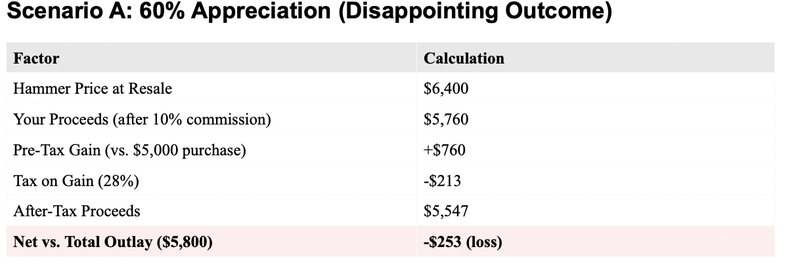
Even with 60% appreciation, this investment loses money after accounting for all costs.
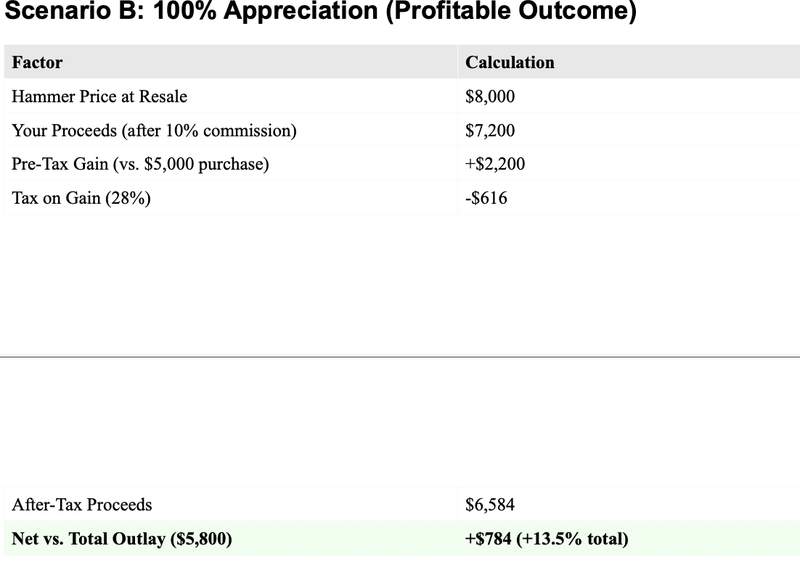
With 100% appreciation over 10 years, you net about 13.5% total return (roughly 1.3% annualized).
The Vinovest Advantage
These examples assume traditional auction channels with high fees. Through Vinovest, costs are significantly lower:
- No buyer's premium—wines sourced at wholesale
- 2.5% annual fee covers storage, insurance, and management
- Lower transaction costs through Vinovest marketplace
- Better wine selection through expert curation
This can meaningfully improve your net returns compared to DIY investing.
How to Get Started with Wine Investing
Ready to start building your wine portfolio? Here's a practical roadmap:
Step 1: Determine Your Budget and Goals
Decide how much you can invest and what you're hoping to achieve. A minimum of $5,000-10,000 allows for meaningful diversification. Consider wine as 5-10% of your overall alternative investment allocation.
Step 2: Choose Your Approach
For most investors, Vinovest offers the best combination of accessibility, cost-efficiency, and expertise. If you prefer hands-on control, be prepared to invest time in education and due diligence.
Step 3: Build Wine Knowledge
Whether you use a platform or invest directly, understanding wine makes you a better investor. Consider:
- Following market indices like Liv-ex 100 and Liv-ex 1000
- Reading critic reviews and understanding scoring systems
- Learning about major wine regions and producers
- Using resources like Wine-Searcher and CellarTracker for pricing data
Step 4: Start Small and Diversify
Don't put all your capital into a single wine or region. A well-diversified portfolio might include:
- Bordeaux First Growths and classified estates
- Burgundy Grand Crus
- Prestige Champagnes
- Super Tuscans and Piedmont Barolos
- Napa Valley cult Cabernets
Step 5: Be Patient
Wine investing requires a long-term mindset. Plan to hold wines for 5-10 years minimum. Resist the urge to panic-sell during market corrections—fine wine has historically recovered from downturns.
Frequently Asked Questions
How much money do I need to start investing in wine?
You can start with as little as $1,000 through Vinovest. For direct purchasing, $5,000-10,000 provides enough capital for meaningful diversification across multiple wines.
Is wine investing better than stocks?
Wine and stocks serve different purposes. Wine typically shows low correlation with stock markets, making it useful for diversification. However, wine is less liquid, has higher transaction costs, and produces no dividends. Most financial advisors suggest allocating 5-10% of alternative investments to wine rather than choosing one or the other.
How long should I hold wine investments?
Plan for 5-10 years minimum. Top-tier wines from great vintages may appreciate for 15-20 years or longer. Selling too early means missing peak appreciation; selling too late means wines pass their drinking window and lose value.
Can I store investment wine at home?
Technically yes, but it's generally not recommended. Home storage requires significant investment in climate control, and wines stored at home lack the documented provenance that professional storage provides. This can reduce resale value by 10-20% or more.
What are the tax implications of wine investing?
In the US, wine is taxed as a collectible at up to 28% on gains. The UK treats wine as a "wasting asset" exempt from capital gains tax. Storing wine "in bond" can defer duties and VAT. Consult a tax professional for advice specific to your situation.
How do I avoid wine investment scams?
Work only with established, reputable platforms and merchants. Verify provenance documentation for every purchase. Be skeptical of cold-call investment offers or "guaranteed" returns. If a deal seems too good to be true, it probably is. Learn more about wine investment scams and how to avoid them.
What wines have the best investment potential?
Historically, Bordeaux First Growths (Lafite, Latour, Margaux, Haut-Brion, Mouton) and top Burgundies (DRC, Leroy, Rousseau) have shown the strongest appreciation. Prestige Champagnes, Super Tuscans, and Napa cult wines also perform well. Focus on highly-rated wines (95+ points) from exceptional vintages.
Start Building Your Wine Portfolio Today
Wine investing offers a unique combination of potential financial returns and personal enjoyment that few other asset classes can match. While it requires patience, education, and careful attention to costs, the right approach can deliver meaningful portfolio diversification and attractive long-term appreciation.
Whether you're drawn to the romance of owning Grand Cru Burgundy or simply looking for an uncorrelated alternative investment, wine deserves consideration as part of a well-rounded investment portfolio.
Ready to get started?Create your Vinovest account today and let our team of experts build a customized wine portfolio tailored to your goals. With institutional-quality wine selection, professional storage, full insurance, and transparent pricing—all starting at just $1,000—there's never been an easier way to invest in fine wine.
Disclaimer: This article is for educational purposes only and should not be taken as tax, legal, or financial advice. Wine investments carry risk and may result in loss. Past performance does not guarantee future results. Consult qualified professionals before making investment decisions.