Penfolds Grange: The Complete 2026 Guide to Australia's Greatest Wine
What makes Penfolds Grange such a special wine?
The same question echoed in the wine world when the Australian wine catapulted to fame in the ‘50s and ‘60s. More than half a century later, Penfolds Grange remains one of the most sought-after collectibles worldwide!
Let’s find out the secret to its success, the Cuvee’s early years, and what makes Penfolds Grange so expensive. You’ll also discover 10 Best Vintages to add to your collection right away!
Further reading
- Jingle all the way into the new year with this Christmas Wine List.
- No matter what the season, these classic white wines and timeless red wines are never out of fashion.
Max Schubert's Defiant Vision
The story of Grange begins with Max Schubert, Penfolds' chief winemaker, and a trip to Bordeaux in 1950. At the time, Australian wine was synonymous with fortified styles — ports and sherries that bore little resemblance to the fine wines of Europe. Schubert visited the great châteaux of the Médoc and was captivated by wines that could develop and improve over decades of cellaring. He returned to Adelaide with a radical ambition: to create an Australian wine "capable of staying alive for a minimum of twenty years."
The first experimental Grange was produced in 1951 from Shiraz grapes sourced from the Magill Estate vineyard, located in the eastern suburbs of Adelaide. Schubert made two critical winemaking decisions that defined the style. First, he chose Shiraz over Cabernet Sauvignon — betting on Australia's signature grape rather than imitating Bordeaux. Second, he aged the wine in new American oak hogsheads (300-liter barrels) rather than the French oak barriques standard in Bordeaux. Both choices were deliberate, and both proved prescient: they gave Grange a character that was unmistakably Australian while delivering the structure and longevity Schubert craved.
The early vintages were dark, tannic, and confrontingly powerful in their youth. Penfolds management and the Australian wine establishment were unimpressed. In 1957, the company's board ordered Schubert to cease production entirely.
The Hidden Grange: 1957-1959
What happened next has become the most famous act of defiance in wine history. Schubert, convinced that his wines would prove themselves with age, ignored the order. With the help of a small group of loyal cellar hands, he continued making Grange in secret between 1957 and 1959 — hiding barrels in the back of the winery, away from management's eyes.
These three "hidden vintages" were never formally acknowledged during production. Schubert risked his career on a conviction that time would validate his vision. It did. By the early 1960s, the 1952 and 1953 vintages had evolved into wines of extraordinary complexity and depth. When Penfolds management finally tasted the matured wines, they reversed their decision. Official production resumed with the 1960 vintage, and Schubert was vindicated.
The 1952 Grange, which retailed for just under $1 upon its original commercial release — an extraordinary sum in those days — now commands up to $20,000 at auction. The 1951 first vintage, the rarest of all, has fetched over $150,000 per bottle. It is estimated that fewer than 20 bottles of the 1951 remain in circulation.
From National Treasure to Global Icon
Grange's reputation built steadily through the 1960s, '70s, and '80s, but its international breakthrough came in 1995 when Wine Spectator named the 1990 vintage their "Wine of the Year" — the first Australian wine to receive the honor. This single recognition catapulted Grange onto the global stage, bringing it to the attention of collectors and investors who had previously focused exclusively on France.
Critical acclaim from Robert Parker, James Suckling, and other influential voices followed, cementing Grange among the world's elite wines. In 2005, Penfolds made a strategic move that transformed Grange's investment profile: it began distributing the wine through La Place de Bordeaux — the prestigious negociant network that handles First Growth Bordeaux releases. This gave Grange access to Europe's and Asia's established fine wine trade infrastructure, dramatically expanding its international collector base.
Today, Grange is officially listed as a Heritage Icon of South Australia — a recognition typically reserved for buildings and landmarks, extended to a wine for the first and only time. It holds 31 "Winery of the Year" awards from Wine & Spirits Magazine (more than any other winery in the world), was named "Best Winery of the World" by The FINE Wine Magazine in 2021, and occupies a permanent place in Langton's "Exceptional" tier — the highest classification for Australian wine. A complete set of all Grange vintages from 1951 to 2018 sold for a world record AUD $431,000 at the 2022 Langton's Rewards of Patience auction. It is estimated that only around 30 complete sets exist worldwide.
How Grange Is Made
Multi-Vineyard, Multi-District Philosophy
Grange's winemaking philosophy differs fundamentally from most prestige wines. While Bordeaux's greatest wines come from single estates and Burgundy's from individual vineyard plots, Grange is a multi-vineyard, multi-district blend — assembled from the finest Shiraz parcels across South Australia. The primary source regions are Barossa Valley, McLaren Vale, Clare Valley, and Magill Estate (the original Grange vineyard in Adelaide's suburbs), with the exact regional proportions varying by vintage.
The 2020 vintage, for example, comprised 48% McLaren Vale, 40% Barossa Valley, and 12% Clare Valley fruit. The 2021 drew from the same three regions but in different proportions. This approach is not a compromise — it is the core of Grange's identity. By drawing on the best fruit from across an entire state's wine production, the winemaking team (led by Chief Winemaker Peter Gago since 2002) can maintain remarkable consistency even in challenging vintages. Where a single-vineyard wine is entirely at the mercy of conditions in one location, Grange has an entire palette of terroirs to select from.
The grape blend is overwhelmingly Shiraz — typically 94-100% — with occasional small additions of Cabernet Sauvignon when the vintage warrants it. The 2020 included 3% Cabernet, while the 2021 had 6%. Notably, in vintages where the Cabernet fruit doesn't meet the standard for Grange or its sister wines, Penfolds simply doesn't release certain labels (they did not release the elite Bin 707 or Bin 129 Cabernets from the 2020 vintage, for instance) — a commitment to quality over commercial pressure.
American Oak and the Schubert Tradition
Grange is aged for approximately 18-20 months in 100% new American oak hogsheads. The use of American oak (rather than French) was Schubert's original decision and remains a signature element of the wine's identity. American oak contributes distinctive notes of coconut, vanilla, sweet spice, and chocolate that complement the richness of South Australian Shiraz in a way that French oak's more restrained, savory character does not.
After oak maturation, the wine undergoes partial barrel fermentation — a technique relatively unusual for red wines — which adds textural depth and mid-palate weight. Additional bottle aging before release means Grange typically hits the market approximately five years after the vintage date (the 2021 vintage, for instance, was released in 2026). This extended pre-release aging ensures that Grange arrives with meaningful maturity already developed — though decades of further evolution lie ahead.
What Does Grange Taste Like?
Understanding Grange's tasting profile helps explain why it commands such devotion from collectors and why it ages so spectacularly.
Young Grange (within 5-10 years of vintage) is a wine of extraordinary intensity. Expect dense aromas of blackberry, dark plum, blueberry, and black pepper, layered with chocolate, licorice, espresso, mocha, and the characteristic American oak spice — coconut, vanilla, cinnamon. The palate is full-bodied and richly textured, with ripe, velvety tannins that coat the mouth without astringency, and a long, persistent finish that seems to last for minutes. There's often a distinctive savory quality — sometimes described as "crushed ant" or black olive — that adds complexity beyond the generous fruit.
Mature Grange (15-30+ years) undergoes a profound transformation. The exuberant fruit of youth gives way to dried fruits, leather, tobacco, earth, truffle, sandalwood, and a sweet, meaty quality that is uniquely Grange. The tannins, which were plush but firm in youth, resolve into a silky, almost seamless texture. Great vintages can continue improving for 50 years or more — the 1951 and 1952 have been tasted in the 2020s and remain vibrant, testament to Schubert's original vision of creating a wine that could "stay alive" for decades.
Where great Bordeaux is about structure and elegance, and Burgundy about transparency and finesse, Grange is about sheer, unapologetic power delivered with remarkable grace. It doesn't whisper — it proclaims. And yet, in its finest vintages, it achieves a harmony of intensity and refinement that places it genuinely among the world's greatest wines.
Best Penfolds Grange Vintages
The Legendary Vintages
Grange has over 30 perfect 100-point scores to its name. Understanding which vintages matter most — for drinking, collecting, and investment — is essential.
1951 (Experimental) — The inaugural vintage. Fewer than 20 bottles are believed to exist. Individual bottles have sold for over $150,000 at auction. This is a museum piece of incalculable historical importance — not a practical investment, but the ultimate trophy for any wine collection. A complete set including this bottle sold for AUD $431,000 in 2022.
1971 — Widely considered by Penfolds' own winemakers and veteran critics to be the greatest Grange ever produced. Extraordinarily rare and commanding five-figure prices at auction. A benchmark against which all subsequent vintages are measured.
1976 — Made headlines as the first Australian wine to breach the $20 retail price barrier — a jaw-dropping sum at the time. Now a four-figure wine at auction, valued as much for its historical significance as its exceptional quality.
1986 — Outstanding quality and among the most consistently praised vintages from the 1980s. Exceptional aging potential with decades of life remaining.
1990 — Wine Spectator's Wine of the Year in 1995. The vintage that took Grange from national treasure to global icon. Still powerful and developing beautifully in the mid-2030s.
Modern Investment-Grade Vintages
2008 — A milestone vintage. The first Australian wine to receive perfect 100-point scores from both Wine Spectator and Robert Parker's Wine Advocate — an achievement no other Australian wine has matched. This dual-100 distinction creates a permanent quality marker that supports long-term price floors. The wine is drinking beautifully now through 2045+ and represents the most defensible modern investment vintage.
2010 — Exceptional quality widely considered on par with the greatest Grange vintages ever produced. Chief Winemaker Peter Gago has drawn comparisons to the legendary 1990. Powerful, concentrated, and built for decades of cellaring. Among the highest average critic scores of any modern Grange, though not rated by Vinous.
2012 — Received 100 points from Andrew Caillard MW. An excellent vintage that benefits from being slightly overlooked next to the 2010 and 2013, creating relative value opportunities.
2013 — Perfect 100-point score from Lisa Perrotti-Brown of Robert Parker's Wine Advocate. One of the few Australian wines to achieve this specific distinction. Back vintages of 2013 currently offer greater investment potential than some newer releases, as the perfect score creates permanent collector demand.
2015 — Scored 100 points from Nick Stock at JamesSuckling.com and was named Australian Wine of the Year 2019. According to wine-searcher data, the 2015 vintage has appreciated approximately 36% since its October 2019 release. At the time of writing, current pricing around $700-750 represents strong value relative to quality.
2016 — Named Best Syrah of the Year by The FINE Wine Magazine (2021) and scored 100 from Ken Gargett in the World of Fine Wine. Excellent structure and freshness with a very long drinking window.
2018 — The current standout. Received an unprecedented five perfect 100-point scores from leading critics — more than any other single Grange vintage. The average score across Wine Advocate, Vinous, and James Suckling is 99 points, the highest average for any modern Grange. Priced around $775 per bottle, this is the premier current-vintage investment opportunity. Gago describes 2018 as requiring hard work to find the "muscular black-fruited Shiraz" that defines Grange, making it a vintage of exceptional selectivity.
2021 — Scored 98/100 from Wine-Searcher's critic average, priced around $705. Released in 2026, this is a celebrated vintage — marking Grange's 70th anniversary — with an "extraordinary" assessment from critics. Includes 6% Cabernet Sauvignon sourced from Barossa Valley, McLaren Vale, and Clare Valley.
A Note on Recent Vintages and Honest Expectations
2020 — A solid but not spectacular vintage. Scored 95 from Wine Advocate and 97 from James Suckling — good but below the heights of 2018 or 2021. Gago acknowledged this was a "difficult" growing season, and the wine feels lighter and more accessible on release than many predecessors. At $784 average retail, the 2020 is priced above some higher-scoring back vintages, illustrating a reality that experienced Grange investors understand well.
This brings up an important caveat. Not every Grange vintage is a guaranteed investment winner. The retail price of new-release Grange has risen significantly over the past two decades — from around $400 in the early 2000s to $700-800+ today — which has compressed the margin for short-term appreciation. As Australian auction experts note, recent vintages at current retail prices may require 15-30 years of patient cellaring before delivering meaningful investment returns, unless they carry the distinction of perfect scores or exceptional critical acclaim.
The smartest Grange investment strategy, therefore, focuses on two approaches: buying perfect-score vintages (2008, 2013, 2015, 2018) at or near release, where the quality distinction creates durable demand; and acquiring high-scoring back vintages at auction, where secondary market pricing often sits 20-40% below retail and the wines already have a track record of appreciation. Buying every new release at retail and expecting quick profits is not how Grange investing works — and any guide that tells you otherwise is doing you a disservice.
Penfolds Grange as an Investment
Why Grange Belongs in a Global Wine Portfolio
Despite the nuances above, Grange earns its place in serious wine portfolios for several structural reasons.
Geographic diversification you can't get elsewhere. Most fine wine portfolios are overwhelmingly European — Bordeaux, Burgundy, Champagne, and Italy account for the vast majority of traded wine by value. Grange is the dominant "Rest of World" holding on Liv-ex, providing genuine Southern Hemisphere exposure that operates on different economic and climatic cycles. When European wines face headwinds from tariffs, currency movements, or regulatory changes, Australian wine often behaves independently. This decorrelation is the definition of effective diversification.
Extraordinary auction premiums on historic vintages. This is where Grange truly shines as a long-term hold. At the 2025 Bill Koch auction — one of the most significant wine auctions of the decade — Grange vintages consistently exceeded their Liv-ex market valuations by substantial margins. The 1998 Grange realized £4,560 against a Liv-ex benchmark of £1,700 (2.7x). The 1990 fetched £4,180 against £1,650 (2.5x). The 1986 achieved £3,650 against £1,600 (2.3x). These premiums demonstrate that well-stored Grange with verified provenance commands significantly more than standard market pricing — a pattern that rewards patient, long-horizon investors.
Institutional-grade recognition. Grange is tracked on the Liv-ex Rest of the World 60 index and the broader Liv-ex 1000, providing transparent price discovery and market data. In 2017, Liv-ex classified Grange as a First Growth in its recreation of the 1855 Bordeaux Classification — the only Australian wine to receive this distinction. Langton's, Australia's premier wine auction house, has maintained Grange in its top "Exceptional" tier since the classification's inception in the 1990s.
La Place de Bordeaux distribution. Since 2005, Grange has been distributed through the prestigious Bordeaux negociant network. This gives Grange access to the established European and Asian fine wine trade, expanding its collector base well beyond Australian domestic demand. Penfolds continues to expand globally — including ventures into Champagne production and a "Wine of the World" appellation with wines like the ultra-premium Quantum — suggesting the brand's international prestige will only grow.
The scarcity of complete sets. With only around 30 complete sets of all Grange vintages believed to exist, and with every consumed bottle permanently reducing supply, the long-term scarcity dynamics work firmly in the investor's favor. Individual trophy vintages (1951, 1952, 1971) will only become rarer and more valuable as time passes.
Current Market Context (2025-2026)
The broader fine wine market correction of 2023-2025 affected most regions, but Grange has shown relative resilience. While the Liv-ex Burgundy 150 dropped approximately 30% from its 2022 peak and Bordeaux fell significantly, the Rest of the World 60 index (which includes Grange alongside Screaming Eagle, Opus One, Dominus, and Vega Sicilia Unico) held steadier — reflecting the diversification value these non-European wines provide.
Asian demand remains a critical tailwind. Hong Kong, Singapore, and mainland China are major buyers of Grange, and Australia's geographic proximity to these markets — combined with free trade agreements that reduce tariff friction — gives Grange a structural advantage over European wines as Asian wine collecting expands.
Market experts note that the fine wine market may be approaching the bottom of its correction cycle, with Liv-ex indices showing positive monthly movements in late 2025. Blue-chip wines with history, scarcity, and liquidity — precisely Grange's profile — tend to recover first as the market turns.
Grange Compared to Other Investment Wines
Grange vs. Bordeaux First Growths: Both are blue-chip holdings, but they serve different portfolio functions. First Growths have centuries of track record and the deepest liquidity in fine wine. Grange has a shorter history (~70 years) but offers geographic diversification and, in recent auctions, has shown comparable or superior appreciation for historic vintages. A case of 2008 Grange (the dual-100-point vintage) costs significantly less than a case of 2010 Lafite, but both are trading at comparable multiples of their respective release prices. Hold both for balance.
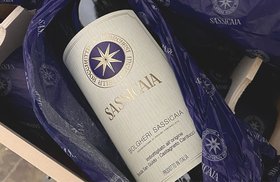
Grange vs. Sassicaia Both are iconic wines that redefined their national wine identities. Sassicaia currently has stronger market momentum (surging to #3 on the Liv-ex Power 100) and lower prices per bottle ($200-350 vs $700-800 for Grange). Grange offers superior auction premiums on historic vintages and greater geographic diversification. For an Italian-Australian barbell strategy, hold both.
Grange vs. Napa cult wines: Screaming Eagle, Harlan Estate, and Opus One are Grange's closest New World comparables. Screaming Eagle commands vastly higher prices ($23,000+ per bottle) with minimal liquidity — it's more trophy than tradeable asset. Opus One is more accessible (~$400-500) but lacks Grange's seven-decade track record and perfect-score history. Grange offers the best balance of accessibility, proven appreciation, and global brand recognition in the non-European segment.
Other Penfolds Investment Wines
While Grange is the flagship, Penfolds produces a deep portfolio of wines that warrant investor attention.
Bin 389 Cabernet Shiraz — Affectionately called "Baby Grange" because it ages in the same American oak hogsheads used for Grange the previous vintage. Starting under $50 per bottle, Bin 389 offers the most accessible entry point into Penfolds collecting. The 2018 vintage scored 97 points from James Suckling, who called it "perhaps the greatest Bin 389 we've seen to date." Over time, well-cellared back vintages of Bin 389 have shown steady appreciation on the secondary market — not at Grange levels, but with far lower capital outlay.
RWT Barossa Valley Shiraz — Aged in French oak (unlike Grange's American oak), RWT offers a different stylistic expression of premium Barossa Shiraz. Prices typically range from $100-150 per bottle. Strong critical scores and growing collector interest make this an emerging investment-grade wine.
Bin 707 Cabernet Sauvignon — Penfolds' finest Cabernet, produced only in vintages where the fruit meets the standard (it was not made in 2020, for instance). Prices around $150-250, with strong collectibility among Australian wine enthusiasts.
G Series (G3, G4, G5) — Ultra-limited multi-vintage Grange blends, with only 2,500 bottles produced per release. The G4 received a perfect 100 points from James Suckling. These are rare collector's pieces that trade at significant premiums to standard Grange.
Quantum Bin 98 Cabernet Sauvignon — The inaugural 2018 release received 100 points from The Somm Journal. Part of Penfolds' ambitious "Wine of the World" program, Quantum represents the estate's push toward global prestige beyond the Australian category.
How to Invest in Penfolds Grange
Grange's international distribution through La Place de Bordeaux means the wine trades actively across European, Asian, and Australian markets. However, for individual investors, the most effective approach combines several elements: access to the global secondary market (not just Australian domestic auctions), professional bonded storage that protects provenance and avoids tariff exposure, verified authentication (counterfeit Grange exists, particularly for older vintages), and insurance against breakage and loss.
Vinovest can include Grange in your investment portfolio alongside wines from Bordeaux, Burgundy, Italy, and other regions — providing the geographic diversification that separates sophisticated wine portfolios from those concentrated entirely in European wines. Professional sourcing, bonded warehouse storage, and provenance verification are all handled through the platform.
Whether you're starting with a case of the 2018 (the five-100-point vintage) or targeting back vintages with proven appreciation potential, the key is ensuring your wine is stored in conditions that preserve both its quality and its investment value.
Frequently Asked Questions
What grape is Penfolds Grange made from?
Grange is made primarily from Shiraz, typically 94-100% of the blend, with occasional small additions of Cabernet Sauvignon (0-6% depending on the vintage). The grapes are sourced from multiple premium vineyards across South Australia, primarily Barossa Valley, McLaren Vale, Clare Valley, and the historic Magill Estate.
How much does Penfolds Grange cost?
Current-release Grange typically costs $700-800 per bottle at retail. Back vintages vary enormously: strong recent vintages (2008-2018) trade between $600-900 at auction, while historic trophy vintages from the 1950s-1970s can sell for $5,000-$150,000+ per bottle. The smartest approach is often buying high-scoring back vintages at auction, where prices can sit 20-40% below retail.
How long can Penfolds Grange age?
The best Grange vintages can age for 50 years or more. The 1951 and 1952 vintages have been tasted in the 2020s and remain vibrant. Most modern vintages (2008 onward) are drinking well from 10-30 years after the vintage date, with the finest continuing to improve well beyond that. Penfolds' own "Rewards of Patience" tastings regularly demonstrate the extraordinary longevity of wines spanning seven decades.
What does "Grange Hermitage" mean?
Grange was labeled as "Penfolds Grange Hermitage" until the 1989 vintage. The name referenced Hermitage, the famous Rhône Valley appellation — Schubert was inspired by both Bordeaux and Rhône traditions. EU regulations eventually required Australian producers to stop using European geographical names, so the "Hermitage" was dropped from the 1990 vintage onward.
Is Penfolds Grange a good investment?
Grange is the strongest investment wine from outside Europe, with unique advantages: 30+ perfect scores, First Growth classification from Liv-ex, La Place de Bordeaux distribution, and extraordinary auction premiums on historic vintages (2-2.7x Liv-ex valuations at the 2025 Bill Koch sale). However, not every vintage at retail prices will deliver short-term gains. The best approach is to focus on perfect-score vintages near release and high-scoring back vintages at secondary market prices. As a long-term hold (15-30+ years) with proper storage, top Grange vintages have a strong track record of meaningful appreciation.
Why is Penfolds Grange so expensive?
Grange's pricing reflects its unique position as the only Southern Hemisphere wine with First Growth status, 70+ years of unbroken production, over 30 perfect scores, Heritage Icon classification, and global collector demand spanning Europe, North America, and Asia-Pacific. The wine's multi-vineyard sourcing ensures consistent quality, while its distribution through La Place de Bordeaux gives it access to the world's most established fine wine trade networks.
Add Penfolds Grange to your global wine portfolio. Start building with Vinovest — professionally sourced, bonded storage, and full provenance documentation.