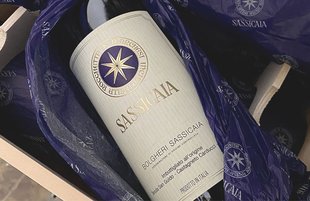
Sassicaia Wine: The Complete 2026 Guide to Italy's Greatest Investment Wine
Sassicaia is the wine that changed Italy forever. Before the 1968 vintage hit the market, Italian wine was synonymous with Chianti in straw-wrapped bottles and simple table wines. After Sassicaia, Italy stood shoulder to shoulder with Bordeaux's greatest estates — and in today's investment market, it's arguably outperforming them.
The numbers tell the story. In the 2025 Liv-ex Power 100 — the definitive ranking of the world's most traded fine wine brands — Tenuta San Guido (Sassicaia's producer) surged from #57 in 2023 to #3, behind only Dom Pérignon and Château Cheval Blanc. Sassicaia is the sixth most searched wine on Wine-Searcher globally and the #1 most searched Italian wine. The 2016 vintage, released at approximately $230 per bottle, now trades above $480 — a 108% return in under nine years. And the 2018 vintage has rebounded 11.5% from its 2025 low, with recent trades exceeding market valuations.
For investors, Sassicaia occupies a rare sweet spot: iconic enough to guarantee liquidity, accessible enough that the secondary market moves in volume, and consistent enough across vintages that even non-trophy years deliver strong returns. Whether you're a wine enthusiast exploring Tuscany's greatest wine or an investor seeking the best risk-adjusted returns in Italian fine wine, this guide covers everything you need to know.
Further reading
- Want to invest in some of the finest wines in the world? Check out this Detailed Article To Learn Everything About Wine Investment.
- Dive into the world of Italian Wines or try some of the Best Grenache Bottles.
The Story Behind Sassicaia
The Birth of the Super Tuscan Movement
The story begins in the 1940s when Marchese Mario Incisa della Rocchetta — an Italian nobleman who had married into the family that owned Tenuta San Guido, a vast estate near the Tuscan coast — planted Cabernet Sauvignon and Cabernet Franc cuttings on his property. The cuttings were rumored to originate from Château Lafite Rothschild, though this has never been conclusively proven.
For two decades, Mario made wine from these grapes purely for private family consumption. The wines were rough, tannic, and nothing like the polished product we know today. But Mario's son Nicolò and nephew Piero Antinori (who would later create Tignanello and Solaia) recognized the potential. They convinced Mario to bring in Giacomo Tachis, one of Italy's most brilliant oenologists, to refine the winemaking.
Tachis introduced French oak barrique aging — revolutionary for Italy at the time — and the 1968 vintage became the first Sassicaia to be sold commercially. The Italian wine establishment was not impressed. Because the wine used French grape varieties rather than the approved local Sangiovese, it could only be classified as "Vino da Tavola" — Italy's lowest wine classification, alongside the cheapest table wines.
The 1978 Blind Tasting That Changed Everything
The turning point came in 1978 when the 1972 Sassicaia was entered into Decanter magazine's blind tasting of the world's greatest Cabernet-based wines. Sassicaia competed against 33 wines from Bordeaux, California, and Australia — and won first place. A "table wine" from an obscure Italian coastal estate had beaten the finest wines from the most prestigious regions on earth.
The result sent shockwaves through the wine world. Within years, other Tuscan producers began planting international varieties and producing wines outside the traditional DOC regulations, creating the movement now known as "Super Tuscans." Tignanello, Ornellaia, Masseto, and Solaia all followed in Sassicaia's wake.
Recognition eventually caught up with reality. In 1994, Sassicaia was granted something unprecedented in Italian wine: its own DOC denomination — DOC Bolgheri Sassicaia. To this day, it remains the only single estate in Italy with this distinction.
Tenuta San Guido Today
The estate is now managed by the third generation of the Incisa della Rocchetta family, with Priscilla Incisa della Rocchetta serving as president. The winemaking team maintains the same philosophy that Giacomo Tachis established: Cabernet Sauvignon dominates the blend (typically 85%), with Cabernet Franc providing aromatic complexity (typically 15%). The grapes come from vineyards planted at approximately 400 meters altitude on Bolgheri's coastal hills, where the Mediterranean climate — warm days, cool sea breezes at night — creates ideal conditions for full phenolic ripeness without loss of acidity.
Annual production is approximately 180,000 bottles — substantial by Burgundy standards but modest compared to Bordeaux First Growths, which can produce 200,000-300,000 bottles per vintage. This production level is critical for investment: it's enough to support active secondary market trading (liquidity) but limited enough to maintain scarcity pressure on prices.
What Does Sassicaia Taste Like?
Sassicaia is often described as an Italian interpretation of Bordeaux — but that comparison undersells its distinctiveness. While it shares the structural backbone of great Médoc wines, Sassicaia possesses a Mediterranean warmth and generosity that is unmistakably Tuscan.
Young Sassicaia (1-5 years) presents intense aromas of blackcurrant, black cherry, and blueberry, layered with notes of cedar, graphite, and fresh herbs. The palate is powerful and structured, with firm but fine-grained tannins and a vibrant acidity that signals exceptional aging potential. There's often a distinctive mintiness — a hallmark of the Bolgheri terroir — that adds freshness and complexity.
With age (10-20 years), Sassicaia evolves dramatically. The primary fruit recedes, replaced by complex secondary aromas of tobacco, leather, tar, dried herbs, and truffle. The tannins soften and integrate, and the wine develops a silky, almost creamy texture that belies its structural power. Great vintages can age magnificently for 30-40 years, with the finest examples (1985, 2006, 2016) still improving well beyond their third decade.
The wine is typically aged for 24 months in French oak barriques (225-liter barrels), followed by additional bottle aging before release. The oak influence is restrained and well-integrated — enhancing rather than dominating the fruit expression.
Sassicaia as an Investment
Why Sassicaia Is the Smartest Italian Wine Investment
The investment case for Sassicaia rests on several structural advantages that few other wines can match simultaneously.
Liquidity. This is Sassicaia's greatest investment strength. Many wines appreciate in value but are nearly impossible to sell because so few bottles trade on the secondary market. Sassicaia's combination of production volume (180,000 bottles), global brand recognition, and broad collector base means there is always a market for your bottles. It is consistently among the most actively traded wines on Liv-ex by both volume and value. For investors, this means you can enter and exit positions with confidence — you won't be stuck holding wine that nobody wants to buy.
Accessible entry point. Current vintages of Sassicaia trade between $200-$350 per bottle — a fraction of the cost of comparable investment-grade wines from Bordeaux or Burgundy. A case of Sassicaia costs roughly the same as a single bottle of DRC Village Vosne-Romanée. This accessibility means more collectors can participate, which in turn supports healthy trading volumes and price discovery.
Consistent quality. Unlike some regions where quality varies dramatically from year to year, Sassicaia delivers investment-grade quality with remarkable consistency. Even vintages that receive "only" 94-95 points from critics (rather than 97-100) tend to appreciate well on the secondary market. This consistency reduces vintage-selection risk for investors.
Proven appreciation. Sassicaia's 2016 vintage appreciated from its release price of approximately €130 to over €450 — a roughly 250% increase. The 2015 vintage, named Wine Spectator's Wine of the Year in 2018, delivered over 100% returns in five years (21.6% annualized). The 2021 vintage jumped 38% immediately after receiving 100 points from Wine Advocate.
Current Market Position (2025-2026)
The broader fine wine market has been in a correction since its September 2022 peak, with prices across most regions declining 25-30% from highs. Sassicaia has been more resilient than most. The Liv-ex Italy 100 index — which tracks the ten most recent vintages of Sassicaia alongside other leading Italian wines — has declined less than the broader Fine Wine 100 over both one-year and two-year periods, while maintaining positive five-year returns of approximately 9.8%.
Recent trading activity shows encouraging signs of recovery. The 2018 Sassicaia has traded above £1,070 per six-bottle case, well ahead of the current market valuation of £1,000, and has rebounded 11.5% from its 2025 low. Asian collectors — particularly in Hong Kong and Singapore — have increased allocations to Sassicaia and other Super Tuscans by over 30% since 2019, providing a demand tailwind that European wines increasingly rely on.
Perhaps most significantly, Sassicaia's rise on the Liv-ex Power 100 from #57 to #3 in just two years reflects a structural shift in collector behavior, not a temporary spike. As the fine wine market recovers from its correction, wines that maintained trading volume and brand strength during the downturn — exactly what Sassicaia did — tend to lead the recovery.
Best Sassicaia Vintages for Investment
The Trophy Vintages
1985 — The vintage that put Sassicaia on the map. This was the first Italian wine ever to receive a perfect 100-point score from Robert Parker. A case sold for $18,375 at Sotheby's in 2015. Individual bottles now trade around $2,500-$3,000. Purely a collector's trophy at this point — astronomical prices but extremely rare and essentially irreplaceable.
2016 — The modern benchmark. Scored 100 points from Wine Advocate, this vintage rocketed from its release price of approximately €130/bottle to over €450. It is broadly considered one of the greatest Sassicaias ever produced — intensely concentrated, perfectly balanced, with decades of aging potential ahead. Cases trade near £3,500 on Liv-ex. If you can still find allocations, this is a long-term hold with significant further upside as bottles are consumed.
Investment-Grade Vintages
2006 — A legendary year across Tuscany. The 2006 Sassicaia is considered one of the top five vintages ever produced. Exceptional concentration and complexity, with a drinking window extending past 2040. This vintage consistently outperforms the market.
2010 — Outstanding vintage with intense structure and longevity. Considered among Sassicaia's finest, with 97-point scores from multiple critics. The drinking window extends to 2050+, meaning scarcity will continue building for decades.
2015 — Wine Spectator's Wine of the Year (2018). This recognition created a massive demand spike and delivered 100%+ returns over five years. Now entering its ideal drinking window, which typically accelerates consumption and tightens supply. Current pricing around $300-350 per bottle.
2019 — Excellent critical reception with outstanding balance and freshness. Still relatively early in its appreciation cycle, offering a good entry point for investors with a five to ten year horizon.
2021 — Received 100 points from Wine Advocate, triggering a 38% price jump. Widely considered one of the most outstanding recent vintages — exceptional concentration, freshness, and complexity. Pre-release investment yielded immediate returns for early buyers.
Value Opportunity Vintages
2017 — Often overlooked because it followed the spectacular 2016, the 2017 Sassicaia received excellent scores (97+ points) and currently trades at accessible prices below $250. The vintage is approaching its ideal drinking window (2025-2040), making it a potential value play.
2018 — Strong scores and rebounding market prices (up 11.5% from its 2025 low). Currently trading around $200-250 per bottle, this vintage offers one of the best entry points for new Sassicaia investors.
2022 — Currently available in pre-sale (en primeur) at attractive pricing. Has received 97+ from Wine Advocate with Vinous and James Suckling scores still pending. Historically, buying Sassicaia before all critic scores are published has been an effective strategy for capturing early appreciation.
How Sassicaia Compares to Other Investment Wines
Sassicaia vs. Bordeaux First Growths
The comparison is illuminating. Bordeaux First Growths (Lafite, Latour, Margaux, Haut-Brion, Mouton Rothschild) remain the anchors of fine wine investment, but Sassicaia offers several advantages for modern investors.
On price accessibility, a current-vintage First Growth typically costs $400-800 per bottle, while Sassicaia trades at $200-350 — roughly half the price for comparable or better recent returns. On liquidity, both trade actively on Liv-ex, but Sassicaia's lower price point means more buyers can participate, supporting broader market depth. On recent performance, Sassicaia has outperformed most Bordeaux over five-year periods, as Bordeaux prices have corrected more sharply from their 2022 peaks.
The counterargument: Bordeaux First Growths have centuries of track record and deeper institutional demand. For portfolio construction, the optimal approach may be to hold both — Bordeaux for stability and Sassicaia for growth. For a comprehensive look at Bordeaux, see our guide to investing in Bordeaux wine.
Sassicaia vs. Other Super Tuscans
Among the Big Five Super Tuscans — Sassicaia, Tignanello, Ornellaia, Masseto, and Solaia — Sassicaia stands out for liquidity and consistency. Masseto commands higher prices (it's the "Pétrus of Italy") but trades in much lower volumes, making it harder to buy and sell. Tignanello is more affordable but lacks Sassicaia's brand prestige and critical track record. Ornellaia and Solaia fall somewhere in between. For an in-depth look at the Super Tuscan category, read our guide to investing in Italian wine.
Sassicaia vs. Barolo
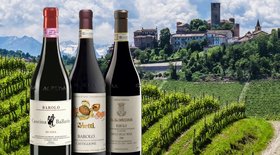
Both are Italian investment icons, but they serve different functions. Barolo is made from Nebbiolo and represents pure Italian terroir expression; Sassicaia uses Bordeaux varieties and bridges the French-Italian divide. Barolo's top producers (Giacomo Conterno, Bruno Giacosa) can match Sassicaia's returns but with significantly lower liquidity. The investor who holds both captures different segments of the Italian market and different collector demographics.
How to Invest in Sassicaia
The traditional approach to buying Sassicaia — cultivating relationships with Italian wine merchants, navigating allocation lists, and arranging bonded storage — remains viable but time-intensive. Modern platforms have simplified the process considerably.
Through Vinovest, you can build a portfolio that includes Sassicaia alongside other investment wines from around the world. The platform handles sourcing at competitive market prices, professional storage in bonded warehouses (which avoids tariff and tax exposure until the wine is sold or delivered), full insurance against breakage and loss, and authentication verification. This approach lets you focus on the investment decision — which vintages, what allocation — rather than the logistics.
Whether you're starting with a single case of 2018 Sassicaia as your entry into Italian wine investment or building a diversified portfolio across vintages and regions, the key is ensuring proper storage, verified provenance, and access to liquid secondary markets when it's time to sell.
Frequently Asked Questions
What does Sassicaia mean?
"Sassicaia" translates roughly to "the place of many stones" in Italian, referring to the stony, gravel-rich soils of the Bolgheri estate where the vineyards are planted. These rocky soils provide excellent drainage — similar to the gravelly soils of the Médoc in Bordeaux — which forces vine roots deep and produces concentrated, complex fruit.
What grapes are in Sassicaia?
Sassicaia is a blend of approximately 85% Cabernet Sauvignon and 15% Cabernet Franc. The exact proportions vary slightly by vintage depending on growing conditions. This blend mirrors the classic composition of Left Bank Bordeaux wines, though the Tuscan terroir gives Sassicaia a distinctly Mediterranean character.
How long should you age Sassicaia?
Most experts recommend waiting at least 10 years before opening a Sassicaia. Great vintages (2006, 2010, 2016) can age gracefully for 30-40 years or more. The ideal drinking window for most recent vintages is approximately 10-25 years from the vintage date.
Is Sassicaia a good investment?
Sassicaia is widely considered the best risk-adjusted wine investment in Italy. Its combination of global brand recognition, consistent quality, accessible pricing, and deep secondary market liquidity make it an ideal core holding for any wine investment portfolio. Recent vintages have delivered returns of 10-20% annualized, and the wine's structural advantages suggest continued strong performance.
How much does Sassicaia cost?
Current-vintage Sassicaia (2020-2022) typically costs $200-350 per bottle. Trophy vintages like 2016 (100 points) trade at $450-500+. Historic vintages like 1985 (the first 100-point Italian wine) command $2,500-3,000 per bottle.
Why is Sassicaia so expensive?
Sassicaia's pricing reflects its unique combination of quality, scarcity, and brand prestige. Annual production of approximately 180,000 bottles is modest relative to global demand from collectors in Europe, North America, and Asia. Its status as the original Super Tuscan, its own DOC appellation, and its consistent 95-100 point critical scores all support premium pricing.
Ready to add Sassicaia to your investment portfolio?
Start building your wine collection with Vinovest and gain access to investment-grade Italian wines sourced at market prices, professionally stored, and fully insured.