Screaming Eagle Wine: The Complete Investment Guide to Napa Valley's Most Iconic Cult Cabernet (2026)
Screaming Eagle is the definitive American cult wine — a Napa Valley Cabernet Sauvignon that transformed from an unknown 1992 debut into bottles that routinely command $3,000-$7,000+ and set auction records that rival First Growth Bordeaux. When a 6-liter Imperial of 1992 Screaming Eagle sold for $500,000 at the Napa Valley Wine Auction in 2000, it announced to the world that California could produce wines of extraordinary investment caliber.
For investors, Screaming Eagle represents the pinnacle of American wine investment: extreme scarcity (just 400-800 cases annually), unwavering critical acclaim (six perfect 100-point scores), and a closed mailing list that ensures perpetual excess demand. Understanding how to acquire, value, and profit from Screaming Eagle is essential for any serious wine investment portfolio.
This guide covers everything investors need to know about Screaming Eagle in 2026: current pricing across vintages, investment performance data, the portfolio of wines, acquisition strategies, and how this Napa icon compares to other trophy wine investments.
Further reading
- Discover the 15 Outstanding Cabernet Sauvignon Wines to buy in 2024.
- Check out these 15 Napa Valley Cult Wines and tips in how to invest in them.
Understanding Screaming Eagle's Investment Value
Why Screaming Eagle Commands Extraordinary Prices
- Extreme Production Scarcity
Screaming Eagle produces just 400-800 cases (4,800-9,600 bottles) of its flagship Cabernet Sauvignon annually. Compare this to:
- Château Lafite Rothschild: ~20,000 cases annually
- Opus One: ~25,000 cases annually
- Château Margaux: ~12,000 cases annually
This structural scarcity creates fundamental supply/demand imbalance that supports premium pricing.
- Closed Mailing List
The Screaming Eagle mailing list hasn't accepted new members for over 25 years. The only way to acquire bottles is through:
- Secondary market (auction, retailers)
- Inheritance or gift from existing list member
- Extremely rare list openings
This creates permanent excess demand — thousands of would-be buyers compete for a few hundred cases annually.
- Consistent Critical Excellence
Screaming Eagle has received six perfect 100-point scores from Robert Parker/Wine Advocate for vintages: 1992, 1997, 2007, 2010, 2012, and 2015. Additional 100-point vintages include the 2018. No other Napa Valley estate has matched this consistency at the highest level.
Scores below 95 are virtually nonexistent in Screaming Eagle's history.
- The $500,000 Moment
At the 2000 Napa Valley Wine Auction, a 6-liter Imperial of 1992 Screaming Eagle sold for $500,000 — the highest price ever paid for a bottle of American wine. While this was a charity auction (with prices inflated accordingly), it permanently established Screaming Eagle's trophy status and brand equity.
- Ownership Stability
Since 2009, Screaming Eagle has been solely owned by Stan Kroenke, the billionaire sports and real estate entrepreneur who also owns the Los Angeles Rams, Arsenal FC, and Bonneau du Martray in Burgundy. This stable, well-capitalized ownership ensures continuity and long-term brand stewardship.
The Screaming Eagle Portfolio
Screaming Eagle produces three wines, each with distinct investment characteristics:
Screaming Eagle Cabernet Sauvignon (Flagship)
The wine that built the legend. Pure Oakville Cabernet Sauvignon of extraordinary concentration, elegance, and longevity.
Production: 400-800 cases annually (varies by vintage)
Composition: Predominantly Cabernet Sauvignon with small amounts of Merlot and Cabernet Franc
2026 Pricing: $2,500-$4,500 per bottle (recent vintages); $5,000-$15,000+ (100-point vintages)
Wine-Searcher Average: $3,500-$4,000 (all vintages combined)
Tasting Profile: Not about power (despite the name) but elegance and purity. Sweet red and black fruit, crushed stone minerality, subtle oak integration, velvet textures, and extraordinary length. Great vintages age beautifully for 25-40+ years.
Investment Thesis: The flagship is the core investment holding. Focus on 100-point vintages (1992, 1997, 2007, 2010, 2012, 2015, 2018) for maximum appreciation potential, or recent releases (2019-2022) for entry-level positions with runway ahead.
Second Flight (Second Wine)
Introduced in 2006, Second Flight is made from younger vines and declassified lots not meeting Screaming Eagle standards. Despite "second wine" status, quality is exceptional — Robert Parker has awarded 96 points to multiple vintages.
Production: Limited (less than flagship)
2026 Pricing: $500-$700 per bottle
Composition: Merlot-dominant blend (distinguishes it from Cabernet-focused flagship)
Investment Thesis: Second Flight offers Screaming Eagle provenance at roughly 15% of flagship pricing. For investors, it provides portfolio entry and diversification. Appreciation potential exists as the wine gains recognition, though returns will likely trail the flagship.
Screaming Eagle Sauvignon Blanc
A small-production white wine offering another dimension to the estate's portfolio.
Production: Extremely limited
2026 Pricing: $300-$500 per bottle
Investment Thesis: Collector interest, not primary investment vehicle. Include for portfolio completeness if available.
2026 Pricing Guide: Screaming Eagle by Vintage
100-Point Vintages (Trophy Status)
Vintage | Parker Score | 2026 Price Range | Investment Notes
1992 | 99 (debut) | $7,000-$15,000+ | Inaugural vintage; museum pieces
1997 | 100 | $6,000-$10,000 | First perfect score; legendary status
2007 | 100 | $4,500-$7,000 | Upgraded from 96-98 to 100; showed 66% appreciation
2010 | 100 | $4,500-$6,500 | Parker's Perfect Napa dozen; 46% rise in 6 months
2012 | 100 | $4,000-$5,500 | Strong recent vintage
2015 | 100 | $4,000-$5,000 | Most recent 100-pointer with availability
2018 | 100 | $3,800-$4,500 | Current release with appreciation runway
Strong Investment Vintages (95-99 Points)
Vintage | Parker Score | 2026 Price Range | Investment Notes
2019 | 98+ | $3,500-$4,200 | Exceptional quality; current release
2016 | 98 | $3,500-$4,000 | Structured, age-worthy
2013 | 97 | $3,200-$3,800 | Value relative to neighbors
2006 | 98 | $3,500-$4,500 | Cool vintage; complex structure
2002 | 98 | $4,000-$5,000 | Legendary Napa vintage
Historic Vintages
Vintage | 2026 Price Range | Notes
1998 | $4,200-$7,500 | +72% appreciation (Aug 2021-Jul 2023)
1994 | $5,000-$8,000 | Early vintage; collector status
1993 | $5,500-$9,000 | Second vintage rarity
Historical Investment Performance
Screaming Eagle has delivered strong, consistent appreciation across its 30+ year history:
Documented Appreciation Examples
1992 Vintage: Release price ~$75 → Current value $7,000-$15,000+ (9,000%+ appreciation over 30+ years)
1997 Vintage: Release price ~$125 → Current value $6,000-$10,000 (4,700%+ appreciation)
1998 Vintage: $4,248 (August 2021) → $7,310 (July 2023) = +72% in 23 months
2007 Vintage: After Parker upgrade (96-98 → 100), value rose 66% within months
2010 Vintage: After inclusion in Parker's "Perfect Napa Dozen," value increased 46% in six months
These returns demonstrate the power of critical acclaim and scarcity in driving wine investment returns.
The Robert Parker Effect
Robert Parker's influence on Screaming Eagle prices has been particularly pronounced:
October 2013 "Perfect Napa Dozen": Parker released his list of twelve 100-point California Cabernets. Several Screaming Eagle vintages appeared, triggering immediate price increases:
- 2010 vintage: +46% within six months
- Overall Screaming Eagle demand surge
- Secondary market premiums expanded
Score Upgrades: When Parker upgraded the 2007 from 96-98 to a perfect 100, values jumped 66% within months. This demonstrates how critical reassessment can create value inflection points.
Lesson for Investors: Monitor Wine Advocate and other major critics for score updates. Upgrades on existing holdings create appreciation; downgrades (rare for Screaming Eagle) warrant attention.
Price Evolution from Release
Original mailing list prices have increased dramatically over 30 years:
- 1992 release: $75 per bottle
- 1995: $125 per bottle (Jean Phillips raised prices)
- 2006 (Phillips sale to Kroenke/Banks): ~$300 per bottle
- 2015: ~$750 per bottle (estimated)
- 2026 mailing list: Estimated $1,000+ per bottle
Even at mailing list prices, Screaming Eagle commands premiums that would have seemed extraordinary a decade ago. This pricing power demonstrates the brand's investment strength.
Comparison to Other Asset Classes
Over the past decade, Screaming Eagle has outperformed many traditional investments:
Asset | 10-Year Performance | Notes
Screaming Eagle (100-pt vintages) | +100-300% | Vintage dependent
S&P 500 | +150-200% | With dividends reinvested
Gold | +30-50% | Inflation hedge
Real Estate (US median) | +50-80% | Location dependent
Fine Wine Index (Liv-Ex 100) | +40-60% | Diversified wine basket
While past performance doesn't guarantee future results, Screaming Eagle's track record compares favorably to traditional asset classes.
Investment Thesis for 2026
Bulls argue:
- Structural scarcity (production cannot meaningfully increase)
- Closed mailing list ensures perpetual excess demand
- Six 100-point vintages demonstrate consistent quality
- Stan Kroenke's stable, well-capitalized ownership
- Growing international recognition, particularly in Asia
- American trophy wine status; cultural icon
- Recession resilience of ultra-luxury goods
- Consumption-driven supply reduction
Bears argue:
- Concentration risk (single estate, single region)
- Style dependence (requires appreciation for Napa Cabernet style)
- Competition from other cult wines (Harlan, Scarecrow, Colgin)
- Economic sensitivity (ultra-luxury discretionary spending)
- High capital requirements per bottle ($3,000+ minimum)
- Climate risk affecting Napa Valley
- Generational preference shifts (younger collectors may favor different styles)
Our Assessment: The bull case is stronger. Structural scarcity, closed distribution, and consistent quality create durable competitive advantages that justify premium valuations. Risks are manageable through diversification.
Comparison: Screaming Eagle vs. Other Trophy Wines
vs. Domaine de la Romanée-Conti (DRC)
Factor | Screaming Eagle | DRC
Production | 400-800 cases | ~7,000 cases (all wines)
Price Range | $3,000-$15,000 | $1,200-$35,000+
Region | Napa Valley | Burgundy
Grape | Cabernet Sauvignon | Pinot Noir
Track Record | 30+ years | 200+ years
Liquidity | Good | Excellent
100-Point Scores | 6 vintages | Multiple
Verdict: DRC offers deeper history and superior liquidity; Screaming Eagle offers American market strength and potentially higher percentage returns on early-vintage acquisitions.
vs. Château Pétrus
Factor | Screaming Eagle | Pétrus
Production | 400-800 cases | ~2,500 cases
Price Range | $3,000-$15,000 | $3,500-$8,000+
Region | Napa Valley | Pomerol, Bordeaux
Grape | Cabernet Sauvignon | Merlot
Track Record | 30+ years | 100+ years
Allocation Access | Virtually impossible | Difficult
Verdict: Similar scarcity profiles and price ranges. Pétrus offers longer track record; Screaming Eagle offers American market positioning and potentially greater appreciation on recent vintages.
vs. Other Napa Cult Wines
Wine | Production | Price Range | 100-Point Vintages
Screaming Eagle | 400-800 cases | $3,000-$15,000 | 6
Harlan Estate | ~1,800 cases | $1,000-$2,500 | 3
Scarecrow | ~800 cases | $800-$1,500 | 1
Colgin | ~1,500 cases | $500-$1,000 | 2
Opus One | ~25,000 cases | $400-$600 | 0
Verdict: Screaming Eagle commands significant premiums over other Napa cult wines due to production scarcity and critical consistency. For investors, this premium reflects genuine differentiation — not merely brand perception.
The Screaming Eagle Terroir
Understanding what makes Screaming Eagle special helps contextualize its investment value:
Oakville AVA Location
Screaming Eagle's 57-acre estate sits in the heart of Oakville, widely considered one of Napa Valley's premier appellations for Cabernet Sauvignon. The AVA produces some of America's most celebrated wines, including Opus One, Harlan Estate, and multiple First Growth-comparable estates.
Soil Composition: Deep, well-drained alluvial soils with volcanic deposits. This combination provides excellent drainage while retaining sufficient moisture for vine health.
Microclimate: The estate benefits from a unique microclimate that allows early ripening — Screaming Eagle grapes are often among the first harvested in Napa Valley. This extended hang time produces concentrated fruit with balanced acidity.
Elevation: The vineyard sits at approximately 150-200 feet elevation, capturing morning sun while avoiding excessive afternoon heat.
Winemaking Philosophy
What happens in the winery reinforces terroir expression:
Farming: Meticulous attention to vine management. Specific techniques are closely guarded, but the estate is known for:
- Hand harvesting at optimal ripeness
- Multiple sorting passes for quality control
- Low yields per vine for concentration
Vinification: Traditional Bordeaux-inspired approach:
- Extended maceration for color and tannin extraction
- French oak aging (high percentage new oak)
- Careful blending to achieve signature style
- Extended bottle aging before release
Style: Despite the aggressive name, Screaming Eagle is not about power. The wines are remarkably elegant, showing:
- Sweet red and black fruit purity
- Crushed stone minerality
- Subtle oak integration (despite new barrel usage)
- Velvet textures
- Extraordinary length and balance
- Exceptional aging potential (25-40+ years for great vintages)
This combination of exceptional terroir, meticulous farming, and refined winemaking creates wines that justify investment-grade pricing.
How to Acquire Screaming Eagle
The Mailing List Reality
Screaming Eagle's mailing list has been closed to new members for over 25 years. The estate rarely opens the list, and when it does, demand vastly exceeds available spots.
What we know about the list:
- Members receive allocation offers (typically 3-6 bottles annually)
- Allocations must be accepted (use-it-or-lose-it policy)
- List membership occasionally transfers through estate sales
- The estate controls all allocation decisions
Practical reality: Most investors will never obtain mailing list access. Plan for secondary market acquisition.
Auction Strategy
Auctions provide the primary acquisition channel for most collectors:
Leading Auction Houses for Screaming Eagle:
- Acker Merrall & Condit (strong California expertise)
- Hart Davis Hart (Chicago-based; excellent Napa offerings)
- Sotheby's (global reach)
- Christie's (international network)
- Heritage Auctions (growing wine division)
- Zachys (regular Napa offerings)
Auction Best Practices:
- Research recent hammer prices before bidding
- Factor buyer's premium (20-25%) into maximum bids
- Review condition reports carefully (fill levels, label condition)
- Confirm provenance documentation
- Consider complete cases (better provenance, potential premium)
Expected Premiums: Current vintages (2018-2022) typically sell at 10-30% above retail equivalent; 100-point vintages command 20-50%+ premiums.
Specialist Retailers
Some retailers maintain Screaming Eagle inventory:
US-Based:
- Benchmark Wine Group (Napa specialist)
- K&L Wine Merchants (occasional inventory)
- Woodland Hills Wine Company
- Premier Cru (California focus)
UK-Based:
- Lay & Wheeler Trading
- Berry Bros. & Rudd
- Fine + Rare
Pricing: Retail typically runs 10-20% above auction for convenience and immediate availability.
Investment Platforms
Platforms like Vinovest provide managed access:
Advantages:
- Professional authentication
- Climate-controlled bonded storage
- Portfolio management and diversification guidance
- Exit assistance when ready to sell
Considerations: Management fees apply; may have limited inventory of specific vintages.
Authentication and Counterfeiting
Given Screaming Eagle's values, authentication is critical:
Known Counterfeiting Concerns
Screaming Eagle has been counterfeited, though perhaps less extensively than European trophy wines (DRC, Pétrus). The brand's relative youth (1992 debut) means fewer "ancient" bottles circulating with questionable provenance.
Authentication Checklist
Provenance documentation: Request complete chain of custody
Label inspection: Correct printing quality, font, vintage-specific details
Capsule examination: Proper materials, application, estate-specific markings
Cork condition: Consistent with stated age
Fill levels: Appropriate for vintage
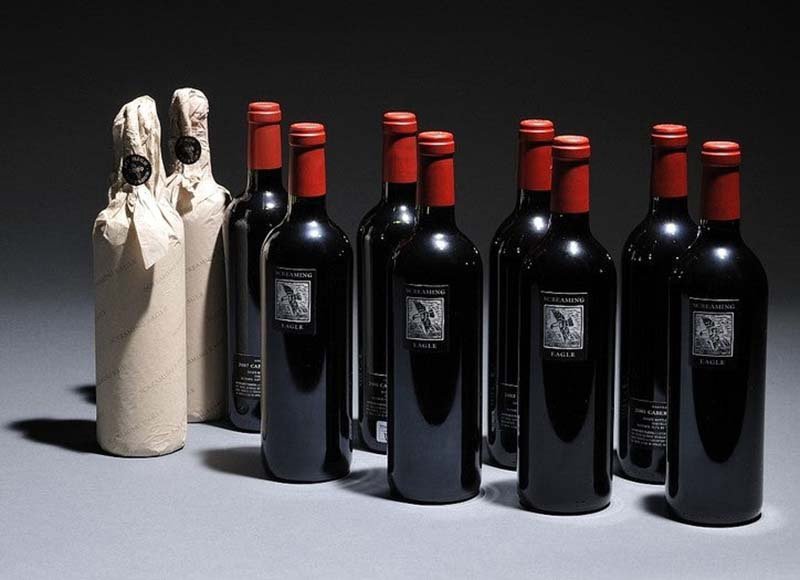
Case verification: Original wooden cases (OWC) strengthen provenance
Professional Authentication
For high-value purchases ($5,000+), consider professional authentication services. The cost (typically $100-$300 per bottle) is insignificant relative to downside risk.
Red Flags
- Prices significantly below market (too good to be true)
- Sellers unwilling to provide provenance
- Bottles from unknown or recently-emerged collections
- Label or capsule inconsistencies
- Unusual fill levels for vintage
Storage Requirements
Investment-grade Screaming Eagle requires precise storage:
- Temperature: 55°F (13°C), rock-stable
- Humidity: 65-70%
- Light: Complete darkness
- Position: Horizontal
- Vibration: Minimal
Professional Storage: Essential for investment bottles. Expect $15-$25 per case annually. Bonded storage provides provenance documentation and potential tax advantages.
Home Storage: Not recommended for investment. Even excellent home cellars may face provenance questions at sale.
Building a Screaming Eagle Portfolio
Understanding Vintage Selection for Investment
Not all Screaming Eagle vintages offer equal investment potential. Successful investors focus on vintages combining:
Critical acclaim (95+ points, ideally 100 from Parker/Wine Advocate)
Reasonable availability (bottles exist in secondary market)
Price relative to potential ceiling (room for appreciation)
Drinking window (years of evolution ahead supports holding)
Vintage Investment Tiers
Tier 1: 100-Point Trophy Vintages (1992, 1997, 2007, 2010, 2012, 2015, 2018)
- Highest capital requirement ($4,000-$15,000 per bottle)
- Strongest long-term appreciation history
- Most liquid at auction due to collector demand
- Recommended allocation: 40-60% of Screaming Eagle holdings
Tier 2: Strong Recent Vintages (2019, 2016, 2013, 2006, 2002)
- Moderate capital requirement ($3,000-$4,500 per bottle)
- Appreciation runway ahead as wines mature
- May achieve score upgrades (2007 precedent: 96-98 → 100)
- Recommended allocation: 30-40% of holdings
Tier 3: Value Positions (Second Flight, lesser-known vintages)
- Entry-level capital ($500-$3,000)
- Higher risk but potentially higher percentage returns
- Second Flight offers estate exposure at accessible pricing
- Recommended allocation: 10-20% of holdings
Entry Strategy ($15,000-$30,000)
For investors beginning Screaming Eagle acquisition:
- 1-2 bottles recent vintage (2019-2022): $7,000-$8,500
- 1 bottle Second Flight: $500-$700
- Professional storage setup: $200-$300 annually
- Reserve capital for auction opportunities: $5,000+
Focus: Establish position with recent vintages offering appreciation runway. Second Flight provides portfolio diversification at accessible pricing. Maintain auction watch for opportunistic 100-point vintage acquisition.
Recommended Timeline: 5-10 year holding period minimum. Recent vintages need time to develop track records and critical reassessment opportunities.
Growth Strategy ($50,000-$100,000)
For serious collectors building investment positions:
- 2-3 bottles 100-point vintages (2015, 2018): $8,000-$15,000
- 3-4 bottles strong recent vintages: $12,000-$16,000
- 1-2 bottles historic vintages (pre-2010): $8,000-$15,000
- Second Flight allocation (3-6 bottles): $2,000-$3,500
- Complete 3-bottle case if available: Premium for provenance
Focus: 100-point vintages anchor portfolio with proven appreciation. Recent vintages provide growth engine. Historic bottles demonstrate collection depth and attract auction house interest. Second Flight adds diversification without excessive capital concentration.
Recommended Timeline: 7-15 year holding period for optimal appreciation capture.
Collector Strategy ($250,000+)
For major collectors building trophy holdings:
- Vertical collection (10+ vintages): $50,000-$100,000
- Large formats (magnums if available): Extraordinary scarcity premium
- Multiple bottles of trophy vintages (1992, 1997): $30,000-$50,000
- Complete representation across portfolio wines (Cab, Second Flight, Sauvignon Blanc)
- OWC (original wooden cases) for maximum provenance strength
Focus: Trophy holdings signal collection importance to auction houses. Comprehensive verticals command significant premiums at sale. Large formats are extraordinarily rare (minimal production) and command corresponding premiums. OWC documentation strengthens provenance and presentation.
Recommended Timeline: 10-20+ year holding periods maximize appreciation and position for major auction event.
Diversification Considerations
While Screaming Eagle is exceptional, concentration in any single wine carries risk. Consider balancing with:
- Other Napa cult wines: Harlan Estate, Scarecrow, Colgin
- Bordeaux First Growths: Lafite, Latour, Margaux
- Burgundy Grand Crus: DRC, Leroy, Roumier
- Prestige Champagne: Dom Pérignon, Cristal, Krug
A diversified portfolio captures Screaming Eagle's upside while managing single-estate concentration risk.
The Bottom Line
Screaming Eagle represents the apex of American wine investment. The combination of extreme production scarcity (400-800 cases annually), closed mailing list access (no new members for 25+ years), consistent critical excellence (six 100-point vintages), and stable ownership creates a fundamentally sound investment thesis that has delivered extraordinary returns.
The Numbers Speak:
- 1992 vintage: $75 release → $7,000-$15,000+ today (9,000%+ appreciation)
- 1998 vintage: +72% in 23 months (August 2021 - July 2023)
- 2007 vintage: +66% following Parker upgrade to 100 points
- 2010 vintage: +46% in six months after "Perfect Napa Dozen" inclusion
For 2026, focus on:
- Recent 100-point vintages (2015, 2018) offering appreciation runway at "accessible" pricing
- Current releases (2019-2022) at relative value compared to historic bottles
- Auction acquisition with proper authentication and provenance verification
- Professional storage from acquisition through exit
Investment Allocation Recommendations
Conservative approach: 5-10% of alternative investment allocation to Screaming Eagle specifically, 15-25% to fine wine broadly
Aggressive approach: 15-25% of alternative investment allocation to Screaming Eagle and Napa cult wines, diversified across vintages and producers
Key Risks to Monitor
Single-estate concentration: Diversify across producers and regions
Authentication: Buy only from reputable sources with provenance
Storage integrity: Professional bonded storage essential
Market liquidity: Plan for 2-8 week sale processes
Economic sensitivity: Ultra-luxury markets can contract during severe downturns
Why Screaming Eagle Belongs in Serious Portfolios
The investment case for Screaming Eagle rests on structural advantages that persist regardless of market conditions:
Scarcity cannot be solved: You cannot create more Screaming Eagle. The estate's 57-acre vineyard, meticulous farming, and tiny production (400-800 cases) represent fixed capacity. As global wealth grows and new collectors enter the market, demand expands against static supply.
The mailing list is closed: Unlike most wines, Screaming Eagle cannot be acquired through normal retail channels. This closed distribution creates permanent excess demand that supports premium pricing.
Quality is proven: Six 100-point vintages across 30 years demonstrates consistency that few estates can match. Collectors buy with confidence knowing Screaming Eagle delivers.
Ownership is stable: Stan Kroenke's long-term, well-capitalized ownership ensures continuity. There's no succession risk, no financial pressure to expand production, no risk of quality compromise.
For investors seeking American wine exposure, Screaming Eagle is the benchmark. Its track record, structural scarcity, and trophy status justify premium valuations. The question isn't whether Screaming Eagle is expensive — it's whether you can acquire it at all.
Own Napa’s most allocated wines with a real strategy. Vinovest helps you source, document, and manage trophy bottles like Screaming Eagle as part of a diversified portfolio.