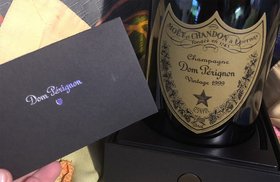
Dom Perignon: Complete Guide to Vintages, Prices, and Investment Potential in 2026
Dom Perignon is more than champagne. It is arguably the most recognized luxury wine brand on earth — a name that has graced royal weddings, presidential dinners, and James Bond films for nearly a century. But behind the celebrity endorsements and pop culture mystique is a genuinely extraordinary wine: a vintage-only prestige cuvée produced exclusively in exceptional years, aged for nearly a decade before release, and crafted from Grand Cru and Premier Cru vineyards that represent the finest terroir in Champagne.
Whether you are considering your first bottle, evaluating older vintages for your collection, or analyzing Dom Perignon as a serious investment asset, this guide covers everything you need to know in 2026 — from the history and winemaking philosophy to vintage-by-vintage analysis, current pricing, and the investment case for one of the world’s most iconic wines.
Further reading
- Discover how to Invest in Fine Wine, including valuable insights and how you can embark on this lucrative investment option.
- Discover everything about The Luxurious Dom Perignon 1993 — price, tasting notes, food pairings, and more.
- Navigate the world of Whiskey Investment like a pro with our tips and tricks.
The History of Dom Perignon
The brand takes its name from Dom Pierre Perignon, who lived from 1638 to 1715. He was a Benedictine monk who served as cellar master at the Abbey of Hautvillers in the Champagne region of northern France. Contrary to popular mythology, Dom Pierre Perignon did not invent champagne or discover how to make sparkling wine. What he did was arguably more important. He revolutionized winemaking quality in the region through systematic approaches to viticulture, blending, and cellar management that laid the foundation for modern Champagne production.
The first Dom Perignon vintage was produced in 1921 but was not released for sale until 1936, when it sailed to New York aboard the SS Normandie. The brand had been given by Champagne Mercier to Moët and Chandon in 1927 as part of a wedding between the two families, a gift that would become one of the most valuable brand assets in the history of wine.
Until the 1943 vintage, Dom Perignon was essentially a second release of standard Moët and Chandon vintage champagne. It was transferred into the distinctive 18th-century-style bottles after extended cellaring. From the 1947 vintage onward, Dom Perignon has been produced as a separate cuvée from the start, with its own dedicated vineyard sourcing, blending, and aging protocols.
Today, Dom Perignon operates under LVMH, the world’s largest luxury conglomerate. The house draws grapes exclusively from Grand Cru vineyards in Champagne, including Aÿ, Bouzy, Verzenay, Mailly, Chouilly, Cramant, Avize, and Le Mesnil-sur-Oger, along with the legendary Premier Cru of Hautvillers where Dom Pierre Perignon himself worked. Vincent Chaperon has served as Chef de Cave since 2019, succeeding Richard Geoffroy, who guided the house from 1990 to 2018.
Understanding the Plénitudes: P1, P2, and P3
What sets Dom Perignon apart from nearly every other Champagne is its Plénitude system, a philosophy that a single vintage reaches three distinct peaks of expression during its life on the lees, the spent yeast cells that remain in the bottle after secondary fermentation and contribute complexity, texture, and longevity.
P1: First Plénitude (The Vintage Release)
Every Dom Perignon starts here. After at least seven to nine years aging on the lees in the cellars beneath the Abbey of Hautvillers, the wine reaches what Dom Perignon calls its first moment of fullness. This is the standard vintage release and the bottle most people encounter when they buy Dom Perignon.
P1 shows the freshest, most vibrant side of the vintage. Depending on the year, you may find floral notes, citrus brightness, toasted brioche, chalky minerality, and the precise, persistent mousse that defines the house style. The 2015 vintage, which is the current P1 release as of 2026, earned 97 points from James Suckling, 96 from Vinous, and 95 from Robert Parker’s Wine Advocate, with critics highlighting its complexity, tension, and unusual energy.
P1 is what most consumers experience, and it represents exceptional quality. But it is only the starting point of what a great Dom Perignon vintage can become.
P2: Second Plénitude (12–18 Years on Lees)
After approximately 12 to 18 total years of maturation on the lees, the wine undergoes a remarkable transformation. The flavors deepen. The texture becomes richer and more enveloping. The mousse evolves from bright effervescence to something more integrated and creamy. Dom Perignon describes the P2 experience as a wine that becomes “wider, deeper, longer, more intense.”
P2 releases are produced in significantly smaller quantities than the standard vintage, making them rarer and more sought after by collectors. Previously labeled “Œnothèque” (a term some older bottles still carry), the P2 designation was introduced to better communicate the philosophical concept of a second peak of expression rather than simply “older champagne.”
P2 vintages currently available include some extraordinary expressions — the 2006 and 2004 P2 releases are actively traded on the secondary market, with the 2002 P2 considered among the greatest expressions in the house’s modern history.
P3: Third Plénitude (25–40 Years on Lees)
P3 represents the ultimate expression of Dom Perignon, a Champagne that has spent 25 years or more on the lees and developed exceptional complexity, texture, and depth. These are the rarest bottles in the Dom Perignon portfolio. They are produced in small quantities and can command prices above $5,000 per bottle.
P3 is not simply older Champagne. The wine is monitored and tasted throughout decades in the cellar, and the Chef de Cave chooses the exact disgorgement moment when the vintage reaches its third peak. The result is a Champagne with striking complexity, with oxidative notes like toasted nuts and dried fruit layered over still-vibrant acidity and the minerality that defines great Champagne.
The Plénitude system is not a marketing exercise. It reflects a real understanding that great Champagne evolves in stages, with distinct windows of peak expression separated by quieter periods. For investors and collectors, that creates multiple value inflection points as a vintage moves from P1 to P2 to P3, with each stage bringing greater scarcity and typically higher prices.
Dom Perignon Vintages: Complete Guide
Dom Perignon is always a vintage Champagne, meaning every bottle comes from grapes harvested in a single year. In years when the harvest does not meet the house’s standards, Dom Perignon does not produce a vintage. That strict selectivity means only about 43 to 48 vintages have been declared across the brand’s roughly century-long history, which works out to about one vintage every two years.
This vintage-only commitment is central to Dom Perignon’s investment appeal. Unlike non-vintage champagnes that can be produced consistently year after year from blended reserves, each Dom Perignon vintage is a finite, irreplaceable expression of a single harvest.
The Current Release: 2015 Vintage
The 2015 Dom Perignon arrived in markets in 2024 and is the current standard vintage release. It is a blend of 51% Pinot Noir and 49% Chardonnay, disgorged in January 2023 with a dosage of 4.5 g/L.
The 2015 growing season was defined by climatic extremes. A freezing spring gave way to prolonged heat and drought from mid-May through August, and harvest began on September 7 under bright sunshine. The result is a Champagne critics describe as an unusual mix of richness and tension.
James Suckling awarded 97 points and praised its complexity and layered character. Jeb Dunnuck scored it 96 and highlighted a tropical profile with notes of fresh pastry and smoky wet stones. Robert Parker’s Wine Advocate rated it 95 and pointed to its singular, ethereal quality. Vinous gave 96 points and noted its strong energy and bright saline character.
At roughly $290 to $320 per bottle at retail, the 2015 is the entry point for current-release Dom Perignon. Wine-searcher data from early 2026 also shows strong interest, and some commentary suggests production for 2015 may be smaller than typical, which could support future appreciation if supply proves especially tight.
Outstanding Modern Vintages (Investment Grade)
2008: Widely considered one of the greatest Dom Perignon vintages of the 21st century and a standout of the modern era. It was released out of sequence, after the 2009, because the house believed it deserved more time in the cellar. It earned 96 points from both Robert Parker’s Wine Advocate and Wine Spectator and has continued to appreciate on the secondary market. Dom Perignon produced only the Brut in 2008, with no Rosé declared. For investors, the 2008 is a blue-chip holding with decades of evolution ahead.
2012: The 2012 is an exceptional vintage that has generated strong excitement among critics and collectors. The growing season produced Champagnes with impressive structure and longevity potential. As its quality becomes more widely recognized, demand has increased and the vintage has become more sought after on the secondary market.
2006: Available in both P1 and P2, the 2006 shows how value can build as vintages move through the Plénitude system. The P2 release delivers a different tasting experience from the original vintage release, with deeper complexity and a richer texture.
2004: A vintage known for elegance and precision, the 2004 has shown steady appreciation since release. Available in P2, it can offer strong value relative to its quality.
2002: Often cited as one of the greatest Dom Perignon vintages in recent memory, the 2002 earned perfect and near-perfect scores from major critics. Jancis Robinson MW gave it 20/20, a rare perfect score. The P2 expression of 2002 is among the most sought-after prestige Champagnes in the world. Available supply continues to tighten, which can support further appreciation.
Historic Benchmarks
1996: Legendary for its razor-sharp acidity and extraordinary aging potential. The 1996 is one of the highest-scoring Dom Perignon vintages ever, and bottles in good condition command substantial premiums. The Rosé Gold Methuselah (6L) from 1996 holds the record as the most expensive Dom Perignon bottle ever sold at $49,000.
1990: An outstanding vintage that produced both Brut and Rosé expressions. The 1990 Oenothèque Rosé has shown strong appreciation, rising about 41% in value between September 2023 and October 2024, from roughly $2,511 to $3,533.
1985, 1982, 1966: Historic vintages that represent the pinnacle of Dom Perignon’s legacy. Bottles from these years are exceedingly rare and trade primarily through major auction houses. They serve as benchmarks for what Dom Perignon can become with decades of proper cellaring.
The 1921 Vintage
The holy grail. Three bottles of the original 1921 Dom Perignon sold for $24,675 at Christie’s in 2004, from the collection of Doris Duke (daughter of tobacco magnate James Buchanan Duke, who had ordered 100 bottles upon release). According to the late Chef de Cave Richard Geoffroy, the 1921 exhibited a “distinctive bouquet comprising sandalwood, vanilla and praline.” Given its age and extreme rarity, surviving bottles in drinkable condition are essentially priceless historical artifacts.
Dom Perignon Rosé
First produced in 1959 for the Shah of Iran’s celebrations marking the 2,500th anniversary of the Persian Empire, Dom Perignon Rosé has become a collecting category of its own. Only 28 Rosé vintages were produced through 2009, which is the current Rosé release as of late 2025, making it meaningfully rarer than the Brut.
Dom Perignon Rosé is made using the saignée method, which relies on brief skin contact with Pinot Noir grapes to extract color and structure. The result is a Champagne that keeps the house’s signature precision while adding more depth, red-fruit character, and textural complexity. Retail pricing for current vintages typically starts above $460, with older Rosé releases often commanding much higher prices.
The 1959 Rosé is the ultimate rarity. Only 306 bottles were produced, and they were never sold commercially. One bottle reached $84,700 at an Acker Merrall and Condit auction in 2008, one of the highest prices ever paid for a single bottle of Champagne and a clear example of what extreme scarcity can do to value.
For investors, Dom Perignon Rosé vintages can offer compelling appreciation potential. Lower production volumes, strong collector demand, and steady supply reduction through consumption create favorable long-term dynamics. The P2 Rosé releases sit among the rarest wines in the world.
Dom Perignon Prices in 2026
Pricing varies significantly by vintage, expression (Brut vs. Rosé, P1 vs. P2 vs. P3), condition, and provenance. Here is a general framework for current market pricing:
Current Vintage (2015 Brut): $290–$320 retail Recent Vintages (2012, 2013 Brut): $320–$450 Sought-After Vintages (2008, 2006, 2004 Brut): $400–$600+ P2 Expressions: $500–$1,200 depending on vintage P3 Expressions: $2,500–$5,600+ Current Rosé (2009): $460–$550 Older Rosé Vintages: $600–$2,500+ Historic Vintages (pre-1980): $1,500–$10,000+ depending on vintage and condition
These prices reflect standard 750ml bottles in good condition from reputable sources. Larger formats (magnums, jeroboams, methuselahs) command significant premiums, and auction prices for exceptional lots can far exceed secondary market averages.
Why Dom Perignon Is Expensive
Understanding why Dom Perignon commands premium pricing helps investors evaluate whether the current market represents fair value, overvaluation, or opportunity.
Vintage-Only Production
This is the single most important factor. While most Champagne houses produce non-vintage cuvées using reserve wines blended across multiple years to ensure consistent supply regardless of growing conditions, Dom Perignon produces only in exceptional years. Over the past century, the Cellar Master has declared about 48 Brut vintages and only 28 Rosé vintages. In a non-declared year, there is no Dom Perignon, period. That constraint creates scarcity that is structurally embedded in the brand’s identity.
Limited Production Volume
Each declared vintage produces approximately 200,000 cases (about 2.4 million bottles). While this sounds substantial, global demand is enormous. Dom Perignon is distributed across more than 100 markets worldwide, and bottles typically sell out within months of release. The Cellar Master reportedly ensures no more than six vintages are released per decade, maintaining artificial scarcity beyond what nature imposes.
The 2015 vintage has been described as the smallest production ever for Dom Perignon, adding further scarcity pressure to the current release.
Extended Aging
Every bottle of Dom Perignon spends a minimum of seven to nine years aging on the lees before release. P2 expressions mature for 12–18 years. P3 expressions age for 25–40 years. During this time, capital is tied up in inventory, cellar space is occupied, and the wine requires constant monitoring. This extended aging period represents an enormous opportunity cost that is reflected in the final price.
Grand Cru Sourcing
The grapes come exclusively from Grand Cru and Premier Cru vineyards in Champagne — the most expensive agricultural land in France and among the most expensive in the world. Grand Cru vineyard land in Champagne can exceed €2 million per hectare. This land cost is embedded in every bottle.
Brand Equity and Cultural Status
Dom Perignon has been the champagne of choice at royal weddings, including Charles and Diana in 1981, as well as presidential events and countless cultural moments. Celebrity collaborations with Lady Gaga, Andy Warhol, and Lenny Kravitz have reinforced its luxury positioning, and James Bond films have cemented it in popular culture. That brand equity supports pricing power that extends beyond the intrinsic quality of the wine, even though the quality is genuinely exceptional.
Dom Perignon as an Investment
The Investment Case
Dom Perignon occupies a unique position in the fine wine investment landscape. It combines the brand recognition and global demand of a luxury consumer product with the scarcity dynamics and appreciation potential of a collectible asset.
Several factors make Dom Perignon compelling for investors in 2026:
Global Liquidity: Dom Perignon is one of the most actively traded wines in the world. Its universal brand recognition means there are buyers across every major market, from New York and London to Hong Kong and Tokyo. This global demand base provides liquidity that more obscure investment wines cannot match.
Proven Appreciation Track Record: Historical data shows consistent appreciation for top Dom Perignon vintages. The 1993 P2 Plénitude Brut appreciated 1,308% between November 2021 and April 2023. The 1990 Oenothèque Rosé gained 41% in a single year from 2023 to 2024. Even current vintages like the 2010 Brut have shown meaningful gains. These returns are not guaranteed, but they highlight the upside for well-selected Dom Perignon holdings.
Recession Resilience: When the global financial crisis hit stock markets in 2008 and 2009, Dom Perignon prices dipped only about 0.6% on average. This resilience reflects the brand’s status as a Veblen good, meaning demand can remain strong even at higher price points because the price itself signals status and exclusivity.
Built-In Value Escalation: The Plénitude system creates multiple inflection points where value can rise structurally. A vintage bought at P1 pricing can gain value as it moves toward P2 territory, not only because it is older, but because it is approaching a recognized peak of expression that the market prices accordingly. This is a distinctive dynamic among investment wines.
Demographic Tailwinds: The global luxury buyer base continues to expand, especially in Asia and among younger Western consumers, which broadens the pool of demand. The Sotheby’s January 2026 whiskey auction, where half of buyers were under 40 and a third were new to the auction house, shows a similar generational wealth shift that can support demand for prestige Champagne.
Best Vintages for Investment
Not every Dom Perignon vintage appreciates equally. The strongest investment candidates share several characteristics: exceptional critical scores (95+ from major publications), scarcity (either inherently low production or vintages approaching exhaustion), and proven secondary market trading activity.
Current High-Conviction Picks:
The 2008 Brut is the consensus top pick among analysts, a legendary vintage with decades of evolution ahead and strong collector demand.
The 2012 vintage combines outstanding quality scores with growing market recognition and relatively accessible current pricing.
The 2015 Brut, as the smallest production ever, could benefit from scarcity-driven appreciation as the initial release supply is absorbed.
P2 expressions of the 2004 and 2006 represent the sweet spot where extended aging has added complexity while prices haven’t yet fully reflected the quality transformation.
Rosé vintages broadly offer compelling risk-reward given lower production volumes and strong collector demand for prestige rosé champagne.
Risks
Dom Perignon investment carries the same risks as all fine wine investment: market sentiment shifts, currency fluctuations, storage requirements, and the illiquidity inherent in physical assets. Additionally, Dom Perignon’s relatively high production volumes (compared to, say, a Burgundy domaine producing 500 cases) mean that scarcity-driven appreciation may develop more slowly than for ultra-rare wines.
Proper storage is non-negotiable. Dom Perignon must be kept at approximately 50–55°F (10–13°C) with 70% humidity, in darkness, and without vibration. Bottles with imperfect provenance trade at significant discounts or may be unsellable. Professional bonded warehouse storage through platforms like Vinovest eliminates this risk entirely.
How to Serve Dom Perignon
For those enjoying rather than investing, proper service maximizes the experience:
Temperature: Serve at 46 to 50°F (8 to 10°C). Too cold suppresses aromatics, and too warm can make the wine feel heavy. A standard refrigerator is usually too cold, so remove the bottle 15 to 20 minutes before serving, or chill it in an ice bucket for about 20 minutes.
Glassware: Use a white wine glass or a tulip-shaped Champagne glass instead of a coupe or a narrow flute. A wider bowl lets the aromas develop and gives the wine room to breathe. Richard Geoffroy, the former Chef de Cave, recommended quality crystal stemware to fully appreciate the wine’s depth.
Decanting: For P2 and P3 expressions, brief decanting for 15 to 30 minutes can help the wine open up. Standard vintage releases usually do best when poured and allowed to evolve in the glass over the course of an hour.
Food Pairing: Dom Perignon Brut pairs well with shellfish like oysters, lobster, and crab, along with sushi and sashimi, aged Comté or Parmesan, and dishes with truffle or mushroom elements. Dom Perignon Rosé works with richer preparations such as duck, salmon, and lamb, and it can stand up to more intensely flavored cuisine.
Frequently Asked Questions
How much does a bottle of Dom Perignon cost?
The current vintage (2015) retails for about $290 to $320. Older vintages often range from $350 to $600 or more depending on the year. P2 expressions typically cost $500 to $1,200, while P3 can exceed $5,000. Rosé starts above $460. Auction prices for rare vintages and large formats can reach five figures.
What is the best Dom Perignon vintage?
The 1996, 2002, and 2008 are widely considered the top modern vintages. The 2002 received a perfect 20/20 from Jancis Robinson MW. The 2008 is often described as a once-in-a-generation vintage with exceptional aging potential. The 2012 is increasingly seen as a future benchmark. Among historic vintages, 1966, 1982, and 1990 are often cited as legendary.
Is Dom Perignon worth the price?
For a prestige cuvée Champagne, Dom Perignon offers strong value. Comparable prestige cuvées such as Krug, Salon, and Cristal often trade at similar or higher price points, and Dom Perignon’s quality is consistently high. Extended aging, typically at least 7 to 9 years, means you are buying a wine that has already developed significantly compared with many Champagnes released after around 15 months. Whether it is worth it depends on your priorities. As a drinking experience, it delivers complexity, elegance, and consistency. As an investment, its brand recognition, global demand, and history of appreciation support the case.
Does Dom Perignon age well?
Exceptionally well. Top vintages can evolve for 30 to 50 years or more with proper storage. The Plénitude system is built around this aging potential, with P3 releases coming after 25 to 40 years and still showing energy and complexity. Proper storage, including stable cool temperature, humidity, darkness, and low vibration, matters.
What is the difference between Dom Perignon and Moët and Chandon?
Dom Perignon is the prestige cuvée of Moët and Chandon. It is produced by the same house but as a separate wine with its own vineyard sourcing approach, winemaking decisions, and aging program. Standard Moët and Chandon, including Moët Impérial and Moët Rosé Impérial, is non-vintage Champagne produced in much larger volumes at lower price points. The relationship is similar to a flagship model versus a standard line from the same manufacturer.
How should I store Dom Perignon?
Store it in a cool environment at 50 to 55°F (10 to 13°C), with around 70% humidity, in darkness, and with minimal vibration. For investment-grade bottles, professional storage or a bonded warehouse is ideal. A quality wine fridge at home works for bottles you plan to drink within a few years. Avoid long-term storage in a standard refrigerator since it is too cold, too dry, and the compressor vibration can be harmful.
Start Collecting Dom Perignon
Dom Perignon represents one of the most accessible entry points into prestige wine collecting and investment. Its global brand recognition provides liquidity that most investment wines lack. Its vintage-only production creates structural scarcity. And its Plénitude system offers a built-in roadmap for value creation as wines age through P1 to P2 to P3.
With the broader Champagne market down from its 2022 highs and entry pricing attractive compared with historical levels, 2026 offers a strong window to build Dom Perignon positions, whether you plan to drink them, hold them, or both.
Start investing in Dom Perignon and prestige Champagne with Vinovest. Our experts handle sourcing, authentication, professional storage, insurance, and portfolio management, so you can own one of the world’s most iconic wines with complete confidence.