Moscato d'Asti: Italy's Perfect Dessert Wine (2026)
Moscato d'Asti is one of the wine world's most delightful creations — a gently sparkling, intensely aromatic, refreshingly sweet Italian wine that seems purpose-built for pleasure. With its low alcohol, luscious peach and apricot flavors, and delicate fizz, Moscato d'Asti has earned devoted fans who appreciate its unique ability to pair with desserts, serve as an aperitif, or simply bring joy to any occasion.
This comprehensive guide covers everything you need to know about Moscato d'Asti: what makes it special, top producers, food pairings, and why this wine deserves a place in every wine lover's rotation.
Further reading
- Ace your wine investment game with this insightful guide to Wine Investing!
- Feeling like a delightful red wine? Pair these Spicy Shiraz or Classic Italian Reds with your dinner.
What Is Moscato d'Asti?
Moscato d'Asti is a sweet, semi-sparkling (frizzante) white wine produced in the Piedmont region of northwestern Italy. It's made from Moscato Bianco grapes (also called Muscat Blanc à Petits Grains), one of the oldest and most aromatic grape varieties known.
Key Characteristics:
- Classification: DOCG (Italy's highest quality tier)
- Grape: 100% Moscato Bianco
- Sweetness: Sweet (100-140 g/L residual sugar)
- Alcohol: Very low, 5-5.5% ABV
- Bubbles: Frizzante (gently fizzy, 2.5 bars pressure)
- Color: Pale straw to light gold
- Price Range: $12-$40
What Makes It Special
Moscato d'Asti occupies a unique position in the wine world:
- Lowest alcohol of any major wine category
- Intensely aromatic — perfumed, floral, fruity
- Naturally sweet — no added sugar
- Gentle fizz — elegant, not aggressive
- DOCG quality — strictly regulated production
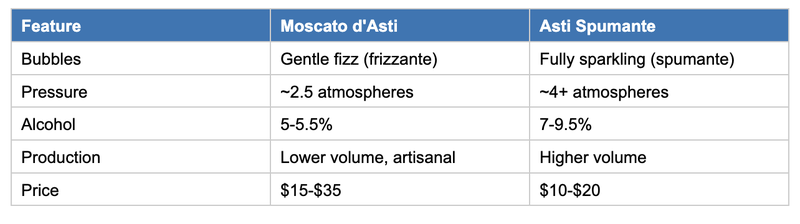
Moscato d'Asti vs Asti Spumante
These wines are often confused, but they're distinct products:
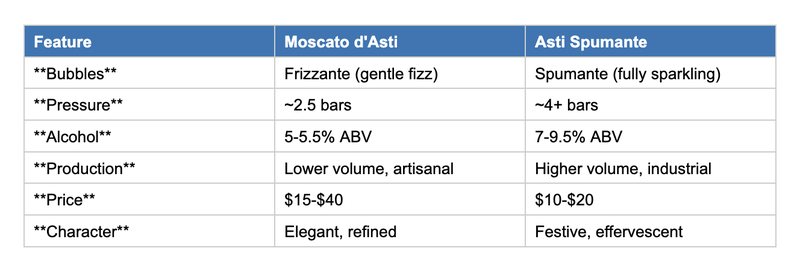
Moscato d'Asti is the "sommelier's choice" — more refined, complex, and food-friendly.
Asti Spumante is the "party wine" — more bubbles, more accessible, more celebratory.
How Moscato d'Asti Is Made
The Asti Method
Moscato d'Asti production is unique:
- Harvest: Moscato Bianco grapes harvested at optimal ripeness
- Pressing: Gentle pressing preserves delicate aromatics
- Must Storage: Grape juice is filtered and stored cold to prevent fermentation
- On-Demand Fermentation: Unlike most wines, fermentation happens just before bottling — throughout the year, not just at harvest
- Single Fermentation: Fermentation occurs in sealed, pressurized tanks
- Early Stopping: When alcohol reaches 5-5.5% and CO2 creates gentle fizz, fermentation is stopped by chilling
- Immediate Bottling: Wine is filtered and bottled, preserving freshness
This method ensures maximum freshness and aromatic intensity. Each bottle captures the grape's vibrant character.
Why It's Low Alcohol
Stopping fermentation early serves two purposes:
- Preserves sweetness: Remaining sugar creates natural sweetness
- Limits alcohol: Only partial sugar conversion means low ABV
The result is a wine with the sweetness of grape juice, the complexity of wine, and the refreshment of low alcohol.
Taste Profile
Aroma
Moscato d'Asti is intensely aromatic — the perfume is unmistakable:
Primary Aromas:
- White peach (dominant)
- Apricot
- Orange blossom
- Jasmine
- Honeysuckle
- Fresh grape
Secondary Notes:
- Honey
- Sage
- Tangerine peel
- Pear
- Lychee
Palate
Flavor Profile:
- Sweet but not cloying
- Fresh acidity balances sugar
- Peach and apricot dominate
- Floral undertones
- Light citrus finish
Texture:
- Gentle, persistent fizz
- Light-bodied
- Silky smooth
- Refreshing finish
Quality Indicators
Better Moscato d'Asti shows:
- Intense aromatics that fill the room when poured
- Clean, balanced sweetness — not syrupy
- Vibrant acidity — lifts the sweetness
- Persistent fizz — tiny, elegant bubbles
- Long finish — flavors linger
Best Moscato d'Asti Producers (2026)
Top Tier
Paolo Saracco
- Benchmark producer
- Multiple single-vineyard bottlings
- Price: $18-$30
- Style: Elegant, balanced, complex
Vietti Cascinetta
- Historic estate
- Consistent excellence
- Price: $16-$24
- Style: Classic expression
La Spinetta Bricco Quaglia
- Premium quality
- Distinctive bottle
- Price: $22-$32
- Style: Concentrated, intense
G.D. Vajra
- Respected Barolo producer
- Excellent Moscato
- Price: $18-$25
- Style: Fresh, mineral, refined
Elio Perrone Sourgal
- Organic production
- Precise winemaking
- Price: $18-$28
- Style: Pure, aromatic, elegant
Excellent Value
Michele Chiarlo Nivole
- Widely available
- Consistent quality
- Price: $14-$18
- Style: Approachable, balanced
Ceretto
- Famous estate
- Price: $15-$22
- Style: Fresh, typical
Braida
- Quality-focused house
- Price: $16-$24
- Style: Concentrated, fruit-forward
Fontanafredda
- Historic producer
- Price: $14-$20
- Style: Traditional expression
Where to Find Them
Top Moscato d'Asti is worth seeking:
- Specialty wine shops
- Italian wine specialists
- Wine.com
- Total Wine (select locations)
- Vivino marketplace
Price Guide (2026)

Best Value: At $18-$25, producers like Paolo Saracco and Vietti deliver exceptional quality that rivals wines costing twice as much in other categories.
Food Pairing Guide
Moscato d'Asti's sweetness and low alcohol make it uniquely versatile.
Perfect Dessert Pairings
Fruit-Based Desserts:
- Fresh fruit tarts (peach, apricot, berry)
- Panna cotta with fruit
- Fruit salads
- Baked peaches or pears
- Strawberry shortcake
- Fruit sorbets
Light Pastries:
- Biscotti (the classic Italian pairing)
- Almond cake
- Angel food cake
- Madeleines
- Cream puffs
Italian Classics:
- Panettone (Christmas tradition)
- Pandoro
- Cannoli (light versions)
- Tiramisu (lighter preparations)
Beyond Dessert
Aperitif:
- Serve chilled before dinner
- Low alcohol allows pre-meal enjoyment
- Pairs with light appetizers
Cheese:
- Fresh goat cheese
- Gorgonzola dolce (classic pairing)
- Ricotta with honey
- Mascarpone preparations
Spicy Foods (surprisingly excellent):
- Thai cuisine
- Indian appetizers
- Spicy-sweet Asian dishes
- Mild curries
Brunch:
- Fresh fruit
- Pastries
- Light egg dishes
Pairing Principles
Match sweetness: Wine should be as sweet or sweeter than food
Complement aromatics: Peach, apricot, and floral dishes harmonize
Contrast richness: Sweetness cuts through creamy, rich desserts
Tame spice: Sugar soothes capsaicin heat
How to Serve Moscato d'Asti
Temperature
Ideal: 40-45°F (4-7°C)
Well-chilled but not ice-cold:
- Refrigerate 3-4 hours before serving
- Ice bucket: 15-20 minutes
- Too cold mutes aromatics
- Just right: refreshing, aromatic, balanced
Glassware
White wine glass or flute:
- White wine glass allows aroma appreciation
- Flute shows delicate bubbles
- Either works beautifully
Pour gently to preserve fizz.
Serving Size
Standard pour: 4-5 oz (120-150ml)
Low alcohol allows slightly larger pours without concern.
Opening
Moscato d'Asti bottles typically use regular wine corks (not mushroom-shaped Champagne corks) because of lower pressure. Open carefully — there's still some fizz.
Storage
Before Opening:
- Store in refrigerator or cool, dark place
- Drink within 1-2 years of vintage
- Freshness is essential — don't cellar
After Opening:
- Reseal immediately
- Refrigerate
- Consume within 24-48 hours
- Fizz diminishes quickly
Common Questions
Does Moscato d'Asti age well?
No. It's made for immediate enjoyment. Fresh bottles (within 1-2 years of vintage) taste best. Older bottles lose aromatics and vivacity.
Is Moscato d'Asti the same as Moscato?
"Moscato" is a general term; Moscato d'Asti is a specific DOCG wine with strict regulations. American "Moscato" wines vary widely in style and quality.
Why is alcohol so low?
Fermentation is stopped early, preserving sugar and limiting alcohol conversion. This is intentional, not a defect.
Can vegetarians/vegans drink it?
Most Moscato d'Asti is vegan-friendly, though some producers may use traditional fining agents. Check with specific producers if concerned.
Is it good for people who "don't like wine"?
Often, yes. Its sweetness, low alcohol, and familiar fruit flavors appeal to those who find dry wines challenging.
Health and Nutrition: Complete Guide
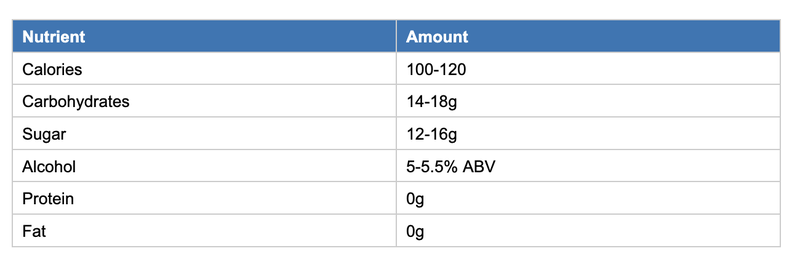
Per 5 oz (150ml) Serving
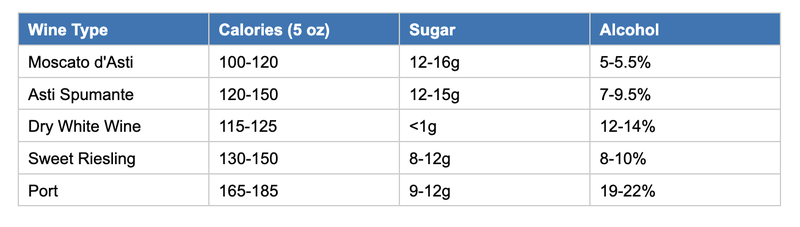
Calorie Comparison
The Low-Alcohol Advantage
Moscato d'Asti's 5-5.5% ABV is remarkably low:
- Less than half of most wines (12-14%)
- Similar to many beers
- Fewer calories from alcohol
- Reduced intoxication risk
- Suitable for daytime events
- Extended enjoyment possible
Sugar Considerations
Moscato d'Asti is high in sugar compared to dry wines:
- 12-16g per glass (vs. <1g for dry wines)
- Accounts for most of the calories
- Important consideration for diabetics
- Balanced by acidity, so doesn't taste cloying
Health Perspective
Potential benefits (in moderation):
- Lower alcohol reduces intoxication risk
- Antioxidants from grapes (though less than dry wines)
- Social and relaxation benefits
Considerations:
- High sugar content
- Not suitable for low-carb diets
- Diabetics should consult healthcare providers
Expanded Frequently Asked Questions
How do you pronounce Moscato d'Asti?
"Mo-SCAH-toh DAHS-tee" — four syllables total.
What does DOCG mean?
DOCG (Denominazione di Origine Controllata e Garantita) is Italy's highest wine classification, indicating:
- Strictly regulated production zone
- Specific grape requirements (100% Moscato Bianco)
- Quality testing before release
- Guaranteed authenticity
What's the difference between Moscato d'Asti and Asti Spumante?
What temperature should Moscato d'Asti be served?
40-45°F (4-7°C) — well-chilled.
- Refrigerate 3-4 hours before serving
- Ice bucket: 15-20 minutes
- Too cold mutes aromatics
- Too warm makes sweetness cloying
How long does Moscato d'Asti last after opening?
Very briefly:
- Best: Drink same day
- Maximum: 24-48 hours refrigerated with stopper
- Fizz: Diminishes rapidly after opening
What food pairs best with Moscato d'Asti?
Perfect matches:
- Fresh fruit tarts (especially peach, apricot)
- Biscotti (classic Italian pairing)
- Panettone (Christmas tradition)
- Light cakes and pastries
- Gorgonzola cheese
Good matches:
- Spicy Asian cuisine
- Fresh fruit salads
- Light appetizers
- Brunch dishes
Is Moscato d'Asti sweet?
Yes, notably sweet with 100-140 g/L residual sugar. However, it doesn't taste cloying due to:
- Balancing acidity
- Light body
- Gentle fizz
- Fresh fruit character
Can diabetics drink Moscato d'Asti?
Moscato d'Asti's high sugar (12-16g per glass) requires careful consideration:
- Consult healthcare providers
- Account for carbohydrates
- Consider smaller portions
- Dry wines may be better alternatives
What's the alcohol content of Moscato d'Asti?
5-5.5% ABV — among the lowest of any wine:
- Half the alcohol of most wines
- Similar to light beers
- Allows for daytime enjoyment
- Reduced intoxication risk
Why is Moscato d'Asti more expensive than Asti Spumante?
Several factors:
- Lower production volume
- More artisanal production methods
- Higher quality perception
- Greater demand from enthusiasts
- Often from better vineyard sites
What glass should I use for Moscato d'Asti?
White wine glass or tulip-shaped glass works well:
- Allows appreciation of aromatics
- Shows gentle bubbles
- Maintains temperature
Can you cook with Moscato d'Asti?
Yes, particularly for:
- Poaching pears or peaches
- Fruit sauce reductions
- Zabaglione (Italian dessert)
- Adding to fruit salads
- Sweet marinades
Is Moscato d'Asti the same as Pink Moscato?
No:
- Moscato d'Asti: White, Italian DOCG, gently fizzy
- Pink Moscato: Pink, often American, added red grapes
Pink Moscato is inspired by Moscato but is a different product.
How many calories are in Moscato d'Asti?
Approximately 100-120 calories per 5 oz glass:
- Lower than many wines (due to low alcohol)
- Higher carbohydrates (due to sugar)
- Net result: Similar to dry wines
What's the best Moscato d'Asti brand?
For quality: Paolo Saracco, Vietti, La Spinetta
For value: Michele Chiarlo Nivole, Fontanafredda
For availability: Ceretto, Braida
When is the best time to drink Moscato d'Asti?
Versatile timing:
- Aperitif: Before dinner
- Dessert: With fruit-based sweets
- Afternoon: Low alcohol suits daytime
- Brunch: Perfect for late morning
- Celebration: Toast with something special
The History of Moscato d'Asti
Ancient Origins
The Moscato Bianco grape has grown in Piedmont for nearly a thousand years, with records dating to medieval times. Monks cultivated Moscato in monastery vineyards, producing still, sweet wines for personal consumption and religious ceremonies.
The "Winemaker's Wine"
For centuries, Moscato d'Asti was known as the "winemaker's wine" — a personal indulgence rather than a commercial product. Its low alcohol and refreshing sweetness made it perfect for:
- Lunch refreshment during harvest
- Celebration after picking
- Afternoon enjoyment
- Family gatherings
Modern Renaissance (1870s)
The modern frizzante style emerged in the 1870s when producers began capturing natural carbonation from fermentation. This innovation transformed Moscato d'Asti into the gently sparkling wine we know today.
DOCG Recognition (1993)
Moscato d'Asti achieved DOCG status in 1993, cementing its position as a quality Italian wine worthy of Italy's highest classification. This recognition:
- Established strict production rules
- Guaranteed geographic authenticity
- Elevated international perception
- Protected the traditional style
Global Popularity (2000s-Present)
The 21st century brought explosive growth:
- American market discovered Moscato
- Sweet wine stigma decreased
- Quality producers gained recognition
- Prices remained accessible
- Category expanded globally
The Bottom Line
Moscato d'Asti is one of wine's purest pleasures — an intensely aromatic, gently sweet, refreshingly low-alcohol wine that brings joy to any occasion. It's not trying to be serious or age-worthy; it simply aims to delight, and it succeeds magnificently.
At $18-$30 for top producers, Moscato d'Asti offers exceptional value for DOCG-quality wine. Its versatility — pairing with desserts, serving as aperitif, complementing spicy cuisine — makes it uniquely useful in any wine collection.
Don't let wine snobbery prevent you from enjoying this gem. Moscato d'Asti has centuries of tradition, strict quality regulations, and dedicated producers crafting wines of genuine excellence. The fact that it's sweet and approachable doesn't diminish its quality — it enhances its appeal.
Invest in fine wine with Vinovest. Build a portfolio based on your goals, then Vinovest handles sourcing, authentication, storage, insurance, and portfolio management.