The Oldest Whiskey in the World: Record Bottles and Casks (2026)
Unlike wine, whiskey doesn't age once bottled — the moment it leaves the cask, maturation stops. That means the “oldest whiskey in the world” isn't defined by how long it's sat on a shelf, but by how many years it spent maturing in oak before bottling. The record holders are a mix of genuinely ancient distillery releases and extraordinary discoveries of long-forgotten bottles.
Further reading
- Check out our Guide on Whiskey Investment which reveals the 10 high-potential bottles and some expert tips.
- Explore everything about the exquisite Hibiki Suntory Whiskey — best bottles to buy, their investment potential, and more.
- And if you want to explore other investment opportunities, check out this Fine Wine Investment Guide.
The Oldest Whiskeys Ever Bottled
- Gordon & MacPhail Generations 80 Year Old (Glenlivet). Distilled in 1940 and bottled in 2021, this held the title of oldest single malt Scotch ever released at the time — just 250 decanters made, designed by architect Sir David Adjaye.
- The Reach (Macallan, 81 Years). Distilled at the Macallan Estate in 1940 during the Second World War and matured for 81 years in a single sherry-seasoned cask — 288 bottles were released via Sotheby's auction in 2022.
- Evans & Ragland Old Ingledew Whiskey. Not the oldest by distillation date, but one of the most historically remarkable finds — a bottle with a documented chain of ownership through J.P. Morgan, Franklin D. Roosevelt, and Harry S. Truman, rediscovered in a South Carolina estate in 2008.
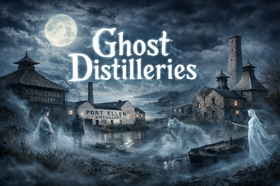
- Karuizawa 1960 (52 Years Old). From Japan's most famous demolished distillery — with no operational successor able to replicate the original spirit, its remaining stock only grows rarer. See our ghost distillery investment guide for the full closed-distillery picture.
Why Age Alone Doesn't Determine Value
A whiskey's age is only part of what makes it valuable. Distillery reputation, rarity of the release, documented provenance, and condition all matter as much as the number on the label. A well-provenanced 40-year-old bottle from a blue-chip distillery can outsell a poorly documented 80-year-old from an obscure producer. This is why closed or “ghost” distilleries — whose supply is permanently capped — tend to dominate record sales alongside genuinely ancient releases.
Record Prices for Old Whiskey
|
Bottle / Cask | Age |
Notable Detail |
|---|---|---|
| Macallan 1926 (Valerio Adami label) | 60 years | ~$2.7 million at Sotheby's, 2023 |
| The Reach (Macallan) | 81 years | 288 bottles; unveiled at Sotheby's 2022 |
| Karuizawa 1999 casks (2) | ~27 years | £4.25M at Christie's, March 2026 |
| Gordon & MacPhail Generations | 80 years | 250 decanters, released 2021 |
How to Approach Buying Old or Rare Whiskey
Authentication is critical at this end of the market — counterfeits and poor provenance are real risks with genuinely old bottles. Buy through reputable auction houses or specialist dealers, insist on documented chain of ownership where possible, and understand that a compelling age statement alone doesn't guarantee value. For a broader view of what actually drives whiskey investment value, see our complete whiskey investment guide, and for Scotch-specific cask ownership, our Scotch whisky cask investment guide.
Frequently Asked Questions
What is the oldest whiskey ever sold?
Among documented distillery releases, whiskies matured 80–81 years — including The Reach (Macallan) and Gordon & MacPhail's Generations 80 Year Old — hold the record for longest cask maturation before bottling.
Does whiskey improve the longer it stays in the cask?
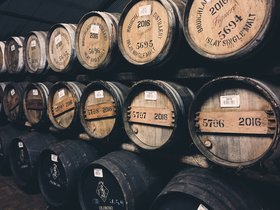
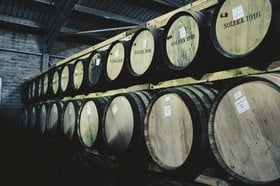
Generally yes, up to a point — but extremely long maturation carries real risk. Evaporation (the “angel's share”) can eventually leave too little liquid to bottle, and over-oaking can overwhelm the spirit's character. Distillers monitor casks carefully and bottle at what they judge to be the peak, which is why 80+ year releases are so rare.
Why doesn't whiskey age once it's in the bottle?
Unlike wine, whiskey's high alcohol content and the absence of ongoing chemical interaction with oak mean it's essentially chemically stable once bottled and sealed. A bottle from 1940 opened today tastes the same as it did the day it was bottled, assuming proper storage.
For more on how closed-distillery scarcity drives value in whiskey investing specifically, see our ghost distillery investment guide.
Post updated in August 2026 by the Vinovest editorial team.