Pouilly-Fuissé: The Complete Guide to Burgundy's Premier White Wine (2026)
Pouilly-Fuissé is one of Burgundy's most prestigious white wine appellations — a rich, complex Chardonnay that offers Grand Cru quality at a fraction of the price. Nestled in the southern Mâconnais region, Pouilly-Fuissé has earned devoted followers who appreciate its distinctive combination of power, elegance, and terroir expression.
This comprehensive guide covers everything you need to know about Pouilly-Fuissé: the region, top producers, tasting profiles, food pairings, and why this wine represents one of Burgundy's best values.
Further reading
Learn what changed with Pouilly-Fuissé Premier Cru in 2020. See the 22 climats and where they sit.
Get a quick overview of the Mâconnais and how Pouilly-Fuissé fits into Southern Burgundy. It’s a useful map in words.
Want broader context on White Burgundy Chardonnay. Use this guide to compare styles and tasting notes across the region.
What Is Pouilly-Fuissé?
Pouilly-Fuissé is a white wine appellation (AOC) in the Mâconnais subregion of Burgundy, France. The wine is made exclusively from Chardonnay and produced in five communes surrounding the dramatic Rock of Solutré.
Key Facts:
- Region: Mâconnais, Southern Burgundy
- Grape: 100% Chardonnay
- Classification: AOC (recently added Premier Cru vineyards)
- Style: Full-bodied, rich white wine
- Price Range: $25-$80 (most $30-$50)
- Production: ~6 million bottles annually
The Five Communes
Pouilly-Fuissé encompasses vineyards in five villages:
- Fuissé — the largest and most prestigious
- Solutré-Pouilly — home to the famous rock
- Vergisson — cooler sites, mineral character
- Chaintré — warmer exposures, ripe fruit
- Pouilly — smaller, blended character
Note: Don't confuse Pouilly-Fuissé with Pouilly-Fumé, which is a Loire Valley Sauvignon Blanc — completely different wine and region.
Why Pouilly-Fuissé Is Special
Burgundy Quality, Better Value
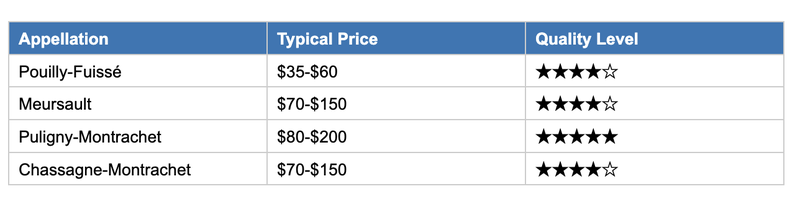
While Côte de Beaune white Burgundies (Meursault, Puligny-Montrachet, Chassagne-Montrachet) command $50-$300+, Pouilly-Fuissé offers comparable quality at $30-$60. For Burgundy lovers priced out of the Côte d'Or, Pouilly-Fuissé provides a legitimate alternative.
Unique Terroir
The Mâconnais differs from northern Burgundy:
- Warmer climate: Riper fruit, fuller body
- Limestone soils: Mineral backbone
- Dramatic topography: Varied exposures and microclimates
- Ancient vines: Many old-vine plots add complexity
2020 Premier Cru Recognition
In a historic decision, Pouilly-Fuissé introduced Premier Cru classifications in 2020 — the first new Burgundy Premier Crus in decades. This recognition elevated 22 vineyards (called "climats") to Premier Cru status, signaling the appellation's quality potential.
Taste Profile
Classic Characteristics
Aroma:
- Golden apple and ripe pear
- White flowers (acacia, hawthorn)
- Honey and beeswax
- Toasted nuts (hazelnuts, almonds)
- Mineral, flinty notes
- Subtle oak influence (vanilla, butter)
Palate:
- Full-bodied and rich
- Round, creamy texture
- Balanced acidity
- Stone fruit and citrus flavors
- Long, mineral-driven finish
Style Spectrum
Pouilly-Fuissé ranges from lean and mineral to rich and opulent depending on:
Vineyard Location:
- Higher altitude = more acidity, mineral
- Warmer sites = riper, fuller body
Winemaking:
- Steel-fermented = crisp, fruity
- Oak-aged = richer, toasty
- Lees-stirred = creamy, complex
Producer Philosophy:
- Traditional = restrained elegance
- Modern = powerful, oak-influenced
Premier Cru Vineyards
The 2020 Premier Cru designation recognizes 22 specific climats:
Notable Premier Crus
Le Clos (Fuissé)
- Most famous site
- Walled vineyard
- Complex, age-worthy
Les Crays (Vergisson)
- High altitude
- Mineral-driven
- Excellent acidity
Les Vignes Blanches (Fuissé)
- South-facing
- Rich, powerful
- Oak-friendly
La Maréchaude (Fuissé)
- Historic site
- Balanced style
Aux Quarts (Pouilly)
- Distinctive terroir
- Elegant expression
Premier Cru Pricing:
While base Pouilly-Fuissé runs $30-$50, Premier Cru bottlings command $50-$100 — still reasonable by Burgundy standards.
Best Pouilly-Fuissé Producers (2026)
Top Estates
Domaine J.A. Ferret
- Benchmark producer
- Multiple Premier Cru sites
- Price: $45-$100
- Style: Powerful, complex, age-worthy
- Top Wines: Les Ménétrières, Tournant de Pouilly
Château de Fuissé
- Largest quality estate
- "Le Clos" is flagship
- Price: $35-$80
- Style: Rich, full-bodied, traditional
- Top Wines: Le Clos Monopole, Vieilles Vignes
Domaine Guffens-Heynen
- Cult status, limited production
- Jean-Marie Guffens is legendary
- Price: $60-$120
- Style: Intense, concentrated, unique
- Must Buy: Any single-vineyard bottling
Domaine Valette
- Biodynamic pioneer
- Old vines, minimal intervention
- Price: $40-$80
- Style: Pure, mineral, terroir-driven
- Top Wine: Tradition (unoaked, old vines)
Domaine Robert-Denogent
- Rising star
- Precise winemaking
- Price: $35-$65
- Style: Elegant, fresh, focused
- Top Wine: Les Carrons (old vines)
Domaine Leflaive
- Legendary Puligny producer's Mâcon venture
- Price: $40-$60
- Style: Finesse and precision
- Recent Addition: Expanding Mâconnais holdings
Domaine Barraud
- Family estate, excellent value
- Price: $30-$50
- Style: Classic, consistent
- Top Wine: La Verchère
Excellent Value Producers
Château de Beauregard
- Consistent quality
- Price: $28-$45
- Great introduction to appellation
Louis Jadot
- Reliable négociant
- Price: $30-$50
- Widely available
Joseph Drouhin
- Historic house
- Price: $28-$45
- Classic style
Maison Auvigue
- Family estate
- Price: $25-$40
- Excellent value
Domaine Cordier
- Small producer
- Price: $30-$50
- Quality-focused
Domaine La Soufrandière/Bret Brothers
- Biodynamic, terroir-focused
- Price: $30-$55
- Rising reputation
Verget
- Quality négociant
- Price: $28-$45
- Excellent cuvée selection
Vintage Guide: Best Years for Pouilly-Fuissé
Outstanding Vintages (Drink or Age)
2020 ★★★★★
- Exceptional quality
- Rich, concentrated
- Excellent aging potential
- Status: Available, still reasonably priced
2019 ★★★★★
- Classic vintage
- Balance of fruit and acidity
- Long-lived
- Status: Drinking well, will age
2017 ★★★★☆
- Ripe, generous
- Approachable early
- Medium-term aging
- Status: Drinking beautifully now
2015 ★★★★★
- Powerful, concentrated
- Excellent structure
- Long aging potential
- Status: Starting to open up
2014 ★★★★☆
- Fresh, mineral
- Classic Burgundy style
- Elegant rather than powerful
- Status: Drinking well
Challenging Vintages (Drink Now)
2021 — Frost-reduced yields, drink younger
2018 — Very ripe, drink in medium term
2016 — Good but lighter, drink now
2013 — Lean, drink up
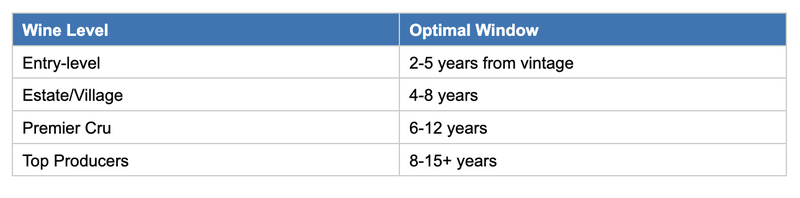
When to Drink
Price Guide (2026)
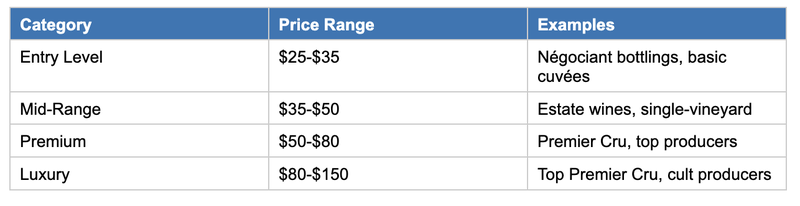
Value Tip: At $35-$50, estate-bottled Pouilly-Fuissé offers Burgundy quality that would cost $70-$150 from the Côte de Beaune.
Food Pairing Guide
Pouilly-Fuissé's richness and complexity make it supremely food-friendly.
Perfect Pairings
Seafood:
- Lobster (thermidor or butter-poached)
- Scallops (seared or gratinéed)
- Crab (cakes or whole)
- Prawns with garlic butter
- Dover sole meunière
- Oysters (especially cooked)
Poultry:
- Roast chicken with herbs
- Chicken in cream sauce
- Turkey breast
- Guinea fowl
- Coq au Vin Blanc
Classic French:
- Escargots in garlic butter
- Quiche Lorraine
- Gratin Dauphinois
- Cheese soufflé
- Blanquette de Veau
Cheese:
- Comté (the classic Burgundy pairing)
- Époisses
- Brie de Meaux
- Aged Gruyère
Rich Vegetarian:
- Mushroom risotto
- Truffle dishes
- Roasted root vegetables
- Creamy pasta
Regional Pairing (Burgundy Cuisine)
For authentic experience:
- Escargots de Bourgogne: Snails in garlic-parsley butter
- Poulet de Bresse: Iconic French chicken
- Jambon Persillé: Ham and parsley terrine
- Gougères: Cheese puffs
How to Serve Pouilly-Fuissé
Temperature
Ideal: 50-55°F (10-13°C)
Slightly cooler than room temperature:
- Too cold: Mutes aromatics and complexity
- Too warm: Alcohol dominates, loses freshness
- Just right: Full expression of fruit and minerality
Remove from refrigerator 20-30 minutes before serving.
Glassware
Use a good-quality white wine glass with:
- Adequate bowl for swirling
- Tapered rim to concentrate aromas
- Clear glass to appreciate golden color
Decanting
- Young wines (1-3 years): Optional — 30 minutes helps
- Mature wines (5+ years): 30-60 minutes can help open aromatics
- Very old wines: Careful decanting, drink promptly
Aging Potential
Entry-level: 2-5 years
Estate wines: 5-10 years
Premier Cru: 8-15 years
Top producers: 10-20+ years
Unlike many white wines, quality Pouilly-Fuissé rewards cellaring.
Pouilly-Fuissé vs Similar Wines
vs. Meursault
- Pouilly-Fuissé: More accessible price, riper fruit, fuller body
- Meursault: More complexity, nuttier, higher prestige
- Price difference: Meursault typically 50-100% more expensive
vs. Puligny-Montrachet
- Pouilly-Fuissé: Richer, broader, warmer climate influence
- Puligny: More mineral, tighter, longer aging
- Price difference: Puligny typically 100%+ more expensive
vs. Mâcon-Villages
- Pouilly-Fuissé: More complexity, depth, aging potential
- Mâcon: Lighter, simpler, drink young
- Price difference: Pouilly-Fuissé 50-100% more
vs. Saint-Véran
- Pouilly-Fuissé: Greater concentration, complexity
- Saint-Véran: Lighter, fresher, excellent value
- Price difference: Similar to 30% premium for P-F
Investment Perspective
While most Pouilly-Fuissé is meant for consumption rather than investment, the new Premier Cru classification creates potential:
Why Premier Cru Matters
- Scarcity: Limited production from classified sites
- Recognition: Official quality designation
- History: First new Burgundy Premier Crus in decades
- Appreciation: Early vintages may gain value
Producers to Watch
For potential appreciation:
- J.A. Ferret Premier Crus
- Château de Fuissé "Le Clos"
- Guffens-Heynen limited releases
- Valette single-vineyard bottlings
Caution: The investment market for Pouilly-Fuissé is not established like Côte d'Or. Buy primarily to drink.
The Bottom Line
Pouilly-Fuissé stands as one of white Burgundy's greatest values — delivering complex, age-worthy Chardonnay at prices that actually allow regular enjoyment. While wine lovers pay $100+ for Meursault and Puligny-Montrachet, comparable quality from Pouilly-Fuissé costs $35-$60.
The 2020 Premier Cru recognition validates what local producers have always known: these vineyards produce world-class Chardonnay. Whether you're seeking an introduction to Burgundy whites or a cellar-worthy wine that won't break the bank, Pouilly-Fuissé deserves your attention.
For the price of a mediocre Côte de Beaune, you can drink exceptional Pouilly-Fuissé. That's a value proposition worth exploring.
Frequently Asked Questions
How do you pronounce Pouilly-Fuissé?
"Pwee-yee Fwee-say" — four syllables total. The double "s" sounds like a single "s."
Is Pouilly-Fuissé the same as Pouilly-Fumé?
No, they're completely different wines:
- Pouilly-Fuissé: Chardonnay from Burgundy
- Pouilly-Fumé: Sauvignon Blanc from the Loire Valley
The similar names cause frequent confusion, but the wines share nothing but geography (both are French).
Is Pouilly-Fuissé oaked?
It varies by producer:
- Traditional producers: Often use oak barrels
- Modern producers: May use stainless steel or neutral oak
- Result: Styles range from rich/toasty to fresh/mineral
Check producer notes or ask your wine shop for guidance on specific bottles.
What's the difference between Pouilly-Fuissé and Saint-Véran?
Both are Mâconnais Chardonnays:
- Pouilly-Fuissé: More prestigious, richer, better aging potential
- Saint-Véran: Lighter, fresher, excellent value
Saint-Véran surrounds Pouilly-Fuissé geographically and offers similar style at 30-40% lower prices.
Can Pouilly-Fuissé age?
Yes, better than most white wines:
- Entry-level: 3-5 years
- Village wines: 5-8 years
- Premier Cru: 8-15 years
- Top producers: 10-20+ years
Quality Pouilly-Fuissé develops honey, toast, and hazelnut notes with age.
What does Premier Cru mean for Pouilly-Fuissé?
In 2020, Pouilly-Fuissé became the first Burgundy appellation in decades to receive new Premier Cru classifications. Twenty-two specific vineyard sites (climats) now carry the "Premier Cru" designation, indicating:
- Superior terroir
- Stricter production standards
- Higher prices ($50-$100 vs. $30-$50 for village)
- Better aging potential
Is Pouilly-Fuissé good value?
Excellent value compared to other Burgundy whites:
You get 80-90% of the quality at 50% of the price.
What food pairs best with Pouilly-Fuissé?
Classic pairings:
- Roasted chicken (especially with cream sauce)
- Lobster and scallops
- Grilled white fish
- Comté cheese (the Burgundy classic)
- Escargots in garlic butter
Guiding principle: Rich enough for cream sauces and butter, fresh enough for lighter seafood.
How should I serve Pouilly-Fuissé?
- Temperature: 50-55°F (10-13°C) — cooler than room temp, warmer than fridge
- Glass: Good-quality white wine glass with adequate bowl
- Decanting: Usually unnecessary, but can help young wines open
- Timing: Can be opened immediately; no extensive breathing required
What's the Rock of Solutré?
The Rock of Solutré (Roche de Solutré) is a dramatic limestone escarpment that dominates the Pouilly-Fuissé landscape. This 500-meter-high formation:
- Creates unique microclimate
- Reflects heat onto vineyards
- Provides distinctive terroir
- Has been used since prehistoric times (archaeological site)
It's a UNESCO World Heritage site and the region's most recognizable landmark.
Are there different quality levels within Pouilly-Fuissé?
Yes, from lowest to highest:
- Basic Pouilly-Fuissé: Blended from multiple vineyards
- Lieu-dit/Named Vineyard: Single vineyard, not Premier Cru
- Premier Cru: 22 classified superior sites
- Old Vines (Vieilles Vignes): Not official but indicates quality
Look for vineyard names and "Premier Cru" on labels for best quality.
Invest in fine wine with Vinovest. Build a portfolio around your goals, then Vinovest handles sourcing, authentication, storage, insurance, and portfolio management.