Tangible Assets: The Complete 2026 Guide to Investing in Physical Assets
In a financial landscape dominated by digital numbers on screens — stock tickers, crypto wallets, and electronic bank balances — tangible assets offer something increasingly rare: real, physical value you can see, touch, and own directly. A gold bar in a vault, a case of investment-grade wine in bonded storage, a piece of land with a deed in your name — these things exist independently of any database, exchange, or digital infrastructure.
This isn't sentimental nostalgia. It's sound portfolio construction. Tangible assets have delivered proven returns across decades, provided meaningful inflation protection when paper currencies lost purchasing power, and demonstrated low correlation with the stocks and bonds that make up most investors' portfolios. When the S&P 500 dropped 18% in 2022 and bonds fell 13% simultaneously — destroying the traditional 60/40 portfolio's supposed diversification — many tangible assets held steady or declined far less.
Here's what you need to know about tangible asset investing in 2026.
Further reading
- Discover Everything You Need To Know About Investing In Wine.
- Alternatively, if you’re looking to trade wines online, check out The Definitive Guide To Wine Exchanges.
What Are Tangible Assets?
Tangible assets are physical items with inherent value that can be owned, stored, and traded. Unlike stocks (which represent a claim on a company's future earnings) or bonds (which represent a promise to repay debt), tangible assets have intrinsic worth derived from their physical properties, scarcity, utility, or desirability.
The distinction matters more than it might seem. A share of stock is only worth something because a market of buyers and sellers agrees it is. If the company goes bankrupt or the stock exchange shuts down, the paper (or digital entry) becomes worthless. A gold bar, by contrast, has been valued by virtually every human civilization for 5,000 years. A bottle of 2016 Sassicaia has value because it's a finite, consumable luxury good that can never be reproduced.
Tangible vs. Intangible Assets
The difference is straightforward. Tangible assets have physical form — you could, in principle, hold them in your hands (even if you choose to store them professionally). Intangible assets lack physical form — stocks, bonds, intellectual property, patents, digital currencies.
Some investment categories blur the line. A REIT (Real Estate Investment Trust) gives you exposure to real estate — a tangible asset — but through an intangible financial instrument. Physical gold is tangible; a gold ETF is intangible. For the purest diversification benefits, actual ownership of physical assets provides the strongest protection against the systemic risks that can affect digital and financial systems.
Why Tangible Assets Matter in 2026
Several dynamics make tangible assets particularly relevant for today's investors.
Inflation Protection
Tangible assets have historically served as effective hedges against inflation because their value tends to rise with the general price level. When currency loses purchasing power, physical goods that have intrinsic scarcity tend to maintain or increase in real value.
The mechanism varies by asset. Real estate rents and property values tend to rise with inflation. Gold has served as a store of value during inflationary periods for millennia. Fine wine's value is driven by supply-demand dynamics largely independent of monetary policy — vintages consumed reduce supply regardless of what central banks do with interest rates.
With inflation remaining above the Federal Reserve's 2% target entering 2026 and the federal funds rate at 3.5-3.75%, real returns on cash and short-term bonds are minimal. Tangible assets provide an alternative store of value when savings accounts and money markets offer little real return after accounting for inflation.
Diversification from Digital Risk
The increasing digitization of finance introduces new categories of risk that didn't exist a generation ago. Cyberattacks on financial institutions, exchange outages, algorithmic trading errors, and the concentration of wealth in a small number of technology platforms create vulnerabilities that tangible assets are immune to.
A wine collection stored in a bonded warehouse or gold bars in a vault cannot be hacked, algorithmically manipulated, or frozen by a software glitch. This independence from digital infrastructure is a form of portfolio insurance that many investors underappreciate.
Low Correlation with Financial Markets
The most powerful investment benefit of tangible assets is their historically low correlation with stocks and bonds. During the 2008 financial crisis, the 2022 stock-and-bond simultaneous decline, and various other market disruptions, tangible assets have repeatedly demonstrated their ability to hold value when financial assets fall.
This isn't guaranteed — tangible assets have their own cycles and can decline — but the return drivers are different enough from financial markets that holding both provides genuine portfolio diversification, not the illusory kind that disappears in a crisis.
Top Tangible Asset Classes for Investors
1. Fine Wine
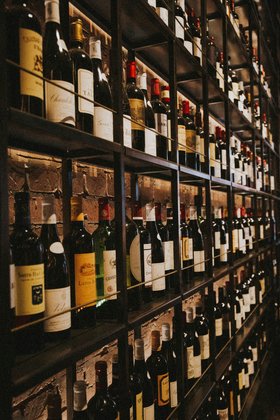
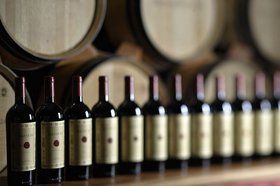
Fine wine has emerged as one of the strongest-performing tangible asset classes over the past two decades. The Liv-ex Fine Wine 1000 index has delivered approximately 10% annualized returns since its inception, while the Knight Frank Luxury Investment Index ranked wine as the second-best performing luxury collectible over the most recent ten-year period, with 149% total appreciation.
Why wine stands out among tangible assets: Unlike most physical assets, wine has a natural supply mechanism that drives value: every bottle consumed permanently reduces the available supply of that vintage. A case of 2010 Bordeaux that exists today cannot be reproduced — and every restaurant dinner, every celebration, every opened bottle tightens supply while demand from a growing global collector base continues to expand.
Wine is also unusually accessible. You can start investing in wine with as little as $1,000 through platforms like Vinovest, which handles sourcing, authentication, professional storage, and eventual sale. By contrast, meaningful investment in real estate requires tens of thousands of dollars, and collectible art or classic cars require specialized knowledge and significant capital.
2. Real Estate
The largest and most established tangible asset class. Real estate offers unique advantages: rental income (cash flow), mortgage leverage (amplifying returns with borrowed money), and well-understood tax benefits (depreciation, 1031 exchanges).
Limitations: High capital requirements, illiquidity, ongoing management demands, interest rate sensitivity, and geographic concentration risk. See our full comparison of real estate vs wine investment for a detailed analysis.
3. Gold and Precious Metals
Gold is the oldest tangible asset investment and remains a portfolio staple. It has served as a store of value for thousands of years, offers high liquidity (gold can be sold nearly anywhere in the world), and performs well during periods of financial stress and currency devaluation.
Limitations: Gold generates no income (no dividends, no rent, no interest). Its returns come entirely from price appreciation, which has averaged approximately 7-8% annually over the long term but with significant volatility. Storage costs are minimal but present.
4. Fine Art
Art investment has attracted significant attention, driven by headline-grabbing auction prices and the rise of fractional art investment platforms. Contemporary art, in particular, has delivered strong returns over certain periods.
Limitations: The art market is highly illiquid (selling a painting can take months), subjective (value depends heavily on taste and trends), and opaque (pricing lacks the transparency of wine exchanges like Liv-ex). Authentication risks are significant, and storage/insurance costs for physical art are substantial.
5. Rare Whisky and Spirits
Rare whisky — particularly Japanese whisky, Scotch single malts, and allocated bourbons — has been the fastest-appreciating collectible category in recent years. The Knight Frank Rare Whisky 100 Index has shown extraordinary performance, outpacing wine and art over multiple time periods.
Limitations: The rare whisky market is less liquid and less transparent than fine wine, with fewer established exchanges and auction venues. Authentication can be challenging, and the market is newer with a shorter track record.
6. Classic Cars
Collectible automobiles have delivered strong returns over decades, with certain models (Ferrari, Porsche, vintage Aston Martin) appreciating significantly. Cars also offer the unique benefit of enjoyment — you can drive your investment.
Limitations: Extremely high capital requirements (entry-level collectible cars start at $50,000+, with blue-chip models costing millions), substantial ongoing maintenance and storage costs, and thin markets with limited liquidity.
7. Luxury Watches
Fine watches (Rolex, Patek Philippe, Audemars Piguet) have shown strong appreciation, particularly limited-production models. The watch market benefits from brand prestige, manageable storage, and a global collector base.
Limitations: Subject to fashion cycles and brand perception shifts. The market has experienced corrections after speculative peaks (similar to wine). Authentication and condition assessment require expertise.
Performance Comparison
The Knight Frank Luxury Investment Index (KFLII) tracks the value of ten collectible asset classes over time and provides the most comprehensive performance data available for tangible luxury assets.
The headline number: A hypothetical $1 million invested in the KFLII basket in 2005 would be worth approximately $5.4 million today — slightly outpacing the same amount invested in the S&P 500 ($5 million). Over the past decade, the overall index has returned approximately 72.6%, and over five years, 21.4%.
Individual category performance (10-year returns to Q4 2024): Watches lead at approximately 125%, followed by handbags (85%), jewelry (~80%), and coins (~60%). Fine wine has returned approximately 37%+ despite a significant recent correction from 2022 peaks. Art performance has been variable, with a sharp correction in 2024 that saw auction volumes drop 48% from 2022 highs.
The timing dimension: Tangible assets demonstrated their greatest advantage during market crises. During the 2008 financial crisis, the KFLII proved far more resilient than equities. The S&P 500 fell approximately 37% in 2008, while most tangible asset categories held steady or declined modestly. This crisis-resilience characteristic — performing best when traditional assets perform worst — is what makes tangible assets so valuable for portfolio construction.
The current opportunity: The KFLII declined 3.3% in 2024, following a fractional decline in 2023 — only the third time in the index's history that luxury collectibles showed a downward trajectory. As Knight Frank notes, this correction "reflects a natural recalibration following years of robust growth." For investors, corrections in tangible assets — particularly in wine, where prices have returned to pre-pandemic levels — create potentially attractive entry points.
The critical insight is that performance varies significantly by time period, category, and individual selection. A broadly diversified tangible asset allocation — combining wine, real estate, gold, and perhaps one or two other categories — provides the most consistent results. Concentrating entirely in any single tangible asset class introduces unnecessary risk.
How to Build a Tangible Asset Portfolio
Starting Small ($5,000-$25,000)
At this level, focus on the most accessible and liquid tangible assets. Fine wine (starting at $1,000 through Vinovest), gold (physical or through a gold-backed ETF), and a REIT for real estate exposure form a solid foundation. This combination provides tangible asset diversification across three uncorrelated categories with minimal capital.
Growing Your Allocation ($25,000-$100,000)
Expand your wine allocation across regions (Bordeaux, Burgundy, Italy, Champagne). Consider adding rare whisky through a managed platform. If capital allows, explore direct real estate investment or a larger gold position.
Sophisticated Allocation ($100,000+)
At this level, a comprehensive tangible asset strategy might include a diversified wine portfolio, direct real estate, physical gold and silver, rare whisky, and selective positions in art or watches based on personal interest and expertise. Many wealth advisors recommend tangible assets representing 10-25% of total investable assets.
Frequently Asked Questions
What is the best tangible asset to invest in?
Fine wine offers the best combination of historical returns, accessibility (starting at $1,000), low correlation with financial markets, and passive management requirements. Gold provides the longest track record and highest liquidity. Real estate offers cash flow and leverage. The optimal approach is diversification across multiple tangible asset classes.
Are tangible assets safe investments?
No investment is completely "safe." Tangible assets carry risks including price volatility, storage costs, illiquidity (depending on the asset), and potential damage or loss. However, their low correlation with financial markets means they tend to hold value when stocks and bonds decline, making them effective portfolio diversifiers.
How much should I allocate to tangible assets?
Most financial advisors and institutional investors recommend allocating 10-25% of investable assets to alternatives, which includes tangible assets. The specific allocation depends on your risk tolerance, investment timeline, and existing portfolio composition.
Start building your tangible asset portfolio with a category that’s accessible and proven. Invest in fine wine with Vinovest starting at $1,000, fully managed and professionally stored.