Super Tuscan Wine: The Complete 2026 Guide to Best Wines and Investment
Super Tuscans are the rebels of Italian wine — born from defiance of tradition, built on international grape varieties, and now recognized as some of the finest and most investable wines in the world. What began as a handful of iconoclastic producers in the 1960s and '70s has evolved into the most dynamic category in fine wine investment.
The numbers are compelling. Italy took 22 spots in the 2024 Liv-ex Power 100 — up from just 15 a year earlier — and the surge was led overwhelmingly by Super Tuscans. Tenuta San Guido (producer of Sassicaia) rocketed from #57 to #3 in the overall ranking. Over the last 20 years, top-tier Super Tuscans have produced annualized returns between 10-16%, with flagship vintages delivering even more: Sassicaia 2016 appreciated over 108% from release price; Masseto 2006 delivered 257% ROI for early investors; Tignanello 2010 has tripled in value.
Unlike the rarefied world of Burgundy Grand Cru, Super Tuscans offer these returns at accessible price points that support deep liquidity on the secondary market. Whether you're a wine enthusiast exploring Tuscany's most celebrated wines or an investor seeking the best risk-adjusted returns outside of France, this is everything you need to know.
Further reading
- Here's the Ultimate Guide to Tuscan Wine - a specialty of the region, grape varieties, and the best wines to buy in 2022.
- Also, discover why Investing in Fine Wine can help you diversify your portfolio.
What Are Super Tuscan Wines?
The Rebellion That Changed Italian Wine
In the 1960s, Italian wine was bound by rigid DOC (Denominazione di Origine Controllata) regulations that dictated exactly which grape varieties could be used, how wines could be made, and what they could be called. In Tuscany, this meant Chianti had to be made primarily from Sangiovese, often blended with white grapes — a requirement that many producers believed compromised quality.
A small group of visionary winemakers decided to ignore these rules entirely. They planted Cabernet Sauvignon, Merlot, and Cabernet Franc — grapes traditionally found in Bordeaux — and aged their wines in small French oak barrels (barriques) rather than the old, neutral large casks mandated by tradition. The result was wines with depth, elegance, and structure that rivaled — and often surpassed — the great châteaux of France.
Because these wines broke DOC rules, they couldn't legally call themselves "Chianti" or use any prestigious designation. They were released simply as "Vino da Tavola" (table wine) — ironically, the lowest possible classification in Italy. Yet their quality and price said otherwise. The term "Super Tuscan" was coined by wine journalists to describe wines too good, too refined, and too forward-thinking for the bureaucracy that tried to contain them.
The Pioneers
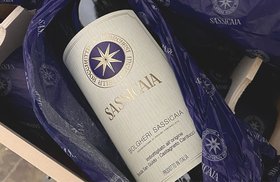
Sassicaia (1968) — The original Super Tuscan. Marchese Mario Incisa della Rocchetta planted Cabernet Sauvignon vines at his Tenuta San Guido estate in Bolgheri after being inspired by the great wines of Bordeaux. Working with legendary winemaker Giacomo Tachis, he created a wine that would eventually beat top Bordeaux in blind tastings and establish Italy as a serious fine wine producer. The 1985 Sassicaia, now trading around $6,000 per bottle, was one of the first Italian wines to achieve true cult status.
Tignanello (1971) — Marchese Piero Antinori shocked the wine establishment by bottling a Sangiovese blend with Cabernet Sauvignon and aging it in small French oak barriques — the first Sangiovese to be treated this way. Tignanello put the Antinori family firmly on the modern wine map and proved that tradition and innovation could coexist.
Ornellaia (1985) — Founded by Piero's younger brother, Lodovico Antinori, in vineyards adjacent to Sassicaia. Ornellaia added richness and polish to the Super Tuscan template, becoming another benchmark with global acclaim. Value has grown approximately 30% over the last decade.
Masseto (1986) — Originally part of the Ornellaia estate, Masseto became its own label in 1986 as a 100% Merlot expression from a unique clay-rich vineyard. Often compared to Pomerol's legendary Petrus, Masseto has become one of Italy's rarest and most expensive wines, with values appreciating over 50% in recent years.
From Rebellion to Recognition
The Italian government eventually caught up. In 1992, it introduced the IGT (Indicazione Geografica Tipica) classification — a framework that recognized wines made outside rigid DOC laws but still of high quality. In 1994, the Bolgheri DOC was created to accommodate Sassicaia's style, and in 1996, Sassicaia earned its own appellation: Bolgheri Sassicaia DOC.
What began as rebellion had become recognition. Today, the five leading Super Tuscans — Sassicaia, Ornellaia, Masseto, Tignanello, and Solaia — make up the core of the Liv-ex Italy 50 index, which tracks the price performance of Italy's most traded fine wines. This index has performed consistently well, often with less volatility than the Liv-ex 50 (which measures Bordeaux First Growths).
The Geography of Super Tuscan Wine
Bolgheri: The Coastal Powerhouse
The Bolgheri DOC on Tuscany's Mediterranean coast is ground zero for Super Tuscan production. The region's unique terroir — maritime breezes, well-drained soils, and abundant sunshine — creates conditions ideal for Cabernet Sauvignon and Merlot, producing wines with concentration, complexity, and aging potential.
Sassicaia's vineyard sits at elevations between 100-400 meters, with stony, well-drained soils that stress the vines and concentrate flavor. Ornellaia occupies neighboring plots with similar conditions. Masseto's single vineyard is distinctive for its compact blue clay — a rare soil profile that retains moisture and contributes to the wine's dense structure. The vineyard spans just 6.6 hectares, with each micro-plot harvested and vinified separately.
Other notable Bolgheri producers include Grattamacco, Le Macchiole (Messorio, Paleo Rosso), and Tenuta Guado al Tasso (Antinori's Bolgheri estate).
Chianti Classico: The Traditional Heartland
While Bolgheri pioneered the Cabernet-dominant style, many of Tuscany's most celebrated Super Tuscans come from the traditional Chianti Classico region, where Sangiovese remains central to the blend.
Tignanello — Antinori's flagship Super Tuscan comes from vineyards in the heart of Chianti Classico. The blend is typically 80% Sangiovese with 15% Cabernet Sauvignon and 5% Cabernet Franc, aged in French barriques. This Sangiovese-dominant style offers red cherry, earth, and savory complexity that distinguishes it from the more Cabernet-forward Bolgheri wines.
Solaia — From the same estate as Tignanello, but with the blend inverted: 75% Cabernet Sauvignon, 20% Sangiovese, and 5% Cabernet Franc. Solaia represents the full expression of Cabernet in Tuscan terroir — structured, age-worthy, and consistently scoring in the mid-to-high 90s from major critics. Values have grown approximately 20% over the past decade.
Flaccianello della Pieve — Fontodi's flagship, a 100% Sangiovese from Chianti Classico that proves the native grape needs no international blending partners to achieve greatness.
Maremma and Beyond
The Maremma region in southern Tuscany offers clay-rich soils and ample sunshine that produce full-bodied wines with bold fruit flavors. Producers like Tua Rita (Redigaffi — Italy's first 100-point wine from Robert Parker) and Tenuta dell'Ammiraglia operate here.
Brunello di Montalcino, while technically its own DOCG, has seen crossover with the Super Tuscan movement. Producers like Case Basse di Gianfranco Soldera create Sangiovese-only wines of such intensity and unconventionality that they're often grouped with Super Tuscans despite their Brunello appellation.
Top Super Tuscan Wines for Investment
The Big Five
These are the wines that define the category and dominate secondary market trading:
- Sassicaia (Tenuta San Guido)
- Grape: ~85% Cabernet Sauvignon, ~15% Cabernet Franc
- Style: Structured, age-worthy, classic Bolgheri
- Price Range: $200-350 (current vintages), $6,000+ (1985)
- Investment Performance: 2016 vintage appreciated 108%+ from release
- Liv-ex Power 100 Rank: #3 (2025)
Sassicaia is the most liquid Super Tuscan on the secondary market, trading in significant volume on Liv-ex. Its accessible pricing (relative to First Growth Bordeaux), consistent quality across vintages, and global brand recognition make it the cornerstone of any Italian wine portfolio.
- Masseto (Tenuta dell'Ornellaia)
- Grape: 100% Merlot
- Style: Dense, powerful, often compared to Pomerol's Petrus
- Price Range: $700-1,000+ (current vintages)
- Investment Performance: 2006 vintage delivered 257% ROI; 50%+ appreciation over recent years
- Production: ~30,000 bottles annually
Masseto commands the highest prices of any Super Tuscan. Tenuta dell'Ornellaia recently opened a winery dedicated solely to Masseto production, signaling continued investment in the brand's prestige. The wine's second label, Massetino (introduced 2017), shows strong appreciation potential for those seeking an entry point.
- Ornellaia (Tenuta dell'Ornellaia)
- Grape: ~50% Cabernet Sauvignon, ~25% Merlot, ~20% Cabernet Franc, ~5% Petit Verdot
- Style: Powerful, polished, cult status among collectors
- Price Range: $200-300 (current vintages)
- Investment Performance: 30% value growth over the last decade
- Production: ~150,000 bottles annually
More accessible than Masseto but with strong investment credentials. Ornellaia's second wine, Le Serre Nuove, offers an entry point into the estate's style at around $50-70 per bottle.
- Tignanello (Marchesi Antinori)
- Grape: ~80% Sangiovese, ~15% Cabernet Sauvignon, ~5% Cabernet Franc
- Style: Elegant, complex, Sangiovese-dominant
- Price Range: €100-140 (current vintages)
- Investment Performance: 74.9% return over five years for past ten vintages; ~12% average annual return
- Production: ~350,000 bottles annually
Tignanello offers exceptional value in the Super Tuscan category. Despite higher production than Sassicaia or Masseto, it maintains strong demand and consistent appreciation. The 2022 vintage received 95-96 points from leading critics and is available at €100-137, representing an attractive entry point. According to Liv-ex analysis, Tignanello maintains a "healthy buyer's market balance" even in the current correction.
- Solaia (Marchesi Antinori)
- Grape: ~75% Cabernet Sauvignon, ~20% Sangiovese, ~5% Cabernet Franc
- Style: Rich, polished, structured
- Price Range: €200-300 (current vintages)
- Investment Performance: ~20% appreciation over the past decade
- Production: ~80,000 bottles annually
Solaia consistently scores in the 95-98 point range and offers a Cabernet-forward expression from the same estate as Tignanello.
Emerging Investment Opportunities
Soldera (Case Basse di Gianfranco Soldera) — A Brunello producer with cult status and Super Tuscan pricing. Production averages just 15,000 bottles annually, creating significant scarcity. The winery's uncompromising approach (100% estate-grown Sangiovese, extended aging) has generated fanatical collector demand.
Tua Rita Redigaffi — Italy's first wine to receive 100 points from Robert Parker. Only 9,000 bottles produced annually. The 100% Merlot shows extraordinary aromatic intensity and investment-grade scarcity.
Le Macchiole Messorio — Another Merlot monovarietal from Bolgheri with strong critical scores and limited production.
Tenuta di Trinoro — Andrea Franchetti's cult Cabernet Franc-dominant estate in southern Tuscany. Prices have risen substantially as recognition grows.
Second Wines and Value Plays
For investors seeking exposure to top estates at lower entry points:
- Le Serre Nuove dell'Ornellaia (~$50-70) — Ornellaia's second wine
- Massetino (~$200-300) — Masseto's second wine, introduced 2017
- Guidalberto (~$40-50) — Tenuta San Guido's second wine
- Pèppoli (~$25-35) — Antinori's entry-level Chianti Classico
Super Tuscan Investment Performance
Historical Returns
The investment case for Super Tuscans is well-documented:
- 10-16% annualized returns over 20 years for top-tier labels
- Sassicaia 2016: Released at ~$230, now trades above $480 (108%+ ROI in under 9 years)
- Masseto 2006: Released at $280, reached $1,000+ by 2024 (257% ROI)
- Tignanello 2010: Rose from $90-100 to $280-300 (3x increase)
- Liv-ex Italy 100: Climbed 14.1% in 2021 alone; maintains positive momentum
- 2024 auction activity: Hammer prices for Sassicaia and Ornellaia verticals exceeded high estimates by up to 40%
Why Super Tuscans Outperform
Lower volatility than Bordeaux. The Liv-ex Italy 50 has performed consistently with less volatility than the Liv-ex 50 (Bordeaux First Growths). This stability reflects Super Tuscans' more rational pricing relative to quality.
Accessible price points. A bottle of 2018 Masseto was released at $428, compared to $510 for 2018 Lafite Rothschild and $1,650+ for DRC. This accessibility supports deep liquidity and broad collector participation.
Growing Asian demand. Singapore, Hong Kong, and mainland China are increasingly important markets for Italian fine wine, providing demand growth independent of traditional European and American collectors.
Consistent quality. Unlike Burgundy, where vintage variation creates dramatic quality swings, Super Tuscans from top producers deliver more consistent scores across vintages. This predictability reduces risk for investors.
Current Market Outlook (2025-2026)
The 2025 Liv-ex Classification confirms Italy — led by Super Tuscans — as a cornerstone of fine wine investment alongside France. Several dynamics favor the category:
Italy's rising share. Italy took 22 spots in the 2024 Liv-ex Power 100 (up from 15), with Super Tuscans driving the surge.
Healthy demand balance. Liv-ex's April 2025 analysis identified Tignanello, Masseto, and Solaia among wines maintaining "healthy buyer-seller balance" despite the broader market correction — indicating sustainable demand rather than speculative excess.
Recovery positioning. As the fine wine market approaches the bottom of its 2023-2025 correction cycle, blue-chip wines with proven liquidity and brand strength tend to recover first. Super Tuscans fit this profile precisely.
How to Invest in Super Tuscan Wine
Building a Portfolio
A diversified Super Tuscan allocation might include:
Core Holdings (60%):
- Sassicaia: Multiple vintages for liquidity
- Tignanello: Strong value, consistent demand
- Ornellaia: Balanced quality-to-price ratio
Growth Positions (30%):
- Masseto: Higher price point, scarcity premium
- Solaia: Strong critic scores, undervalued relative to peers
Emerging Names (10%):
- Soldera, Redigaffi, Messorio for upside potential
Storage and Provenance
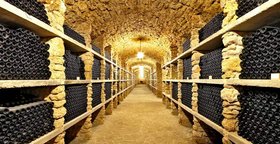
Super Tuscan investment performance depends heavily on proper storage:
- Temperature: Maintain 10-15°C (50-59°F) consistently
- Humidity: Keep between 65-75% to protect corks
- Light: Store in dark conditions; UV degrades wine
- Vibration: Minimize movement to allow proper aging
- Original cases: OWC (original wooden case) adds significant resale value
- Provenance: Bonded warehouse storage provides documented chain of custody
Vinovest sources Super Tuscans directly from estates and negociants, storing them in professional bonded warehouses with verified provenance. This eliminates the authentication and storage risks that can undermine investment returns.
Best Vintages to Consider
Trophy Vintages (Maximum Appreciation Potential):
- 2006, 2010, 2015, 2016 — Outstanding quality across all top producers
Investment-Grade (Strong Quality, Rational Pricing):
- 2013, 2018, 2019 — Excellent critic scores with room for appreciation
Current Release Opportunities:
- 2022 Tignanello (95-96 points, €100-140)
- 2022 Sassicaia (strong vintage, accessible pricing)
Frequently Asked Questions
What is a Super Tuscan wine?
Super Tuscan wines are high-quality Italian reds from Tuscany that broke from traditional DOC regulations by using international grape varieties (Cabernet Sauvignon, Merlot, Cabernet Franc) alongside or instead of Sangiovese. Originally classified as simple "table wine" despite their quality, they now occupy their own IGT category and include some of Italy's most valuable wines.
What are the best Super Tuscan wines?
The "Big Five" Super Tuscans are Sassicaia, Masseto, Ornellaia, Tignanello, and Solaia. All five are tracked on the Liv-ex Italy 50 index and have delivered strong investment returns. Emerging names like Soldera, Redigaffi (Tua Rita), and Messorio (Le Macchiole) also warrant attention.
Are Super Tuscan wines good investments?
Yes. Top Super Tuscans have delivered 10-16% annualized returns over 20 years, with flagship vintages exceeding 200% appreciation. The category offers lower volatility than Bordeaux, accessible price points, and growing global demand. The Liv-ex Italy 100 index has consistently outperformed expectations.
How do Super Tuscans compare to Bordeaux?
Super Tuscans offer similar aging potential and quality at more accessible prices. A case of Sassicaia costs significantly less than a case of First Growth Bordeaux but has delivered comparable (or superior) percentage returns. For portfolio diversification, Super Tuscans provide exposure to Italian market dynamics that operate independently of Bordeaux.
What's the difference between Sassicaia and Tignanello?
Sassicaia is Cabernet Sauvignon-dominant (Bolgheri style), while Tignanello is Sangiovese-dominant (Chianti Classico style). Both are iconic, but they offer different flavor profiles and market dynamics. Sassicaia trades at higher absolute prices; Tignanello offers stronger relative value at current pricing.
Build your Super Tuscan portfolio with Vinovest. Start investing with professional sourcing, bonded storage, and verified provenance.