25 Most Expensive Wines in the World (2026)
What makes a bottle of wine worth more than a luxury car—or even a house? The world's most expensive wines represent the intersection of exceptional terroir, historical significance, extreme scarcity, and collector demand.
In this comprehensive guide, we explore 25 of the most valuable wines ever sold, from legendary Burgundy estates to historic Bordeaux chateaux. Whether you're a serious collector, wine investor, or simply curious about what makes these bottles so extraordinary, you'll discover the stories and factors behind these remarkable prices.
Further reading
- Discover 12 of the Most Expensive Champagne Bottles in the world.
- Want to invest in fine wine to reap attractive rewards in the long run? Our detailed Wine Investing Guide is all you’ll need.
What's in This Guide
- 15 Most Expensive Wines by Average Market Price
- 10 Record-Breaking Auction Wines
- What Makes Wine Expensive (8 Key Factors)
- Spotlight: Lalou Bize-Leroy & Domaine Leroy
- Wine as an Investment Asset
- Frequently Asked Questions
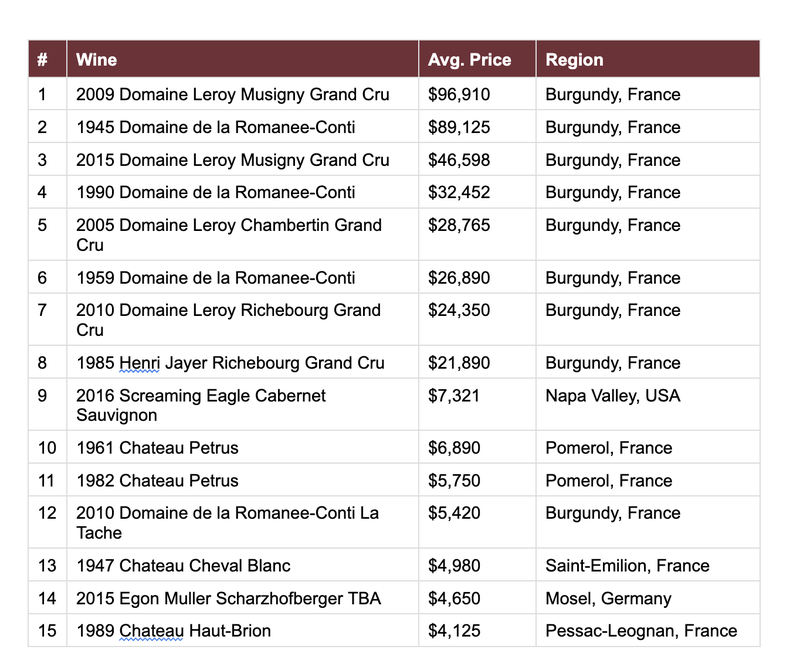
15 Most Expensive Wines by Average Market Price
These wines command extraordinary prices based on their consistent market valuations. Unlike one-time auction records, these prices reflect what collectors regularly pay for these prestigious bottles:
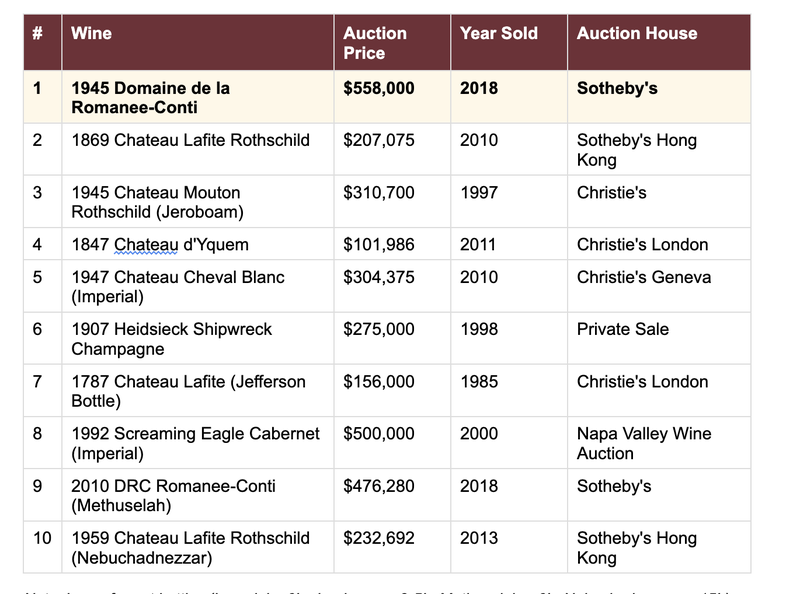
10 Record-Breaking Auction Wines
These historic bottles achieved unprecedented prices at major auction houses, often due to exceptional provenance, historical significance, or unique circumstances:
What Makes Wine Expensive? 8 Key Factors
Understanding why certain wines command astronomical prices requires examining the complex interplay of factors that create value in the fine wine market:
1. Terroir & Vineyard Classification
The concept of terroir—the unique combination of soil, climate, and geography—is fundamental to wine value. Burgundy's Grand Cru vineyards like Romanee-Conti cover just 1.8 hectares (4.5 acres) and produce roughly 6,000 bottles annually. This extreme scarcity combined with ideal growing conditions creates wines that simply cannot be replicated elsewhere.
2. Producer Reputation & History
Centuries of winemaking heritage carry enormous weight. Estates like Chateau Lafite Rothschild (established 1234) and Domaine de la Romanee-Conti (1760) have multi-generational track records of excellence. The expertise passed down through generations, combined with meticulous vineyard management, creates wines of consistent exceptional quality.
3. Vintage Quality & Conditions
Exceptional vintages occur when weather conditions align perfectly throughout the growing season. The 1945 vintage—the year World War II ended—produced legendary wines across Europe despite wartime challenges. Similarly, 2010, 2015, and 2016 are celebrated as outstanding recent vintages. Great vintages can command 3-10x the price of average years from the same producer.
4. Production Scarcity
Limited production drives prices upward through basic supply and demand. Screaming Eagle produces approximately 500 cases annually, while Domaine Leroy's Musigny yields under 300 cases. When global demand from collectors, restaurants, and investors far exceeds supply, prices escalate dramatically.
5. Critical Acclaim & Scores
Wine critics wield significant influence over prices. A 100-point score from Robert Parker or Jancis Robinson can immediately double or triple a wine's value. Publications like Wine Spectator, Decanter, and Wine Advocate shape collector perceptions and drive demand for top-rated wines.
6. Provenance & Storage History
A wine's storage history significantly impacts both quality and value. Bottles stored in optimal conditions (55F, 70% humidity, darkness, no vibration) command premiums, while those with questionable provenance face skepticism. Documentation of cellar conditions, ownership history, and chain of custody are essential for high-value bottles.
7. Historical Significance
Wines connected to historical events or famous figures carry romance and narrative value. Thomas Jefferson's purported wine collection, bottles recovered from shipwrecks, or wines marking significant historical moments (like liberation vintages from 1945) capture collectors' imaginations and command premiums far beyond their drinking value.
8. Bottle Format & Condition
Large format bottles (magnums, jeroboams, imperials) age more gracefully due to the lower ratio of oxygen exposure to wine volume. They're also rarer, as fewer are produced. A pristine Chateau Petrus in Imperial format might sell for 20x the price of a standard 750ml bottle from the same vintage.
Spotlight: Lalou Bize-Leroy & Domaine Leroy
Among the most expensive wines in the world, Domaine Leroy consistently occupies the top positions. This extraordinary domaine is the creation of one remarkable woman: Lalou Bize-Leroy.
The Visionary Behind the Wines
Lalou Bize-Leroy, born in 1932, grew up immersed in wine as the daughter of Henri Leroy, who co-owned Domaine de la Romanee-Conti. She served as co-director of DRC from 1974 to 1992, developing an unparalleled palate and understanding of Burgundy's finest terroirs.
In 1988, she established Domaine Leroy by purchasing vineyards from Charles Noellat and Philippe Remy, including exceptional Grand Cru holdings in Musigny, Chambertin, Richebourg, Romanee-Saint-Vivant, and Clos de Vougeot.
Biodynamic Philosophy
What sets Domaine Leroy apart is Lalou's uncompromising commitment to biodynamic viticulture. Since 1988, the domaine has farmed without synthetic chemicals, pesticides, or herbicides. Yields are kept exceptionally low—often 50-80% below Burgundy averages—concentrating flavors and complexity.
This approach produces wines of extraordinary intensity and purity, but in minuscule quantities. The 2009 Domaine Leroy Musigny, currently the world's most expensive wine by average market price at $96,910, was produced in quantities of fewer than 200 cases.
Investment Performance
Domaine Leroy wines have proven to be exceptional investments. The 2009 Musigny Grand Cru has appreciated over 400% since release. Collectors prize these bottles not only for their investment potential but also for their remarkable ability to age and develop complexity over decades.
Wine as an Investment Asset
Fine wine has emerged as a compelling alternative investment asset class, offering portfolio diversification and strong historical returns. Here's what potential wine investors should understand:
Historical Returns
The Liv-ex Fine Wine 1000 index, which tracks 1,000 of the world's finest wines, has delivered annualized returns of approximately 8-10% over the past 20 years. During periods of market volatility, fine wine has often shown low correlation with traditional equity markets, providing valuable portfolio diversification.
Key Investment Regions
- Bordeaux First Growths: Lafite, Latour, Margaux, Haut-Brion, Mouton—the blue chips of wine investment
- Burgundy Grand Crus: DRC, Leroy, Henri Jayer—highest prices but limited availability
- Super Tuscans: Sassicaia, Ornellaia, Tignanello—growing collector demand
- Cult California: Screaming Eagle, Harlan, Scarecrow—strong US market support
- Champagne: Salon, Krug, Dom Perignon P2/P3—emerging investment category
Investment Considerations
- Storage Costs: Professional storage runs $15-25 per case annually, essential for maintaining value
- Insurance: Typically 0.5-1% of collection value annually for comprehensive coverage
- Authentication: Counterfeit wines are a significant concern; purchase only from reputable sources
- Liquidity: Wine is less liquid than stocks; selling may take time and incur auction commissions (10-25%)
- Drinking Window: Investment wines have optimal drinking windows; holding too long can diminish value
Getting Started with Wine Investment
For investors seeking exposure to fine wine without the complexities of physical ownership, platforms like Vinovest offer fractional wine investment with professional storage, insurance, and authentication handled by experts. Minimum investments start at $1,000, making fine wine accessible to a broader range of investors.
Frequently Asked Questions
What is the most expensive wine ever sold?
The most expensive wine ever sold is a 1945 Domaine de la Romanee-Conti, which achieved $558,000 at Sotheby's New York in October 2018. This legendary Burgundy came from the final vintage produced before the estate's original vines were replanted due to phylloxera. Only 600 bottles were ever produced.
Why is Burgundy wine so expensive?
Burgundy commands high prices due to extreme scarcity (vineyards are tiny compared to Bordeaux), single-varietal purity (100% Pinot Noir for reds), climate sensitivity that creates vintage variation, and the prestige of historic Grand Cru classifications. Top producers like DRC and Domaine Leroy produce just hundreds of cases annually, while global demand continues growing.
Is expensive wine worth the price?
For collectors and investors, expensive wines offer potential appreciation, portfolio diversification, and the prestige of owning rare bottles. For drinkers, the quality difference between a $50 and $5,000 wine is real but diminishing. Many experts suggest that for pure drinking pleasure, excellent wines exist at every price point. The stratospheric prices of top bottles reflect scarcity and collector demand as much as objective quality.
How can I invest in expensive wine?
Wine investment options include: 1) Direct purchase through auction houses (Christie's, Sotheby's) or merchants (Berry Bros, K&L Wine), requiring proper storage and insurance; 2) Wine funds that pool investor capital for diversified holdings; 3) Fractional platforms like Vinovest that handle storage, insurance, and authentication; 4) Wine futures (en primeur) for Bordeaux releases. Start with established investment-grade wines and verified provenance.
What makes the 1945 DRC so valuable?
The 1945 Domaine de la Romanee-Conti represents a perfect storm of value factors: 1) Historical significance as the final vintage before phylloxera replanting; 2) Outstanding vintage quality; 3) Extreme rarity with only 600 bottles produced; 4) Exceptional aging potential—bottles from this vintage still drink beautifully; 5) The irreplaceable nature of pre-phylloxera vines. It represents both the pinnacle of winemaking and a piece of wine history that can never be recreated.
Do expensive wines age better than cheaper wines?
Generally yes, but with important caveats. Age-worthy wines typically have high tannin levels (reds), high acidity, concentrated fruit, and balanced structure. Most expensive wines are built to age decades. However, aging potential doesn't directly correlate with price—some expensive wines are meant to be enjoyed young, while certain affordable wines (like quality Riesling or Barolo) can age beautifully for 20+ years.