Red Wine Brands: The Complete Guide to Top Producers by Region and Price (2026)
Great red wine comes from every major wine-producing region on earth. But not all producers are equal, and navigating the landscape requires understanding the relationship between region, producer reputation, price tier, and occasion. This guide does exactly that — covering the leading brands at every level, from bottles under $25 to trophy wines above $5,000.
Further reading
- Dive into our Red Wine Guide to learn about the most popular varieties, the best food pairings, investment-worthy bottles, and more.
- Or mix things up by creating a delicious Red Wine Cocktail from the comfort of your home.
French Red Wine Brands
France produces more prestigious red wine than any other country, with Bordeaux and Burgundy setting the global standard. Understanding the key producers is essential for any serious wine enthusiast or collector.
Bordeaux: The Five First Growths
The 1855 Classification established Bordeaux's hierarchy, and these five châteaux remain at the apex nearly 170 years later. These are the blue-chip investments of the wine world.
Château Lafite Rothschild (Pauillac) — $600–800 (current vintage)
Lafite defines elegance in Bordeaux. The Rothschild family's flagship estate produces wines of extraordinary finesse and longevity from 178 acres of vines averaging 40+ years old. Predominantly Cabernet Sauvignon (80–95%) with a style that emphasises aromatic complexity, silky tannins, and 50+ year aging potential in great vintages. Historic vintages command significantly more: 1982 ($2,500+), 2009 ($1,500+). Carruades de Lafite (second wine, $150–200) offers an accessible entry point.
Château Latour (Pauillac) — $700–900 (current release)
If Lafite is elegance, Latour is power. The most structured and long-lived of the First Growths — great vintages can age for a century. Owned by François Pinault, Latour controversially withdrew from en primeur sales in 2012, now releasing wines only when deemed ready, typically 10+ years after vintage. The 2010 Latour is widely considered one of the greatest wines ever made.
Château Margaux (Margaux) — $600–800
Feminine elegance defines Margaux. The largest First Growth by vineyard area (210 acres under vine) yet production of Grand Vin remains selective — 10,000–12,000 cases. Silky texture, floral aromatics, and graceful structure distinguish it from its more powerful Pauillac neighbours. Pavillon Rouge (second wine, $150–180) offers accessible quality.
Château Mouton Rothschild (Pauillac) — $500–700
The only château ever elevated in the 1855 Classification — promoted from Second Growth to First Growth in 1973. Produces the most opulent, immediately appealing First Growth style. Famous for commissioning original artwork for each vintage's label: Picasso, Dalí, Warhol, Jeff Koons. The 1945 Victory label remains one of the most valuable wines ever made.
Château Haut-Brion (Pessac-Léognan) — $500–700
The oldest recorded Bordeaux estate (documented since 1525) and the only First Growth from outside the Médoc. Distinctively earthy style — smoky, tobacco-inflected, with savory depth. Higher Merlot percentages (35–45%) than Pauillac estates create softer tannins. La Mission Haut-Brion (sister estate, $400–600) is often considered an unofficial Sixth First Growth.
Bordeaux: Super Seconds and Notable Estates
| Château | Appellation | Price Range | Character |
|---|---|---|---|
| Léoville-Las Cases | Saint-Julien | $200–300 | Super Second; the most structured Saint-Julien — borders Latour |
| Pichon Lalande | Pauillac | $180–250 | Seductive, approachable; high Merlot for Pauillac |
| Palmer | Margaux | $300–400 | 40%+ Merlot; approaches First Growth quality; cult following |
| Cos d'Estournel | Saint-Estèphe | $180–250 | Exotic pagoda château; refined, modern style |
| Ducru-Beaucaillou | Saint-Julien | $200–280 | Classic Saint-Julien elegance; exceptional consistency |
| Lynch-Bages | Pauillac | $100–150 | Crowd-pleasing richness; excellent value for the appellation |
| Pontet-Canet | Pauillac | $150–200 | Biodynamic; powerful; increasingly cult status |
| Léoville-Barton | Saint-Julien | $100–150 | Excellent quality-to-price ratio; reliable every vintage |
Bordeaux Right Bank: Pomerol and Saint-Émilion
Château Pétrus (Pomerol) — $3,000–5,000
The king of Merlot. Just 28 acres on Pomerol's clay plateau, approximately 2,500 cases annually. Typically 100% Merlot — unprecedented concentration and complexity. Great vintages (1961, 1982, 1989, 2000, 2009) fetch $10,000+.
Château Le Pin (Pomerol) — $2,500–4,000
Even smaller than Pétrus at 5 acres, producing 500–700 cases annually. The original garage wine — Jacques Thienpont's tiny estate achieved cult status in the 1980s. Rich, hedonistic, immediately appealing.
Château Cheval Blanc (Saint-Émilion) — $600–800
Unique 50/50 Cabernet Franc and Merlot blend creates wines unlike anything else in Bordeaux. Exotic, spicy, age-worthy. Shares Premier Grand Cru Classé A status with Ausone.
Other notable right bank estates: Château Ausone ($600–800), Château Figeac ($200–300 — recently elevated to Premier Grand Cru Classé A), Château Angélus ($250–350), Château Pavie ($200–300).
Burgundy Red Wine Brands
Burgundy's prestige derives from terroir — specific vineyard sites (called 'climats') produce unique expressions of Pinot Noir. Understanding Burgundy requires understanding its domaines.
Domaine de la Romanée-Conti (DRC)
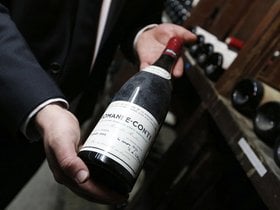
DRC produces the world's most expensive wines. The domaine owns or co-owns eight Grand Cru vineyards, including the legendary 4.5-acre Romanée-Conti monopole. Romanée-Conti Grand Cru: $25,000–35,000 (5,000–6,000 bottles/year). La Tâche Grand Cru: $5,500–8,600. Richebourg: $2,200–5,700. DRC La Tâche 2018 was the single best-performing wine of 2025, gaining 37% in value.
Domaine Leroy: Lalou Bize-Leroy's biodynamic estate; yields are minuscule, prices extraordinary. Premier Cru from ~$500; Grand Cru to $3,000+.
Domaine Armand Rousseau (Gevrey-Chambertin): Benchmark for Gevrey-Chambertin; classic, age-worthy Pinot Noir. Village wines from $100; Grand Cru $500–1,500.
Domaine Georges Roumier (Chambolle-Musigny): Ethereal wines with extraordinary purity. Premier Cru $300–600; Grand Cru $1,000–2,000.
Other notable Burgundy producers: Domaine Dujac ($150–800), Domaine Comte Liger-Belair ($2,500+ for La Romanée monopole), Domaine Coche-Dury ($300–2,000), Domaine Méo-Camuzet ($100–800), Domaine Jean Grivot ($80–500).
Rhône Valley Red Wine Brands
Northern Rhône: Syrah
E. Guigal: Marcel Guigal's La La's — La Mouline, La Landonne, La Turque — are single-vineyard Côte-Rôtie wines aged 42 months in new oak ($400–600 each). Côte-Rôtie Brune et Blonde (~$80–100) is among the best value Rhône wines.
Domaine Jean-Louis Chave: Gérard Chave's family has produced Hermitage for 600 years. Hermitage Rouge: $200–400; Hermitage Blanc: $250–450.
M. Chapoutier (biodynamic; single-vineyard masterpieces: Ermitage L'Ermite and Le Pavillon $500+), Domaine Jamet Côte-Rôtie ($100–200), Domaine Auguste Clape Cornas ($80–150).
Southern Rhône: Châteauneuf-du-Pape
Château Rayas: The cult estate; 100% Grenache of extraordinary complexity. Emmanuel Reynaud's traditional methods yielded wines that challenge Burgundy Grand Crus. His passing in November 2025 triggered sharp price appreciation. $400–600 and climbing.
Château de Beaucastel: Perrin family estate; consistently excellent using all 13 permitted varieties. Hommage à Jacques Perrin ($300–400) rivals Rayas. Regular cuvée $80–100.
Other notable: Clos des Papes ($80–100), Domaine du Vieux Télégraphe ($60–80), Domaine de la Janasse ($50–150).
Italian Red Wine Brands
Piedmont: Barolo and Barbaresco
| Producer | Wine | Price Range | Style |
|---|---|---|---|
| Giacomo Conterno | Monfortino Riserva | $500–800 | The benchmark traditional Barolo; requires decades |
| Bruno Giacosa | Falletto (Red Label Riserva) | $150–500 | Elegance and longevity; legendary status |
| Gaja | Barbaresco / Sori San Lorenzo | $250–500 | Burgundian techniques; international fame |
| Bartolo Mascarello | Barolo | $150–300 | Uncompromising traditional; tiny production |
| Giuseppe Mascarello | Monprivato | $100–250 | Extraordinary finesse; Old School Barolo |
| Vietti | Barolo (various crus) | $60–200 | Excellent quality-to-price across range |
| G.D. Vajra | Barolo Bricco delle Viole | $50–120 | Excellent value; modern-traditional balance |
Tuscany: Super Tuscans and Brunello
Sassicaia (Tenuta San Guido): The original Super Tuscan — 85% Cabernet Sauvignon, 15% Cabernet Franc from Bolgheri. Launched a revolution in the 1970s. $250–350. Top-performing Italian wine on the Liv-ex market in recent years.
Masseto: 100% Merlot from a single 17-acre vineyard. Italy's answer to Pétrus. $700–1,000.
Ornellaia ($200–280), Tignanello ($120–160), and Solaia ($300–400) by Antinori — Soldera Casse Basse ($400–600, +224% over 10 years) is Italy's top investment performer.
Brunello di Montalcino: Biondi-Santi (the creator of Brunello; Riserva $300–500), Casanova di Neri ($80–150), Il Poggione ($50–80 — excellent value). The 2021 vintage began official release January 2026 — a top-rated year.
Veneto: Amarone
Giuseppe Quintarelli ($300–500) and Dal Forno Romano ($300–400) represent Amarone at its most profound. Bertani ($80–150), Allegrini ($70–100), and Tommasi ($50–80) offer excellent accessible options.
Spanish Red Wine Brands
Vega Sicilia (Ribera del Duero): Spain's most prestigious estate. Único (aged 10+ years): $400–600; Valbuena 5°: $150–200.
Pingus (Ribera del Duero): Peter Sisseck's cult wine commands Pétrus-like prices. $700–1,000.
López de Heredia (Rioja): The traditional benchmark; wines aged for decades in American oak before release. Viña Tondonia: $40–150.
Other notable Spanish producers: La Rioja Alta ($30–80), CVNE Imperial ($30–100), Muga ($25–60), Marqués de Murrieta ($30–80), Pesquera ($30–100). For Priorat: L'Ermita by Álvaro Palacios ($600–800) — the wine that put Priorat on the map.
American Red Wine Brands
Napa Valley Cult Cabernets
Screaming Eagle: The most expensive American wine — 57-acre Oakville estate, approximately 500–800 cases annually. $3,500–4,000. Jean Phillips founded the estate in 1986; a 99-point Robert Parker score on the 1992 vintage launched the cult phenomenon.
Harlan Estate ($800–1,000), Scarecrow ($600–800), Colgin Cellars ($300–500), Hundred Acre ($400–600), Opus One ($400–450).
Premium Napa tier: Joseph Phelps Insignia ($200–250), Stag's Leap Wine Cellars CASK 23 ($250–300), Silver Oak ($100–140), Duckhorn ($60–100).
Sonoma, Oregon, and Washington
Sonoma Pinot Noir: Williams Selyem ($70–150), Kistler ($80–150), Flowers ($50–80). Oregon Pinot Noir: Domaine Drouhin Oregon ($40–80), Beaux Frères ($60–100), Eyrie Vineyards ($40–70). Washington State: Quilceda Creek ($200–300), Leonetti Cellar ($100–150), L'Ecole No. 41 ($30–60).
Australian and Southern Hemisphere Red Wine Brands
Penfolds Grange: Australia's national wine icon — Max Schubert's Shiraz masterpiece, first made in 1951. $700–900.
Henschke Hill of Grace: Single-vineyard Shiraz from 150+ year-old Eden Valley vines. $700–850.
Other notable Australian producers: Torbreck RunRig ($180–220), Penfolds Bin 389 ($60–80 — 'Baby Grange'), Two Hands ($40–100), d'Arenberg ($20–100). Margaret River Cabernet: Cullen Diana Madeline ($100–150), Leeuwin Estate Art Series ($80–120).
Argentina Malbec: Catena Zapata Nicolás Catena ($150–200), Achaval-Ferrer Finca Altamira ($80–120), Bodega Noemia ($80–150), Zuccardi ($20–100). South Africa Stellenbosch: Kanonkop Paul Sauer ($50–80), Meerlust Rubicon ($40–60).
Red Wine Brands by Price Point
| Price Tier | Best Bottles | Region | Style |
|---|---|---|---|
| Under $25 |
Marqués de Cáceres Crianza, Catena Malbec, Concha y Toro Gran Reserva, Louis Jadot Beaujolais-Villages | Rioja, Mendoza, Chile, Burgundy | Everyday quality |
| $25–$50 |
Produttori del Barbaresco, Il Poggione Brunello, Château Sociando-Mallet, L'Ecole No. 41 | Piedmont, Tuscany, Bordeaux, Washington | Weekend wines; serious quality |
| $50–$100 |
Clos des Papes, Williams Selyem, Penfolds Bin 389, Château Beychevelle | Châteauneuf, Sonoma, Barossa, Saint-Julien | Special occasions |
| $100–$500 |
Château Léoville-Las Cases, Giacomo Conterno Francia, Joseph Phelps Insignia, Ornellaia | Saint-Julien, Barolo, Napa, Bolgheri | Collector grade |
| $500+ |
DRC Romanée-Conti, Château Pétrus, Screaming Eagle, Sassicaia top vintages | Burgundy, Pomerol, Napa, Bolgheri | Trophy and investment wines |
Frequently Asked Questions
What are the most prestigious red wine brands in the world?
Domaine de la Romanée-Conti (Burgundy), Château Pétrus (Pomerol), Château Lafite Rothschild (Bordeaux), Screaming Eagle (Napa Valley), and Sassicaia (Tuscany) are consistently among the world's most prestigious. DRC Romanée-Conti is the single most valuable red wine produced anywhere, at $25,000–35,000 per bottle.
Which red wine brand offers the best value?
At under $25: Catena Malbec (Mendoza), Concha y Toro Gran Reserva (Chile), and Marqués de Cáceres Crianza (Rioja) offer outstanding quality. At $25–50: Il Poggione Brunello di Montalcino and Produttori del Barbaresco are exceptional values for age-worthy Italian reds.
Which red wine brands are good for investment?
Bordeaux First Growths (Lafite, Latour, Margaux, Mouton, Haut-Brion), Grand Cru Burgundy (DRC, Leroy, Rousseau), Napa cult Cabernets (Screaming Eagle, Harlan), and top Italian producers (Sassicaia, DRC Montrachet in the white category, Giacomo Conterno) have the best established secondary markets and long-term appreciation track records.
What is the difference between First Growth and Super Second Bordeaux?
First Growths (Premiers Crus) are the five Bordeaux châteaux at the top of the 1855 Classification: Lafite, Latour, Margaux, Mouton, and Haut-Brion. 'Super Seconds' is an informal term for Second Growth estates (and a few others) that consistently produce quality approaching First Growth level — Léoville-Las Cases, Palmer, Cos d'Estournel, and Pichon Lalande are the most prominent examples.
Last updated: May 2026 | Vinovest editorial team | Prices sourced from Wine-Searcher, Liv-ex, and the original Vinovest Red Wine Brands guide