Scotch Whisky Investment by Region: Speyside, Islay & Highland (2026)
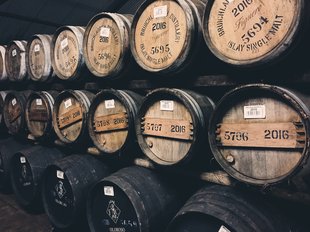
Scotch is the bedrock of the whisky investment market — the deepest, most liquid, and most established corner of the rare spirits world. But “Scotch” is not a single asset. The country’s five recognised whisky regions each carry their own production traditions, collector followings, and investment dynamics. A bottle of heavily peated Islay single malt behaves very differently on the secondary market than an elegant Speyside sherry bomb or a cult Campbeltown release. Understanding those regional differences is one of the most useful frameworks a new whisky investor can adopt.
Scotland’s five whisky regions — Speyside, Islay, Highland, Campbeltown, and Lowland — each offer a distinct investment profile. Speyside (home to Macallan) dominates the blue-chip market; Islay (Ardbeg, Bowmore) commands fierce collector loyalty; and tiny Campbeltown (Springbank) has become the cult investor’s favourite thanks to extreme scarcity. A diversified Scotch portfolio spreads capital across regions to balance stability and growth.
Further reading
Whiskey Investment Guide: How to Build a Profitable Whisky Portfolio in 2026
Japanese Whisky: Complete 2026 Guide to the Best Brands, Bottles and Investment
Why Region Matters for Whisky Investors
The Scotch Whisky Regulations formally recognise five protected regions. Originally these designations described geography and flavour, but for investors they have become a useful shorthand for market behaviour. Some regions are dominated by globally recognised brands with deep auction liquidity; others are defined by tiny output and obsessive collector demand. Building exposure across several regions is the whisky equivalent of diversifying a wine portfolio across producers and vintages — it smooths returns and reduces reliance on any single brand’s fortunes.
The broader backdrop is encouraging. The Rare Whisky Apex 1000 Index, which tracks 1,000 collectible bottles, rose roughly 416% between 2012 and 2022. After a period of consolidation in 2024–25 — when speculative mid-tier prices cooled — the 2026 market favours quality and provenance over hype, which historically rewards patient, regionally diversified collectors.
Speyside: The Blue-Chip Heartland
Speyside is the most densely populated whisky region on earth, home to roughly half of Scotland’s distilleries, clustered around the River Spey in the northeast. Its whiskies are typically elegant, fruit-forward, and frequently matured in sherry casks — a style that has proven enormously popular with collectors worldwide.
This is the home of Macallan, the single most important name in whisky investment. Often called “the Rolex of Scotch,” Macallan dominates the secondary market — a single bottle of the 1926 Macallan with a Valerio Adami label sold for around $2.7 million at Sotheby’s in November 2023, one of the highest prices ever paid for a bottle of spirits. While mid-range Macallan (the 12 to 18 year expressions) saw price softening through 2024–25, the ultra-rare Red Collection and Fine & Rare series have continued to appreciate, with collectors specifically targeting older sherry-oak maturations that are increasingly difficult to produce at scale.
Best for: stability and liquidity. Speyside’s blue-chip names anchor a portfolio the way established estates anchor a wine collection. Beyond Macallan, watch GlenDronach, Glenfarclas, and aged Glenfiddich expressions.
Islay: Peat, Passion and Collector Loyalty
Islay (pronounced “eye-luh”) is a small Hebridean island producing intensely peated, smoky, maritime whiskies that inspire near-fanatical devotion. That passionate collector base is precisely what makes Islay interesting from an investment standpoint: limited releases sell out within hours and immediately trade at multiples of retail.
Ardbeg is the standout example. Its annual Committee releases and special editions are virtually guaranteed to appreciate on release, supported by one of the most engaged fan communities in all of whisky. Bowmore — the island’s oldest distillery — produces genuine trophy assets: a 1961 Bowmore 50 Year Old rose from roughly $78,500 in May 2024 to about $100,700 a year later, a 28% gain in twelve months. The fact that planning permission on Islay is notoriously difficult, yet several new distilleries have still been built, tells you everything about demand for the region’s output.
Best for: growth and momentum. Islay releases can move quickly, driven by scarcity and community demand. Watch Ardbeg, Bowmore, Lagavulin, and the closed distillery Port Ellen, whose finite, declining stocks appear in Diageo’s annual Special Releases.
Highland: Scale and Diversity
The Highland region is geographically the largest, and its whiskies are correspondingly varied — from rich and full-bodied to light and floral. For investors, the Highlands offer two distinct opportunities: ultra-premium luxury positioning and closed-distillery scarcity.
Dalmore has cultivated an ultra-premium image through luxury collaborations and extremely limited older expressions; its Constellation Collection and Decades releases command five-figure prices. At the other end of the spectrum sits Brora, a legendary closed distillery whose remaining stocks are finite and shrinking with every release. Glenmorangie and Highland Park (technically an Island whisky, often grouped with the Highlands) round out a region with both household names and serious collector credentials.
Best for: balanced exposure. The Highlands’ sheer breadth means investors can find both stable luxury names and scarcity-driven closed-distillery plays.
Campbeltown: The Cult Investor’s Favourite
Once known as the “Whisky Capital of the World,” Campbeltown once boasted over 30 distilleries. Today just three remain — Springbank, Glen Scotia, and Glengyle — yet the region retains its own protected status, a testament to how distinctive its robust, slightly briny, oily-textured whiskies are.
Springbank has quietly become one of the most collected distilleries in the world. Because it performs every part of the production process on-site, its output is tiny relative to the industry giants. The result is a demand-to-supply imbalance so extreme that in 2026 a Springbank 15 or 21 is often more liquid — easier to sell quickly at a strong price — than bottles from far more famous brands. For investors, Campbeltown is the closest the whisky world comes to a guaranteed-scarcity play.
Best for: scarcity-driven appreciation. Tiny production and devoted demand make Springbank in particular a cult favourite, though entry can be difficult precisely because supply is so constrained.
Lowland: The Emerging Outlier
The Lowlands produce light, gentle, often triple-distilled whiskies. Historically this region has been the least represented in investment portfolios, but a wave of new and revived distilleries — including Daftmill, Bladnoch, and Rosebank (reopened after decades closed) — has begun to attract collector attention. Rosebank in particular, as a revived “ghost” distillery, is one to watch.
Best for: speculative, early-stage positions. Returns are less proven here, but the revival of historic names offers asymmetric upside for investors willing to take a longer view.
Scotch Whisky Regions at a Glance
| Region |
Signature Style |
Flagship Investment Names |
Investor Profile |
|---|---|---|---|
| Speyside | Elegant, sherried, fruit-forward | Macallan, GlenDronach, Glenfarclas | Blue-chip stability |
| Islay | Peated, smoky, maritime | Ardbeg, Bowmore, Port Ellen | Growth & momentum |
| Highland | Varied; rich to floral | Dalmore, Brora, Highland Park | Balanced exposure |
| Campbeltown | Robust, briny, oily | Springbank, Glen Scotia | Scarcity-driven |
| Lowland | Light, gentle, triple-distilled | Rosebank, Daftmill, Bladnoch | Speculative upside |
How to Start Investing in Scotch Whisky
There are three broad routes into Scotch whisky as an asset, each suited to a different type of investor.
Option 1: Self-Directed Collecting
Buy bottles directly from distilleries, specialist retailers (The Whisky Exchange, Master of Malt), and auction houses (Whisky Auctioneer, Bonhams). This route gives you full control and the lowest ongoing cost, but it demands real expertise: you handle authentication, you arrange correct storage (upright, 15–20°C, away from UV light, with all original packaging retained), and you carry the burden of finding a buyer when you sell. Entry is possible from around £500–£1,000 for a single investment-grade bottle.
Option 2: Specialist Brokerage or Cask Investment
Work with a specialist whisky broker, or buy an entire cask rather than bottles. Cask investment offers concentrated exposure to maturation economics but requires patient capital and a 10+ year horizon, plus careful due diligence on the broker, the bonded warehouse, and the exit strategy. Brokers charge commission but provide market intelligence and access to private sales that never reach public platforms.
Option 3: A Managed Platform Like Vinovest
Vinovest’s managed approach is designed for investors who want exposure to rare whisky as an asset class without the operational complexity of sourcing, authenticating, storing, and selling it themselves. The platform’s specialists handle the entire lifecycle: a data-driven algorithm helps build a portfolio matched to your goals, every bottle and cask is authenticated and stored in professional bonded conditions, holdings are fully insured, and the team manages the eventual sale when your whisky reaches peak value (typically a 4–8 year hold for whisky).
Crucially, Vinovest lets you hold whisky alongside fine wine and other alternative assets in a single diversified portfolio — a genuine advantage given that whisky’s returns often move independently of both equities and wine. The track record speaks to the model: a recent batch of high-rye bourbon casks offered to clients at $1,415 per barrel was sold seven months later at $1,850 each, a 30.7% return. Vinovest has returned over $27.5 million in capital to its 200,000+ clients and holds more than 1.7 million bottles under custody. Plans start from a $1,000 minimum on the Starter tier, with annual fees scaling from 2.85% down to 2.25% for larger portfolios.
Risks to Keep in Mind
Whisky is a real asset with real risks. Prices can fall as well as rise — the mid-tier correction of 2024–25 is a recent reminder. Liquidity varies dramatically by region and name: a Springbank 21 may sell in days, while a mid-tier bottle can sit unsold for months. Authentication is essential at higher price points, where counterfeits exist. And as with any alternative investment, whisky should represent only a measured portion of a broader portfolio. Most specialists suggest treating rare spirits as a long-term holding rather than a short-term trade.
Frequently Asked Questions
Which Scotch whisky region is best for investment?
There is no single “best” region — each serves a different purpose. Speyside (led by Macallan) offers the most stability and liquidity; Islay (Ardbeg, Bowmore) offers momentum and a passionate collector base; and Campbeltown (Springbank) offers extreme scarcity. The strongest approach is to diversify across regions rather than concentrate in one.
How much do I need to start investing in Scotch whisky?
A single investment-grade bottle can be bought from around £500–£1,000. A meaningful diversified bottle portfolio typically requires £5,000–£25,000, while cask investment usually starts higher. Managed platforms like Vinovest open with a $1,000 minimum on their entry tier.
Is Scotch a better investment than Japanese whisky?
They play different roles. Scotch has the deepest, most liquid, and longest-established secondary market, making it the natural core of a whisky portfolio. Japanese whisky has delivered more dramatic price movements — in both directions — and carries higher authentication risk. Many investors hold both, using Scotch as the stable foundation and Japanese whisky as a higher-conviction scarcity play.
How should I store whisky bought for investment?
Store bottles upright (not on their side like wine) to prevent the high-strength spirit from degrading the cork, in a cool, dark place between 15 and 20°C, away from direct sunlight. Retain all original boxes and documentation, which can add a 10–20% premium at resale. For higher-value bottles, professional bonded storage with insurance and provenance tracking is strongly recommended.
Ready to add rare whisky to your portfolio alongside fine wine? Explore how Vinovest handles sourcing, authentication, secure storage, and sales — so you can invest in Scotch with confidence.
This article is for informational purposes only and does not constitute financial advice. Past performance is not a guarantee of future results. All investments carry risk, including the potential loss of capital.