Cognac Investment Guide: Louis XIII, Hennessy Paradis and the Ultra-Premium Eaux-de-Vie Market in 2026
Whisky investors obsess over the angel’s share. Wine investors fret about ullage and storage temperature. Cognac investors have a different problem entirely: once it’s in the bottle, it simply stops changing. That one fact makes Cognac one of the most quietly practical spirits in the entire alternative asset world — and one of the most overlooked. While Scotch and bourbon dominate the spirits-investment conversation, the ultra-premium eaux-de-vie of Cognac — led by Louis XIII and Hennessy Paradis — have spent decades quietly building one of the most resilient secondary markets in luxury collectibles.
Cognac is a grape brandy from the Cognac region of France, and once bottled, it does not age further — a critical difference from whisky and wine that simplifies long-term storage and ownership. The ultra-premium tier is led by Louis XIII (Rémy Martin), a blend of eaux-de-vie aged 40 to 100 years, alongside Hennessy Paradis, Hennessy Richard, and Martell’s top releases. Investment-grade bottles and rare decanters have shown consistent secondary market appreciation, with 1990s Louis XIII vintage releases now trading at $8,000–$12,000 and the rarest cask-strength editions exceeding $30,000.
Further reading
Whiskey Investment Guide 2026: How to Build Wealth with Rare Spirits
Rare Whiskey vs. Rare Wine: Comparing Investment Potential
Best Wine Stocks in 2026: How to Invest in the Wine Industry Through Public Markets
What Makes Cognac Different as an Investment
Cognac is a brandy distilled from white grapes (predominantly Ugni Blanc) grown in the Cognac region of southwestern France, then aged in French oak. Like Scotch, Cognac is regulated by terroir and ageing classifications — VS, VSOP, XO, and the unregulated but understood “Extra” and “Hors d’Age” tiers — with the finest expressions blending eaux-de-vie of vastly different ages to achieve a signature house style.
Several structural factors make Cognac uniquely investor-friendly:
- It stops ageing once bottled. Unlike whisky and wine, Cognac does not develop further in glass. Properly sealed and stored, a bottle bought today will taste essentially the same in 30 years — removing the urgency, the angel’s-share volume loss, and the storage-condition anxiety that define cask and bottle-ageing investments.
- Production requires genuine patience. Louis XIII blends eaux-de-vie aged 40 to 100 years — the literal opposite of a quick-turnaround asset. That patience is baked into the price and is very difficult for any new entrant to replicate.
- Extreme angel’s share during production. Although the bottled spirit doesn’t age further, the decades spent maturing in cask before bottling cause enormous evaporation — a major reason supply of genuinely old eaux-de-vie is structurally limited and shrinking.
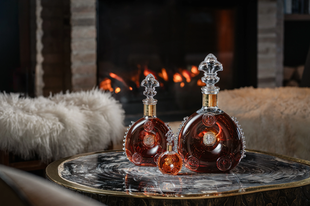
- The decanter is itself a collectible. Louis XIII’s hand-blown Baccarat crystal decanter and Richard Hennessy’s presentation pieces are sought after even empty, with used decanters regularly trading for hundreds of dollars at auction — a secondary value stream most spirits don’t have.
- Deep-pocketed, growing demand. Asian markets — particularly China and broader Asia-Pacific — represent the majority of ultra-premium Cognac sales for both Rémy Martin and Hennessy, and that demand has driven sustained price growth even through broader luxury-spending headwinds.
The Top Names in Cognac Investment
Investment-grade Cognac concentrates in a handful of houses and expressions.
1. Louis XIII (Rémy Martin) — The Category Benchmark
Created in 1874, Louis XIII is the undisputed reference point for ultra-luxury Cognac. Each blend draws from 1,200 to 1,400 different eaux-de-vie, all sourced exclusively from Grande Champagne (Cognac’s premier cru) and aged 40 to 100 years in century-old tierçons. There is no vintage statement and no age statement beyond the implicit understanding that this is far older than any legal minimum — the house instead positions each release as a snapshot of time itself. The standard decanter retails in the $3,000–$4,000 range; vintage releases from the 1990s now trade at $8,000–$12,000 at auction, while the rarest Rare Cask editions (capturing single-year vintages at natural cask strength) have fetched well over $30,000. Even empty decanters hold resale value as collectible objects.
2. Hennessy Paradis and Paradis Impérial — The Transparent Rival
Created in 1979 and named after the legendary cellar where Hennessy ages its rarest stocks, Paradis takes a more pluralistic approach than Louis XIII — blending eaux-de-vie from Grande Champagne, Petite Champagne, and Borderies to showcase the full breadth of Hennessy’s production. At roughly $1,400 per 750ml, Paradis is considerably more attainable than Louis XIII while still occupying the ultra-premium tier. Paradis Impérial, sourced from eaux-de-vie dating back to the 19th century, sits above standard Paradis in both price and rarity, and is a regular at major auction houses.
3. Richard Hennessy — The Family Reserve
Named after Hennessy’s founder, Richard Hennessy is blended from eaux-de-vie laid down by successive generations of the Hennessy family, some dating back over a century. Retailing around $5,000, it sits between Paradis and Louis XIII in both price and prestige, and is presented in its own Baccarat crystal decanter. Its auction presence is smaller than Louis XIII’s but no less collectible — second-edition releases regularly appear at Sotheby’s, Christie’s, and Bonhams.
4. Martell XO and Cordon Bleu — The Heritage Anchor
Martell is the oldest of the great Cognac houses (founded 1715), and its top expressions — Cordon Bleu and XO Extra Old — offer genuine heritage and consistent quality at a more accessible price point than the trophy tier above. While Martell’s flagship releases trade at retail rather than commanding the speculative premiums of Louis XIII, older bottlings (1970s–1980s) have developed a steady collector following and represent a sensible, lower-cost way to gain exposure to historic Cognac.
5. Camus Cuvée 5.150 and Extra Old Releases — The Independent House
As the largest independent, family-owned Cognac house, Camus offers a different investment angle: small-batch, terroir-specific releases (notably from Borderies, a cru known for its distinctive violet and nutty character) at prices well below the LVMH and Rémy houses. Camus’s limited Cuvée releases and Extra Old expressions have built a dedicated following among collectors looking for genuine rarity outside the two dominant brands.
Cognac Investment Tiers at a Glance
| Expression | House |
Typical Retail |
Secondary Market |
|---|---|---|---|
| Louis XIII | Rémy Martin | $3,000–$4,000 | $8,000–$12,000+ (1990s vintages); $30,000+ (Rare Cask) |
| Richard Hennessy | Hennessy | ~$5,000 | Auction premiums for older editions |
| Hennessy Paradis | Hennessy | ~$1,400 | Steady appreciation; less speculative |
| Martell Cordon Bleu / XO | Martell | $150–$300 | Collector interest in 1970s–80s bottlings |
| Camus Cuvée 5.150 / XO | Camus | $200–$500 | Niche but growing collector base |
Louis XIII vs. Hennessy Paradis: Two Philosophies of Ultra-Luxury
The two category leaders represent genuinely different approaches, and the choice between them says as much about an investor’s priorities as their taste. Louis XIII is built on mystique — no vintage, no age statement, a single Grande Champagne terroir, and a presentation designed to function as a museum piece. It is the bottle that performs at auction and the one most likely to be bought, sealed, and never opened. Hennessy Paradis is built on transparency — multiple terroirs, more documented detail about sourcing, and a philosophy that the liquid should speak for itself rather than the mythology around it. It holds value steadily but with less speculative upside, which arguably makes it the better choice for an investor who also intends to eventually drink what they bought.
How to Invest in Cognac
There are three broad routes for investors.
Option 1: Buy New Releases from Specialist Retailers
Buying directly from authorised specialist retailers at or near retail price is the lowest-cost entry point. This is straightforward for Hennessy Paradis and Martell’s top tier; Louis XIII and Richard Hennessy require more searching, as allocation can be limited for certain editions. Always verify authenticity and retain original packaging, which preserves resale value significantly.
Option 2: Buy at Auction
Sotheby’s, Christie’s, and Bonhams regularly auction rare Cognac, including vintage Louis XIII, Richard Hennessy, and historic Martell and Hennessy bottlings dating to the early 20th century. Auction purchases carry buyer’s premiums but provide access to discontinued editions, older decanters, and verified provenance that can be difficult to source elsewhere.
Option 3: A Managed Platform Like Vinovest
Vinovest focuses its spirits expertise on whisky — Scotch, Irish, American, and Japanese — rather than Cognac directly, but the underlying principles of managed alternative-asset investing apply equally well to ultra-premium spirits generally. For investors who want exposure to rare spirits as an asset class without managing sourcing, authentication, and storage themselves, Vinovest’s whisky platform offers a comparable model: specialists source directly from distilleries, every holding is authenticated and insured, and the team manages the eventual sale. The platform’s track record — including a 30.7% return on a recent bourbon cask exit — illustrates how a managed approach to rare spirits can work in practice. For collectors specifically pursuing Cognac, our Scotch whisky cask investment guide covers the closest comparable investment structure in spirits Vinovest does offer directly. For current whisky fees and minimums by tier, see the pricing page.
Risks to Keep in Mind
Cognac investment carries its own risks. The market is considerably smaller and less liquid than whisky or wine — there is no Liv-ex equivalent for Cognac, and price discovery relies heavily on auction results and specialist retailer pricing rather than a transparent index. Authenticity matters enormously at the high end: counterfeit Louis XIII and refilled decanters exist, and provenance documentation is essential. Brand concentration risk is real — value is overwhelmingly concentrated in Louis XIII and a handful of Hennessy expressions, with everything else trading at a steep discount. And while the bottled spirit itself is stable, the crystal decanters can be damaged, which materially affects resale value. As with any alternative spirits investment, Cognac should represent a measured position within a broader portfolio, ideally alongside more liquid holdings like whisky and fine wine.
Frequently Asked Questions
Is Cognac a good investment?
Ultra-premium expressions like Louis XIII and Richard Hennessy have shown consistent secondary market appreciation, supported by genuine scarcity, deep-pocketed Asian demand, and a structural advantage over whisky and wine: Cognac doesn’t change once bottled, simplifying long-term ownership. Returns are concentrated in a small number of trophy names, and the market is far less liquid than whisky or wine.
Does Cognac improve with age in the bottle, like wine?
No — this is the key difference. Cognac only ages while in oak casks; once bottled, it is chemically stable and does not develop further, though it can slowly oxidize once opened. A sealed bottle bought today will taste essentially the same decades from now, which removes much of the storage-condition risk that affects wine and whisky investment.
What is the difference between Louis XIII and Hennessy Paradis?
Louis XIII is exclusively Grande Champagne, blended from eaux-de-vie aged 40–100 years, with no vintage or age statement — built on mystique and presented as a museum piece. Hennessy Paradis blends eaux-de-vie from multiple Cognac terroirs with more documented transparency, retails for roughly a third of Louis XIII’s price, and is generally considered the better choice for someone who intends to actually drink it rather than hold it sealed.
How should I store investment-grade Cognac?
Store bottles upright, away from direct light, in a cool and stable environment, with the original box and any certificates retained — these significantly affect resale value. Once opened, Louis XIII and similar ultra-premium Cognacs maintain peak quality for roughly 2–3 years before slow oxidation becomes noticeable.
Cognac occupies a genuinely distinct corner of the spirits investment world — one built on patience measured in generations rather than years, and an ownership experience simplified by the fact that, once bottled, the clock stops. For investors who want exposure to rare spirits more broadly, explore how Vinovest's whisky and wine platform works.
This article is for informational purposes only and does not constitute financial advice. Past performance is not a guarantee of future results. All investments carry risk, including the potential loss of capital.