Loire Valley Wine Investment: A 2026 Guide to France’s Most Undervalued Fine Wine Region
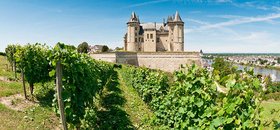
Stretched along 630 miles of France’s longest river, the Loire Valley is a UNESCO World Heritage site and one of the country’s great winemaking regions. Yet for all its quality, it remains the most undervalued of France’s fine wine regions — producing world-class Chenin Blanc, Cabernet Franc, and Sauvignon Blanc at prices a fraction of what comparable Burgundy or Bordeaux commands. For investors with patience and an eye for relative value, that gap is the opportunity.
The Loire Valley offers investment-grade wines at prices well below Burgundy and Bordeaux, with three world-class grapes (Chenin Blanc, Sauvignon Blanc, Cabernet Franc) and extraordinary ageing potential — top Vouvray can age 50–100 years. The blue-chip investment names are Domaine Huet (Vouvray), Didier Dagueneau (Pouilly-Fumé), and Clos Rougeard (Saumur-Champigny), supported by cult Sancerre producers like Edmond Vatan and François Cotat. The 2017 sale of Clos Rougeard and growing critic recognition are pushing the region’s top wines onto the international investment map.
Further reading
For more details on the Loire Valley and investing in French wine, see these related posts from the Vinovest team:
Loire Valley Wine (Grapes, Sub-Regions, 10 Best Bottles to Buy)
Why the Loire Valley Belongs in an Investment Portfolio
The Loire is the most diverse fine wine region in France, encompassing several distinct sub-regions and three of the world’s great grape varieties. Its investment case rests on a clear disconnect: the wines compete on quality with much more famous regions, but trade at meaningfully lower prices. That gap has begun to close as international collectors discover the region, but it remains wide enough to offer real headroom.
Several factors underpin the investment case:
- Extraordinary ageing potential. Top Vouvray from Domaine Huet can age 50 to 100+ years — longer than almost any other still wine. A 1921 Huet Vouvray Le Haut-Lieu still sold for more than $1,000 at auction nearly a century after the harvest.
- Three world-class grapes. Chenin Blanc (Vouvray, Savennières, Anjou), Cabernet Franc (Saumur-Champigny, Chinon, Bourgueil), and Sauvignon Blanc (Sancerre, Pouilly-Fumé) all reach their global apogee in the Loire.
- Genuine producer scarcity. The benchmark estates are tiny. Clos Rougeard produces just a few thousand cases a year across its cuvées; Edmond Vatan’s Clos la Néore is similarly micro-production.
- Documented price appreciation. The 1990 Clos Rougeard Saumur-Champigny Le Bourg appreciated 58% in two years ($1,632 to $2,590), while the 2015 Didier Dagueneau Pouilly-Fumé Asteroide rose 53% in the same period ($1,032 to $1,585).
- Critic and trade recognition. Loire wines now feature prominently at major auction houses (Sotheby’s, Christie’s, iDealwine), with Clos Rougeard regularly dominating Loire auction rankings.
The Loire’s Investment Sub-Regions
Investors should understand four sub-regions that matter most:
- Vouvray and Montlouis (Touraine, Chenin Blanc) — home of the longest-lived Loire whites, in styles ranging from bone-dry to sweet to sparkling.
- Saumur-Champigny and Chinon (Anjou-Saumur and Touraine, Cabernet Franc) — the Loire’s great age-worthy reds, where Clos Rougeard sits as the undisputed benchmark.
- Sancerre and Pouilly-Fumé (Central Loire, Sauvignon Blanc) — home to the world’s finest Sauvignon Blanc, and the source of cult producers like Didier Dagueneau and Edmond Vatan. See our deeper guides to Sancerre as a region and Sancerre white wine.
- Savennières (Anjou, Chenin Blanc) — small, ferociously age-worthy Chenin from steep schist slopes, home to Nicolas Joly’s legendary Coulée de Serrant.
The Top 5 Loire Valley Producers for Investors
Investment demand concentrates around a small group of estates. Here are the five names that matter most.
1. Domaine Huet — The Vouvray Benchmark
If one estate defines the Loire’s investment quality, it is Domaine Huet. Founded in 1928 and biodynamic since the late 1980s, Huet produces Vouvray in every style — sec, demi-sec, moelleux, and the legendary Cuvée Constance — from three single vineyards (Le Haut-Lieu, Le Mont, and Le Clos du Bourg) that read like the Burgundian grand crus of Chenin Blanc. Its wines age for half a century or more; the 1921 Le Haut-Lieu still traded above $1,000 at auction nearly 100 years after the vintage. Huet is the closest thing the Loire has to a First Growth, and the natural anchor of any serious regional allocation.
2. Didier Dagueneau — The Pouilly-Fumé Genius
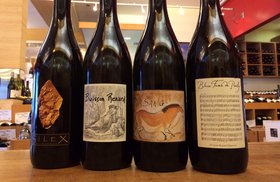
The late Didier Dagueneau — the wild-haired, motorcycle-riding “wild man of Sancerre” — transformed how the world thinks about Sauvignon Blanc. His single-parcel approach (Silex, Pur Sang, Asteroide, Buisson Renard) brought Burgundian-level precision to Pouilly-Fumé, and the wines remain reference points for the variety. After Didier’s death in 2008, his son Louis-Benjamin has continued the estate to widespread acclaim. The 2015 Asteroide appreciated roughly 53% in two years; the rare Silex cuvées from older vintages now command premium prices on the secondary market.
3. Clos Rougeard — The Cabernet Franc Cult
For decades run by brothers Charly and Nady Foucault, Clos Rougeard set the world standard for Cabernet Franc, producing Saumur-Champigny of extraordinary depth and ageing potential from old vines and minimal-intervention winemaking. The estate was sold in 2017 to the Bouygues family (who also own Bordeaux’s Château Montrose), an event that has only intensified investor and collector attention. The flagship Le Bourg trades around $526 in current vintages, with older bottlings (1989, 1990) regularly exceeding $2,500. Clos Rougeard has dominated Loire auction rankings since at least 2017.
4. Edmond Vatan — The Sancerre Original
Edmond Vatan’s Sancerre Clos la Néore is the quietest cult wine in the Loire — tiny production, near-mythical reputation among collectors, and a price (around $396 per bottle) that reflects how little ever reaches the market. Made from old-vine Sauvignon Blanc on Kimmeridgian marl soils (the same geology underlying Chablis), it is built to age for two decades or more — unusual for the variety. A modest allocation goes a long way.
5. François Cotat — Sancerre with Soul
The Cotat cousins (François and Pascal, working separately) make some of the most distinctive Sancerre on earth from steep, hand-worked vineyards in Chavignol — Les Monts Damnés, La Grande Côte, Cul de Beaujeu. Often dry, occasionally just off-dry, and built for the long haul, these wines reward patient cellaring and have become collector targets in their own right. A more accessible entry point than Vatan into the cult Sancerre world.
Honourable mentions: Philippe Foreau / Clos Naudin (Vouvray — the rare Goutte d’Or has been made just three times: 1947, 1990, and 2011), Nicolas Joly’s Coulée de Serrant (Savennières, biodynamic pioneer), Bernard Baudry and Charles Joguet (Chinon), Jacky Blot / Domaine de la Taille aux Loups (Montlouis), and Domaine Vacheron (Sancerre).
Loire Vintages Worth Owning
Vintage variation is significant in the Loire, given its cool-climate marginal viticulture. Recent strong years to anchor a portfolio include:
| Vintage |
Quality Note |
Why It Matters for Investors |
|---|---|---|
| 2005 | Outstanding | Modern classic across reds and Chenin |
| 2009 | Excellent |
Rich, ripe vintage; particularly strong for Chenin and Cabernet Franc |
| 2010 | Excellent | Classical structure; long ageing curve |
| 2014 | Very Good | Pure, balanced — ideal Sauvignon and Cabernet Franc year |
| 2015 | Outstanding | Widely lauded; warm but balanced |
| 2018 | Excellent | Generous, concentrated reds and Chenin |
| 2019 | Excellent | Modern benchmark across the region |
| 2020 | Very Good | Concentrated; lower yields support pricing |
How the Loire Compares to Bordeaux and Burgundy
The Loire’s investment thesis sits on relative value. A Clos Rougeard Le Bourg at $526 is unthinkable next to comparably-rated Cabernet Franc from Pomerol or top Saint-Émilion, where the same quality (and similar age-worthiness) would cost many multiples more. Domaine Huet Vouvray, with its 50- to 100-year ageing potential, trades for a fraction of what comparable-age-worthy Burgundy whites or Bordeaux command. That gap exists because the Loire is less institutionally traded — it doesn’t have the deep auction infrastructure of Bordeaux or the speculative heat of Burgundy — but the same factor means appreciation potential is higher for the right names.
Within a broader French allocation, the Loire is best held alongside (not instead of) Bordeaux and Burgundy. It diversifies grape exposure, region exposure, and price point. For the wider French picture, see our complete guide to investing in French wine.
How to Invest in Loire Valley Wine
There are three broad routes, each suited to a different kind of investor.
Option 1: Buy and Cellar Yourself
Source bottles through specialist merchants and auction houses (Sotheby’s, Christie’s, Bonhams, iDealwine) and store them yourself. Maximum control, lowest ongoing cost, but the entire burden of authentication, climate-controlled storage, insurance, and resale falls on you. The Loire’s top producers — Huet, Dagueneau, Clos Rougeard — can be difficult to source directly given their tiny production.
Option 2: Fine Wine Merchants and the In-Bond Market
Buy through specialist fine wine merchants, particularly UK-based houses, which can place you on allocation lists and hold wine in bonded storage on your behalf. Provenance is preserved, tax is deferred, and resale is simpler. Loire is less liquid than Bordeaux on the in-bond market, but the top names trade actively.
Option 3: A Managed Platform Like Vinovest
Vinovest is designed for investors who want exposure to wines like Huet and Dagueneau without the operational complexity or the allocation hurdles. Its specialists and data-driven algorithm build a portfolio matched to your goals; every bottle is authenticated and held in professional bonded storage; holdings are fully insured; and the team manages the eventual sale (typical wine hold: 5–10 years). Holding Loire wines alongside Bordeaux, Burgundy, Rhône, Champagne, Italian, and Spanish wine in one managed portfolio is the cleanest way to diversify across French regions — and the platform’s sourcing relationships can unlock access that’s otherwise difficult to obtain individually.
The model has a documented track record: over $27.5 million in capital returned to 200,000+ clients, more than 1.7 million bottles under custody. For current fees and minimums by tier, see the pricing page. For the wider picture on building a fine wine portfolio, our complete wine investing guide walks through allocation, costs, and realistic returns.
Risks to Keep in Mind
Loire wine carries real investment risks. The market is less liquid than Bordeaux’s deep, established trade, so selling can take longer and depend on the producer. Value is concentrated in a handful of estates — a generic Sancerre will not appreciate like a Vatan or a Cotat. Vintage variation matters more than in warmer regions. Authentication is essential at the top end, and storage must be impeccable given the wines’ long ageing curves. As with any investment-grade wine, the Loire should sit alongside other regions as part of a diversified portfolio held for the long term.
Frequently Asked Questions
Is the Loire Valley a good investment region?
Top Loire producers — led by Domaine Huet, Didier Dagueneau, and Clos Rougeard — combine extraordinary ageing potential, genuine scarcity, and prices well below comparable Bordeaux and Burgundy. Documented appreciation of 50%+ in two-year windows for specific cuvées suggests the relative-value thesis is being recognised by the market. Returns depend on producer, vintage, and provenance.
Which Loire producers are best for investment?
The three blue-chips are Domaine Huet (Vouvray), Didier Dagueneau (Pouilly-Fumé), and Clos Rougeard (Saumur-Champigny). Edmond Vatan and François Cotat (Sancerre) offer cult-status alternatives, while Nicolas Joly’s Coulée de Serrant and Philippe Foreau’s Clos Naudin are worth attention for serious collectors.
How long do Loire Valley wines age?
Top Vouvray from Huet can age 50–100+ years — longer than almost any other still wine. Clos Rougeard Saumur-Champigny and top Sancerre from Vatan or Cotat can age 20–30 years. Dagueneau’s Pouilly-Fumé single-parcels age 15–20 years from a strong vintage.
How does Loire compare to Burgundy for investment?
Burgundy offers deeper liquidity and established institutional trade but with prices that have already absorbed enormous speculative interest. The Loire offers similar quality and ageing potential at a fraction of the price, with appreciation headroom but lower liquidity. Many investors hold both, anchored by Bordeaux and supplemented by both Burgundy and Loire — a balanced French allocation. For broader context, see our French wine investment guide.
The Loire Valley rewards investors who recognise quality before the wider market fully prices it in — the same pattern that, a decade ago, transformed the Rhône and Brunello into mainstream investment regions. With its scarcity, longevity, and relative value, the Loire deserves serious attention in any diversified French allocation. To see how it could fit alongside your other holdings, explore how wine investing works.
This article is for informational purposes only and does not constitute financial advice. Past performance is not a guarantee of future results. All investments carry risk, including the potential loss of capital.