Red Wine Alcohol Content: ABV from 10% to 20% — Full Guide (2026)
Quick answer: The average red wine contains 13.5% ABV. The range spans from around 10% (light Beaujolais, Brachetto) to 20%+ (Port, fortified reds). Most mainstream red wine — Cabernet Sauvignon, Merlot, Shiraz, Malbec — falls between 13–15% ABV.
Red wine covers one of the widest alcohol content ranges in the wine world — from the delicate fizz of a Brachetto d'Acqui at 5.5% to a fortified Port at 20%+. Understanding where different reds sit on that spectrum helps you choose the right bottle for any occasion, pair it correctly with food, and manage your intake.
This guide covers the ABV range for every major red wine style, the two factors that determine alcohol content, how to use ABV for food pairing, and the best current bottle picks at each level.
Further reading
- Check out the 10 Best Red Wine Brands to relish this holiday season.
- Here’s an in-depth article on Red Wine vs White Wine.
Red Wine Alcohol Content: Master ABV Table by Variety
Here is the full ABV range across all major red wine varieties and styles:
|
Red Wine Style / Variety | ABV Range | Tier | Character |
|---|---|---|---|
| Brachetto d'Acqui (Italy) | 5–7% | Very Low | Sparkling, sweet, red fruit |
| Moscato Rosso / Red Moscato | 5–8% | Very Low | Very sweet, aromatic, low alcohol |
| Lambrusco (sweet styles) | 7–11% | Low | Lightly sparkling, fruity, off-dry to sweet |
| Beaujolais / Gamay | 10–13% | Low to Medium | Light, fresh, cherry and strawberry |
| Pinot Noir (Burgundy, cool climate) | 12–13% | Medium | Elegant, earthy, silky tannins |
| Pinot Noir (Oregon, California) | 12.5–14% | Medium | Fruit-forward, medium body |
| Merlot | 13–14.5% | Medium | Soft, plummy, low tannin |
| Sangiovese / Chianti | 12.5–14% | Medium | Acidic, savoury, cherry and leather |
| Tempranillo / Rioja | 13–14.5% | Medium | Structured, oaky, cherry and vanilla |
| Malbec (Argentina) | 13.5–15% | Medium-High | Dark fruit, violet, smooth tannins |
| Cabernet Sauvignon (Bordeaux) | 12.5–13.5% | Medium | Structured, cedar, blackcurrant |
| Cabernet Sauvignon (Napa Valley) | 13.5–15% | Medium-High | Bold, rich, heavily oaked |
| Syrah (Northern Rhône) | 13–14% | Medium | Peppery, elegant, dark fruit |
| Shiraz (Barossa Valley, Australia) | 14–16% | High | Jammy, spiced, full body |
| Zinfandel (California) | 14–16.5% | High | Jammy, bold, blackberry and spice |
| Grenache / Garnacha (warm climate) | 14–16% | High | Ripe, sweet-tasting fruit |
| Amarone della Valpolicella | 15–17%+ | Very High | Concentrated, dried fruit, complex |
| Châteauneuf-du-Pape | 14.5–16.5% | High | Powerful, spiced, Grenache-dominant |
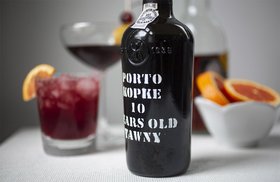
| Port Wine (Ruby, Tawny, Vintage) | 19–22% | Fortified | Sweet, concentrated, fortified |
| Madeira (red styles) | 18–22% | Fortified | Oxidative, nutty, very stable |
What Determines Red Wine Alcohol Content?
Two factors — grapes and winemaking — determine how alcoholic a red wine becomes.
1. Grapes: Sugar at Harvest
During fermentation, yeast converts grape sugar into alcohol. The more sugar in the grapes at harvest, the more potential alcohol in the finished wine. Two variables drive grape sugar levels:
- Some varieties accumulate more sugar than others. Grenache, Zinfandel, and warm-climate Shiraz ripen to very high sugar levels naturally. Gamay and Pinot Noir in cool climates accumulate much less sugar, producing lighter wines
- Grapes from warm regions (Barossa Valley, Napa Valley, Southern Rhône, Priorat) ripen fully and develop high sugar levels. Grapes from cool regions (Burgundy, Loire Valley, Germany, Beaujolais) ripen later and retain more acidity with less sugar — producing lighter, lower-ABV wines
2. Winemaking: Fermentation Control
The winemaker can influence the final ABV by managing the fermentation process:
- Allowing all grape sugars to convert to alcohol produces a dry wine with maximum ABV for the grape variety
- Chilling the wine or filtering out yeast stops conversion, leaving residual sugar and lower ABV — the method used for sweet Lambrusco, Brachetto, and Moscato styles
- Adding neutral grape spirit kills yeast and dramatically raises ABV — used for Port, Madeira, and Marsala. The timing of fortification determines sweetness: earlier = sweeter (Port); later = drier
Red Wine Varieties From Lowest to Highest ABV
Low Alcohol Red Wines (5–11% ABV)
Low-alcohol red wines are usually sweet or semi-sweet, made by stopping fermentation before all grape sugars convert to alcohol. These are ideal for long summer occasions, daytime drinking, and pairing with lighter foods.
| Wine | ABV | Region | Price | Notes |
|---|---|---|---|---|
| Cleto Chiarli Lambrusco Grasparossa Amabile | 8% | Emilia-Romagna, Italy | ~$12 | Classic frizzante; cherry and raspberry; semi-sweet |
| Banfi Rosa Regale Brachetto d'Acqui | 7% | Piedmont, Italy | ~$20 | DOCG sparkling sweet red; rose petal, strawberry |
| Georges Duboeuf Beaujolais-Villages | 12% | Beaujolais, France | ~$12 | The entry point for low-tannin, fresh Gamay |
| Marcel Lapierre Morgon | 12% | Beaujolais, France | ~$30 | Natural winemaker; structured Gamay; exceptional |
| Domaine Foillard Morgon Côte du Py | 12.5% | Beaujolais, France | ~$40 | Single-vineyard Gamay; benchmark for the cru |
Food pairings: Seafood, grilled appetisers, soft cheeses (Brie, mozzarella), prosciutto and cured meats, fruit-based desserts. Low-alcohol reds also make excellent bases for Sangria and wine cocktails — their moderate ABV keeps the final drink balanced.
Low to Medium Alcohol Red Wines (11–13% ABV)
This tier covers the lightest serious dry reds — elegant Pinot Noir from Burgundy and cool-climate expressions from New Zealand, Oregon, and Germany. These wines are food-friendly, age well in great vintages, and are among the highest-value red wines for daily drinking.
| Wine | ABV | Region | Price | Notes |
|---|---|---|---|---|
| Louis Jadot Bourgogne Pinot Noir | 12.5% | Burgundy, France | ~$25 | Reliable entry-level Burgundy; earthy and elegant |
| Domaine Drouhin Oregon Pinot Noir | 13% | Willamette Valley, USA | ~$40 | Burgundian approach in Oregon; silky and precise |
| Felton Road Bannockburn Pinot Noir | 13% | Central Otago, NZ | ~$55 | Benchmark NZ Pinot; intense, mineral, age-worthy |
| Newton Johnson Windansea Pinot Noir | 12.5% | Hemel-en-Aarde, SA | ~$40 | South African Burgundy-style; excellent value |
| Nigl Kremstal Pinot Noir | 12.5% | Kremstal, Austria | ~$30 | Austrian Pinot; precise, cool-climate freshness |
Food pairings: Salmon and fatty fish, roast chicken, duck confit, mushroom risotto, mild soft cheeses. The lower tannin and bright acidity of these wines makes them among the most versatile red wine food partners available.
Medium Alcohol Red Wines (13–14% ABV)
The most populated tier — this is where most serious everyday red wine sits. Merlot, Sangiovese, Tempranillo, cool-climate Cabernet, and Bordeaux blends all occupy this range. Medium-alcohol reds balance fruit, structure, and food pairing flexibility.
| Wine | ABV | Region | Price | Notes |
|---|---|---|---|---|
| Banfi Chianti Classico Riserva | 13.5% | Tuscany, Italy | ~$22 | Reliable Sangiovese; good value Chianti |
| Muga Rioja Reserva | 14% | Rioja, Spain | ~$22 | Classic Tempranillo; vanilla oak, cherry fruit |
| Château Léoville-Barton | 13.5% | Saint-Julien, Bordeaux | ~$100 | Super Second Bordeaux; exceptional quality-to-price |
| Fontodi Chianti Classico Gran Selezione | 14% | Panzano, Tuscany | ~$65 | World-class Sangiovese; powerful and elegant |
| Isole e Olena Chianti Classico | 13.5% | Tuscany, Italy | ~$40 | Benchmark DOCG; great aging potential |
Food pairings: Pasta with tomato sauces, pizza, pork tenderloin, roast chicken, salmon, mild-to-medium cheese boards. This tier's versatility is unmatched — medium reds pair well with almost any non-dessert dish.
Medium to High Alcohol Red Wines (14–15% ABV)
Warm-climate Cabernet Sauvignon, Malbec, and Southern Rhône blends define this tier. The higher alcohol amplifies fruit concentration and body. These wines demand richer food pairings and should be handled with awareness of their strength.
| Wine | ABV | Region | Price | Notes |
|---|---|---|---|---|
| Catena Zapata Catena Malbec | 14% | Mendoza, Argentina | ~$35 | Benchmark Argentine Malbec; balanced and age-worthy |
| Jordan Cabernet Sauvignon | 13.5% | Sonoma, California | ~$55 | Elegant Napa-style Cab; excellent structure |
| Deux Frères Petite Sirah | 14.5% | Napa Valley, USA | ~$40 | Full-throttle Napa; dark fruit, rich texture |
| Zuccardi Valle de Uco Malbec | 14% | Uco Valley, Argentina | ~$30 | High-altitude Malbec; fresher, more precise |
| Penfolds Bin 28 Shiraz | 14.5% | South Australia | ~$30 | Reliable Australian Shiraz; value benchmark |
Food pairings: Grilled ribeye and steak, lamb, BBQ ribs, pulled pork, spiced beef dishes, blue cheese. The higher alcohol and fruit intensity pair best with rich, fatty proteins that can stand up to the wine's weight.
High Alcohol Red Wines (15–20%+ ABV)
This tier includes unfortified giants (Amarone, Châteauneuf-du-Pape, big Barossa Shiraz) and fortified wines (Port, Madeira). These are occasion-specific wines — serve in appropriate portions and respect the ABV.
| Wine | ABV | Region | Price | Notes |
|---|---|---|---|---|
| Sons of Eden Remus Shiraz | 15% | Eden Valley, Australia | ~$45 | Warm, rich Australian Shiraz; remarkable value at ABV |
| Bertani Amarone della Valpolicella | 17% | Veneto, Italy | ~$80 | Benchmark Amarone; 100-point vintage (2015); complex |
| Château Rayas Châteauneuf-du-Pape | 15–16% | Southern Rhône, France | ~$450 | The cult Rhône estate; prices rose sharply in late 2025 |
| Graham's Six Grapes Reserve Ruby Port | 20% | Douro Valley, Portugal | ~$20 | Investment-accessible entry to the Port world |
| Churchill's 30 Year Old Tawny Port | 20% | Douro Valley, Portugal | ~$130 | Complex caramel and dried fruit; exceptional quality |
Food pairings: Rich meat dishes (braised short ribs, venison, game), dark chocolate, strong blue cheeses (Stilton, Roquefort), chocolate cake and crème brûlée. For Port specifically, the Stilton pairing is one of the great classical wine-food combinations.
How Does Red Wine ABV Compare to White Wine?
Red wine does have slightly higher average alcohol content than white wine — but the gap is smaller than most people assume:
|
Wine Category |
Typical ABV Range | Average |
|---|---|---|
| Red wine (all styles) | 5–22% | ~13.5% |
| White wine (all styles) | 5–14% | ~12% |
| Rosé wine | 10–15% | ~12.5% |
| Sparkling wine | 10–13% | ~12% |
| Fortified wine (all types) | 15–22% | ~18% |
The reason red wine averages higher: red grapes are typically harvested later than white grapes, accumulating more sugar before picking — and more sugar converts to more alcohol during fermentation. Red wines also require longer maceration (skin contact) to extract colour and tannin, during which fermentation continues. For the full comparison, see vinovest.co/blog/red-wine-vs-white-wine.
Red Wine Investment: ABV and Value
The highest-value investment red wines span the full ABV spectrum — from lean Burgundy Pinot Noir at 12.5% to powerful Amarone at 17% and Vintage Port at 20%. ABV is not a reliable indicator of investment quality; what matters is producer reputation, terroir, scarcity, and aging potential.
The wines that consistently generate the strongest secondary market returns — DRC, First Growth Bordeaux, Amarone from Quintarelli and Dal Forno Romano, top Rhône Syrah — are distributed across multiple ABV tiers. Vinovest provides managed portfolio access to investment-grade red wines across all regions.
Frequently Asked Questions
What is the average alcohol content in red wine?
The average red wine contains approximately 13.5% ABV. Most mainstream red wines — Cabernet Sauvignon, Merlot, Malbec, Sangiovese — fall between 13% and 15% ABV. Light reds like Beaujolais start at 10–12%. Fortified reds like Port reach 19–22%.
Which red wine has the highest alcohol content?
Fortified wines like Port and Madeira have the highest ABV at 19–22%. Among unfortified reds, Amarone della Valpolicella regularly exceeds 17% ABV, and warm-climate Zinfandel and Barossa Shiraz can reach 15.5–16.5%.
Which red wine has the lowest alcohol content?
Brachetto d'Acqui and Red Moscato at 5–7% ABV are the lightest red wines. Lambrusco styles range from 7–11% ABV. Among dry reds, Beaujolais Nouveau and light Gamay wines are typically 10–12% ABV.
Does higher alcohol mean better red wine?
No — alcohol level is a stylistic characteristic, not a quality indicator. A delicate Burgundy Grand Cru at 12.5% ABV can cost many times more than a bold Barossa Shiraz at 15.5%. What matters is balance: whether the alcohol is supported by the wine's acidity, tannin, and fruit concentration, or whether it stands out as harsh and 'hot'.
Does ABV affect how I should store red wine?
Not significantly for most table wines. The standard storage conditions apply regardless of ABV: consistent 50–55°F (10–13°C), 70%+ humidity, darkness, and horizontal orientation for cork-sealed bottles. Fortified wines (Port, Madeira) are an exception — their higher alcohol and concentration mean they are more stable once opened and can be stored upright.
Last updated: May 2026 | Vinovest editorial team | Data sourced from Wine Folly, Liv-ex, and the original Vinovest red wine alcohol content guide