Tokaji Investment Guide: Hungary’s Wine of Kings and the World’s Longest-Lived Sweet Wine
Louis XIV called it “the wine of kings, the king of wines.” It is written into Hungary’s national anthem — the only wine in the world with that distinction. Queen Victoria, Peter the Great, and Pope Pius X were devoted admirers, and for two centuries before the 1855 Bordeaux classification existed, Tokaji had already classified its own vineyards by quality. And yet, by every measure that matters to a value-minded investor, Tokaji remains dramatically underpriced. “These wines should be costing twice as much, but they don’t,” one industry insider recently observed — a rare, almost embarrassing admission of value hiding in plain sight.
Tokaji Aszú is Hungary’s legendary botrytized sweet wine, made from Furmint grapes affected by noble rot in the volcanic Tokaj region. The investment case rests on three pillars: extraordinary longevity (top Aszú ages 50+ years; Eszencia can age for a century or more), serious institutional ownership (AXA Millésimes owns Disznokő; Vega Sicilia’s Alvarez family owns Oremus), and a price level that remains far below comparable Sauternes or German Trockenbeerenauslese despite arguably superior longevity. A half-bottle of top-tier Eszencia trades for $700–$3,000, while a 6 Puttonyos Aszú from a top producer costs $100–$400.
Further reading
Hungary’s Tokaji Aszú: World’s Oldest Sweet Wine (10 Best Bottles, Prices)
What Is Tokaji, and Why Does It Belong in a Portfolio?
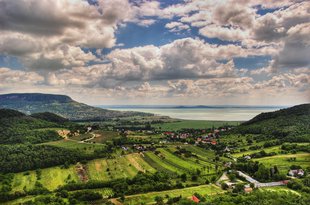
Tokaji (sometimes “Tokay” historically) is produced in the Tokaj wine region of northeastern Hungary, where volcanic soils and the convergence of two rivers create a microclimate ideally suited to Botrytis cinerea — the noble rot fungus that shrivels grapes into intensely concentrated raisins of sugar and acid. The dominant grape, Furmint, brings ferocious natural acidity that keeps even the sweetest Aszú from ever feeling cloying — the wine’s signature balancing act and the reason it ages so extraordinarily well.
Several factors make Tokaji a genuinely compelling, if under-the-radar, investment:
- Extreme longevity. Properly made 5 or 6 Puttonyos Aszú ages 50 years or more. Eszencia — the rarest, most concentrated style — can age for a century or longer thanks to its barely-fermented sugar content.
- Genuine institutional pedigree. Disznokő is owned by AXA Millésimes, the same group behind Château Pichon Baron in Bordeaux and Quinta do Crasto in the Douro. Oremus is owned by the Alvarez family — the same family behind Spain’s blue-chip Vega Sicilia. These are not casual investments by their owners; they are deliberate bets on Tokaj’s long-term value.
- Demonstrable undervaluation. Top Tokaji trades at a fraction of comparable Sauternes or German Trockenbeerenauslese, despite matching or exceeding their ageing potential. Industry observers have explicitly flagged this gap as unsustainable long-term.
- Extreme rarity at the top. Eszencia is among the rarest wines on earth — made purely from free-run juice that drips, unpressed, from Aszú berries under their own weight. Yields are minuscule and fermentation can take years because the sugar concentration is so extreme.
- A genuine 1990s revival story. Tokaj’s modern era began only after Communism fell in 1989–90, when foreign capital and expertise transformed a neglected region into a quality-focused appellation — meaning today’s top producers have a relatively short, well-documented track record of consistent excellence.
Understanding the Puttonyos System
Tokaji Aszú is graded by “puttonyos” — historically the number of baskets of Aszú (botrytized) berries added to a base wine, now standardised to grams of residual sugar per litre. Since 2013, the minimum label classification is 5 Puttonyos (roughly 120g/L residual sugar); 6 Puttonyos indicates roughly 150g/L or more. Above this sits Eszencia, the free-run juice of Aszú berries with residual sugar that can exceed 450–800 g/L and alcohol as low as 2–5% — so concentrated it barely qualifies as wine by conventional definition.
For investors, this matters because puttonyos level is a reasonably reliable proxy for both intensity and longevity — higher puttonyos and Eszencia bottlings command the steepest prices and the longest ageing curves, while dry Furmint (now roughly half of Tokaj’s total production) is a separate, drinking-focused category outside the investment conversation.
Top Tokaji Producers for Investors
Investment interest concentrates in a small group of estates, several with serious outside investment behind them.
Oremus — The Vega Sicilia Connection
Acquired by the Alvarez family (owners of Spain’s Vega Sicilia) in 1993, Oremus is based in Tolcsva atop 13th-century cellars. Its Aszú 6 Puttonyos and Eszencia are consistently among the highest-scoring and most collected Tokaji wines, with its Eszencia trading between roughly $700 and $1,200 depending on vintage and a 95-point critical consensus. The ownership lineage alone — the same family behind one of Spain’s most prestigious wine estates choosing to invest seriously in Tokaj — is a meaningful signal of the region’s long-term potential.
Disznokő — The AXA Estate
One of Tokaj’s oldest estates (founded 1413), Disznokő was acquired by AXA Millésimes in 1992 — the same investment group behind Château Pichon Baron in Bordeaux and Quinta do Crasto in the Douro. AXA replanted 256 of the estate’s 370 acres and built a modern winery while preserving traditional methods. Its 5 and 6 Puttonyos Aszú are widely available and consistently excellent, while its Eszencia (often exceeding 95 points) is a serious collector’s wine. Disznokő offers investors institutional pedigree at relatively accessible prices.
Royal Tokaji — The Revival Pioneer
Founded in 1990 by British wine writer Hugh Johnson and a consortium of investors, Royal Tokaji was the first private winery to operate in the region after Communism— and is widely credited with kickstarting Tokaj’s modern revival. Its single-vineyard Aszú bottlings from Mezés Mály and Szent Tamás are benchmark wines, and its Gold Label and Essencia releases anchor many serious Tokaji collections.
István Szepsy — The Modern Master
Direct descendant of the man credited with first documenting the Aszú process in 1630, István Szepsy is regarded as the godfather of modern Tokaj and the leading force behind the region’s acclaimed dry Furmint movement. His Aszú 6 Puttonyos and rare Esszencia (the latter trading close to $3,000 — the highest of any widely available Tokaji) command the highest prices in the region and the deepest critical respect, with a minimal-intervention, terroir-first philosophy that has elevated Tokaj’s international reputation considerably.
Honourable mentions: Holdvölgy (precise single-vineyard Aszú from a 500-year-old cellar in Mád), Hetszőlő, and Château Dereszla offer further diversification within the appellation at accessible price points.
Tokaji Price Tiers and Indicative Market Data
|
Style / Producer |
Typical Price (500ml) |
Critic Score |
Ageing Potential |
|---|---|---|---|
| Disznokő Aszú 5 Puttonyos | $80–$125 | 92–93 pts | 20–30+ years |
| Oremus Aszú 6 Puttonyos | $240–$250 | 92 pts | 30–40+ years |
| István Szepsy Aszú 6 Puttonyos | $280–$375 | 94 pts | 40+ years |
| Royal Tokaji Aszú Essencia | $950–$1,300 | 95 pts | 75+ years |
| Oremus Eszencia | $700–$1,200 | 95 pts | 100+ years |
| Disznokő Eszencia | $800–$1,150 | 92–96 pts | 100+ years |
| István Szepsy Esszencia | ~$2,900–$3,000 | 94 pts | 100+ years |
Prices and scores are indicative aggregates from Wine-Searcher and major critics; they fluctuate with vintage, availability, and format. Figures should be verified against live market data before purchase.
How Tokaji Compares to Sauternes and German Sweet Wine
The most natural comparison for Tokaji is Sauternes — both are noble-rot sweet wines with serious ageing potential, and both are sometimes discussed together as the world’s great botrytized whites. But the comparison favours Tokaji on pure value grounds: a top Château d’Yquem vintage routinely costs many multiples of an equivalently scored Tokaji Eszencia, despite Eszencia’s arguably superior longevity — Tokaji’s extreme sugar concentration allows it to age even longer than Sauternes in many cases. German Trockenbeerenauslese (most famously Egon Müller’s Scharzhofberger) occupies a similar rarity tier to Eszencia, but again at a steep premium to Tokaji’s comparable releases.
For investors who already hold Sauternes or other dessert wines, a Tokaji allocation adds genuine diversification — different region, different grape, different ownership structures — while addressing the exact value gap that makes the category interesting in the first place.
How to Invest in Tokaji
There are three broad routes for investors.
Option 1: Buy Direct or Through Specialist Merchants
Tokaji has improved distribution over the past decade, but availability remains patchy outside major wine-focused cities. Specialist fine wine merchants and direct purchases from estate websites (particularly for Oremus, Royal Tokaji, and Disznokő) are the most reliable routes. Always retain original packaging and purchase documentation, which matter significantly for long-term value.
Option 2: Buy at Auction
Older library vintages — particularly pre-1989 bottles from the Communist era and early-1990s revival vintages from Royal Tokaji, Disznokő, and Oremus — appear periodically at specialist wine auctions. These carry genuine historical interest alongside investment potential, though the market is thinner than for Bordeaux or Burgundy.
Option 3: A Managed Platform Like Vinovest
Vinovest builds managed fine wine portfolios across the world’s investment-grade regions, handling sourcing, authentication, insured bonded storage, and eventual sale on the investor’s behalf. For investors who want exposure to an under-the-radar category like Tokaji without navigating its relatively specialist distribution network, a managed approach simplifies access considerably. The model is backed by a documented track record: over $27.5 million in capital returned to 200,000+ clients and more than 1.7 million bottles under custody. For current fees and minimums by tier, see the pricing page. For the broader picture on building a diversified fine wine allocation, our complete wine investing guide covers portfolio construction and realistic returns.
Risks to Keep in Mind
Tokaji carries genuine investment risks alongside its value proposition. The market is considerably less liquid than Bordeaux or Sauternes — there is no Liv-ex equivalent for Hungarian wine, and selling outside specialist channels can be slow. Global demand for sweet wines generally has softened over the past decade, which has arguably contributed to Tokaji’s undervaluation but also means there’s no guarantee the gap closes on any particular timeline. Authentication matters for older library vintages. And as with any niche regional wine, value concentrates heavily in a handful of producers — Oremus, Disznokő, Royal Tokaji, and Szepsy — with lesser-known estates offering far less liquidity. As with any fine wine investment, Tokaji should form one considered, diversifying part of a broader portfolio, held with patience.
Frequently Asked Questions
Is Tokaji a good investment?
Top Tokaji — particularly Eszencia from producers like Oremus, Disznokő, and István Szepsy — combines extraordinary longevity, serious institutional ownership, and prices well below comparable Sauternes or German Trockenbeerenauslese. Industry observers have explicitly described the category as undervalued. The market is illiquid relative to Bordeaux, so this suits patient, diversification-minded investors rather than those seeking quick returns.
What is Tokaji Eszencia and why is it so expensive?
Eszencia is the rarest style of Tokaji, made purely from the free-run juice that drips, unpressed, from Aszú (botrytized) berries under their own weight. Residual sugar can exceed 450–800 g/L, and fermentation can take years because the sugar concentration is so extreme. Yields are tiny, which is why even at $700–$3,000 per half-bottle, it remains genuinely scarce.
Which Tokaji producers are best for investment?
Oremus (owned by Vega Sicilia’s Alvarez family) and Disznokő (owned by AXA Millésimes) offer institutional pedigree and consistent quality. István Szepsy commands the highest prices and deepest critical respect. Royal Tokaji, as the pioneer of the post-1990 revival, anchors many serious collections with its single-vineyard bottlings.
How long does Tokaji age?
Properly made 5 or 6 Puttonyos Aszú ages 50 years or more. Eszencia can age for a century or longer — among the longest-lived wine styles in the world, owing to its extreme sugar concentration and natural preservative qualities.
Tokaji rewards investors who recognise quality and pedigree before the wider market fully prices them in — a region with serious institutional backing, extraordinary longevity, and a value gap that industry insiders themselves have flagged as overdue for correction. To see how Tokaji could fit alongside Sauternes, Champagne, and other fine wines in a managed portfolio, explore how wine investing works.
This article is for informational purposes only and does not constitute financial advice. Past performance is not a guarantee of future results. All investments carry risk, including the potential loss of capital