Bourbon Investment Guide: Pappy Van Winkle, Buffalo Trace and the Allocated Bourbon Market in 2026
On 24 January 2026, a single bottle of 1982 Old Rip Van Winkle 20 Year sold at Sotheby’s for $162,500 — the highest price ever publicly recorded for an American whiskey at auction. That same sale featured 360 bottles of American bourbon and rye estimated at $1.7 million in total, described by Sotheby’s global head of whisky and spirits as “the most valuable American whiskey collection ever to be offered at auction.” The message was clear: American bourbon has arrived as a serious collector and investment category, sitting alongside Scotch and Japanese whisky as a legitimate alternative asset.
Bourbon investment centers on a small group of “allocated” bottles — limited releases distributed by lottery, waiting list, or retailer relationship that trade on the secondary market at large premiums to retail. The most important names are Pappy Van Winkle (Old Rip Van Winkle), the Buffalo Trace Antique Collection (BTAC), Mich’s ultra-aged releases, and a handful of heritage distillers. Unlike Scotch, bourbon’s appeal is built on allocation scarcity rather than distillery age — which creates both opportunity and risk.
Further reading
Whiskey Investment Guide 2026: How to Build Wealth with Rare Spirits
5 Market Trends Shaping Bourbon Whiskey Investments
How to Invest in Whiskey Casks: 8 Key Factors + A Reliable Tool
What Makes Bourbon Different as an Investment
Bourbon is legally defined American whiskey: produced in the United States from a grain mash of at least 51% corn, aged in new charred oak barrels, with no additives beyond water. Those rules create a distinctive flavour profile — vanilla, caramel, oak, often rye spice — and a genuinely American identity that drives passionate domestic and growing international collector demand.
The investment dynamic is different from Scotch or Japanese whisky in one important way: the most valuable bottles are still in production. Pappy Van Winkle is made every year; Buffalo Trace releases the Antique Collection annually. What makes them valuable is not scarcity of the distillery but scarcity of the allocation — tiny quantities distributed through a system of retailer relationships, lotteries, and waiting lists, with demand that dramatically outstrips supply. A bottle of Pappy Van Winkle 23 Year with a retail price of around $300–$360 trades on the secondary market for $6,000–$8,000. That 20x premium is the investment story.
Several factors underpin the investment case:
- Extreme allocation scarcity. Annual production of Pappy Van Winkle 23 Year is reportedly just a few hundred bottles. George T. Stagg and William Larue Weller from the BTAC are similarly minute.
- Institutional market legitimacy. The January 2026 Sotheby’s sale was the highest-value American whiskey auction ever, confirming major house recognition of the category as a serious collector market.
- Sustained secondary market premiums. Van Winkle bottles remain “some of the easiest to sell” on the secondary market, with high liquidity relative to the broader allocated bourbon category.
- Cask investment potential. Alongside bottles, American whiskey casks represent an accessible entry point with a 2–4 year horizon — Vinovest’s own high-rye bourbon cask programme delivered 30.7% in seven months on a recent exit.
The Top Names in Bourbon Investment
Investment demand concentrates tightly in the allocated market. Here are the names that matter.
1. Pappy Van Winkle (Old Rip Van Winkle) — The Crown Jewel
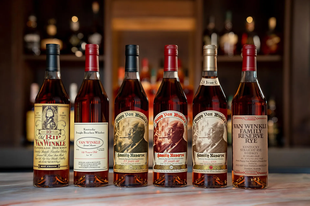
Pappy Van Winkle is the most coveted name in American whiskey, produced at Buffalo Trace Distillery from a wheated mash bill (substituting wheat for the typical rye). The family line runs from 10 to 23 years, with the 20 and 23 Year expressions commanding the highest prices. The 23 Year ($300–$360 retail) trades for $6,000–$8,000 on the secondary market; the 1982 single barrel that set the $162,500 auction record in January 2026 commanded a 45,000% premium over modern retail. Van Winkle maintains genuine scarcity rather than artificial allocation — the key distinction between a durable investment name and a hype cycle. For long-term holders, bottles purchased at or near retail offer the strongest returns.
2. Buffalo Trace Antique Collection (BTAC) — Five Annual Icons
The BTAC releases five expressions each autumn: George T. Stagg (high-proof uncut bourbon, typically $100–$130 retail, $2,500–$4,000 secondary), William Larue Weller (wheated, $100–$130 retail, $1,500–$3,000 secondary), Thomas H. Handy Sazerac Rye, Eagle Rare 17 Year, and Sazerac 18 Year Rye. Each has an intense following and a reliable auction record. George T. Stagg is the standout for investment — highly allocated, barrel-proof, and with decades of consistent critic acclaim. The broader Buffalo Trace market has experienced glut pressures in the standard range, but the BTAC’s ultra-premium tier has remained resilient.
3. Michêter’s — Ultra-Aged Releases
Michêter’s 20 Year Bourbon and 25 Year Bourbon have become among the most sought-after American whiskeys, with secondary market prices of $2,500–$4,000 per bottle for the 20 Year and higher for the 25 Year. These ultra-aged releases command premiums based on genuine scarcity and exceptional quality rather than brand hype, making them defensible long-term investments alongside the Van Winkle and BTAC names.
4. Four Roses Limited Edition Small Batch — The Blend Specialist
Four Roses is one of the few major distillers to work with multiple yeast strains and mash bills, producing a Limited Edition Small Batch each year that blends hand-selected barrels into an annual collector release. These releases have appreciated consistently on the secondary market and offer a more accessible price point than Pappy or BTAC — a sensible diversification play within an allocated bourbon portfolio.
5. Wild Turkey — Master’s Keep Series
Wild Turkey’s Master’s Keep releases (Decades, Revival, Cornerstone, Unforgiven) are annual limited expressions from master distiller Eddie Russell, featuring older, rarer stock. They have built genuine collector followings and secondary market premiums, at price points more accessible than the Van Winkle family. A lower-cost entry into the allocated bourbon investment market.
Honourable mentions: Old Fitzgerald Bottled-in-Bond (Heaven Hill), Willett Pot Still Reserve, Blanton’s Single Barrel, and Heritage releases from Heaven Hill’s Parker’s Heritage Collection. Note: Blanton’s has suffered from over-distribution in recent years, reducing secondary market premiums — know which names have genuine vs. artificial scarcity before investing.
Bourbon vs. Scotch and Japanese Whisky for Investment
| Factor |
Bourbon (Allocated) |
Scotch (Single Malt) |
Japanese Whisky |
|---|---|---|---|
| Scarcity driver | Allocation system | Distillery age / closed distilleries | Closed distilleries / low production |
| Market liquidity | Good (secondary platforms) | High (Liv-ex, auction houses) | Lower; fewer platforms |
| Entry price | $100–$360 retail (Van Winkle) | £50–£1,000+ depending on name | $100–$10,000+ for collectibles |
| Secondary premium | 5–20x retail (top names) | 2–10x+ (top names) | 10–100x+ (Karuizawa) |
| Auction history | Growing (Sotheby’s, Christie’s) | Deep and established | Well developed (Asia) |
| Risk level | Moderate (allocation risk) | Low–moderate | Higher (authentication) |
For a full comparison of the whisky categories and the broader case for whisky alongside wine, see our rare whisky vs. rare wine guide and our ghost distillery guide for the closed-distillery angle.
Cask vs. Bottle Investment in Bourbon
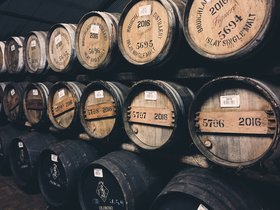
For investors looking beyond the bottle market, American whiskey casks offer a compelling alternative with a shorter hold horizon (typically 2–4 years) and different appreciation dynamics. Where allocated bottles derive value from the secondary market premium structure, casks appreciate as the spirit matures in barrel and benefit from both quality improvement and angel’s share concentration. Vinovest has sourced and managed high-rye bourbon casks for clients; a recent batch purchased at $1,415 per barrel was sold seven months later at $1,850 — a 30.7% return. For the full picture on cask mechanics and what to look for, see our guide to whiskey cask investment and our single cask whiskey guide.
How to Invest in Bourbon
There are three broad routes, each suited to a different type of investor.
Option 1: Hunt Allocated Bottles at Retail
Join retailer lotteries, build relationships with specialist liquor stores, and register on waiting lists. The best bourbon investments are made at or near retail price — the secondary market premium is where returns come from, so buying below secondary is essential. This requires patience, connections, and time but delivers the highest potential returns on the bottle market.
Option 2: Buy on the Secondary Market
Purchase through auction houses (Sotheby’s, Christie’s, Skinner, Hart Davis Hart) or specialist platforms. You pay above retail but gain access to older vintages, rare expressions, and bottles with documented provenance. Buyer’s premiums of 20–25% apply at major houses. For guidance on the selling side, see our guide to selling whiskey investments.
Option 3: A Managed Platform Like Vinovest
Vinovest provides access to American whiskey casks and curated bottle holdings through its managed platform, handling sourcing, authentication, bonded storage, and sale. Its specialists have direct relationships with distilleries for cask allocations that are difficult to obtain individually, and the platform offers the full infrastructure — insurance, provenance tracking, exit coordination — that bottle-hunting alone cannot provide. The model is backed by a documented track record, including the 30.7% bourbon cask exit noted above and over $27.5 million in total capital returned to clients. For current fees and minimums, see the pricing page. For a broader overview of the whiskey investment landscape, our complete whiskey investment guide covers all major categories.
Risks to Keep in Mind
Bourbon investment carries distinct risks that investors should understand. The primary one is allocation risk: if a distillery adjusts its release strategy, increases production, or loses cachet, secondary market premiums can collapse quickly. Blanton’s is a cautionary tale — wider distribution eroded premiums significantly. State laws in the US restrict or complicate private whiskey sales in many jurisdictions, and the legal framework for secondary bourbon sales is less settled than in the UK’s in-bond market. Authentication matters increasingly as prices rise. And bourbon’s shorter auction history means price discovery is less established than for Scotch. As with any whiskey investment, only the most credibly scarce names deliver durable returns.
Frequently Asked Questions
Is bourbon a good investment?
The most tightly allocated bourbon — Pappy Van Winkle, BTAC, and Michter’s ultra-aged releases — has delivered strong returns for investors who obtained bottles at or near retail. The January 2026 Sotheby’s sale confirmed the category’s institutional legitimacy. Returns depend critically on buying below secondary market price and holding names with genuine rather than artificial scarcity.
How much is Pappy Van Winkle worth?
Current-release Pappy Van Winkle 23 Year has a retail price of roughly $300–$360 and trades for $6,000–$8,000 on the secondary market. The 20 Year retails for approximately $200–$250 and trades for $3,000–$5,000. A rare 1982 single barrel sold for $162,500 at Sotheby’s in January 2026 — the highest price ever recorded for an American whiskey at auction.
What is the Buffalo Trace Antique Collection?
The BTAC is an annual limited release of five expressions from Buffalo Trace Distillery: George T. Stagg, William Larue Weller, Thomas H. Handy Sazerac Rye, Eagle Rare 17 Year, and Sazerac 18 Year Rye. All are released at $100–$130 retail and trade at significant secondary market premiums, with George T. Stagg and William Larue Weller being the strongest investment names.
Are bourbon casks a good investment?
American whiskey casks offer a shorter hold horizon than most spirits investments (typically 2–4 years) and can deliver strong returns as the spirit matures. Vinovest’s most recent bourbon cask exit returned 30.7% in seven months. For the full mechanics, see our cask investment guide.
American bourbon has earned its place alongside Scotch and Japanese whisky as a legitimate investment category — and the January 2026 Sotheby’s sale made that case definitively. Whether you’re hunting allocated bottles, buying casks, or building a managed portfolio, the fundamentals are the same: genuine scarcity, provenance, and patience. To see how bourbon could fit into a managed whisky and wine portfolio, explore how Vinovest works.
This article is for informational purposes only and does not constitute financial advice. Past performance is not a guarantee of future results. All investments carry risk, including the potential loss of capital.