South American Wine Investment: A 2026 Guide to Chile, Argentina, and the New World Opportunity
In December 2025, Catena Zapata became the first South American winery ever to enter the Liv-ex Power 100 — the authoritative annual ranking of the world’s most traded fine wine producers. It was a milestone that collectors and investors had been anticipating for years. Chile and Argentina have spent three decades building wines that rival the great names of France and Italy, yet their prices have remained stubbornly below comparable Old World counterparts. That gap — quality ahead of reputation, reputation ahead of price — is precisely where investment opportunity lives.
South America’s investment-grade wine scene centres on two countries: Chile, home ofAlmaviva, Seña, and Clos Apalta; and Argentina, defined by Catena Zapata’s high-altitude Malbec. Together they offer a combination of Bordeaux-calibre blends, extraordinary terroir expression, and prices meaningfully below equivalent Old World wines — making them one of the most compelling value plays in the fine wine market today.
Further reading
Interested in our previous content on South American wine? Check out our post on Viña Almaviva, and our introductions to Chilean Wine and Argentinian Wine.
Why South America Belongs in an Investment Portfolio
The investment case for South American fine wine rests on a single powerful dynamic: a significant and closing gap between quality and price. The 2004 Berlin Tasting — in which the 2000 Viñedo Chadwick and 2001 Seña placed first and second ahead of celebrated Bordeaux and Super Tuscan competitors — was the watershed moment that brought international attention to Chilean wine. Two decades on, the wines have only improved, yet prices remain far below their French and Italian equivalents.
Several factors underpin the investment case:
- Bordeaux connections and pedigree. The region’s most investable names are joint ventures or consultancies with Bordeaux royalty: Almaviva (Mouton Rothschild + Concha y Toro), Seña (Robert Mondavi + Eduardo Chadwick), Cheval des Andes (Cheval Blanc + Chandon). This lends global brand recognition and institutional credibility.
- La Place de Bordeaux distribution. Several top South American estates — Almaviva, Seña, Catena Zapata, Clos Apalta — now release through La Place de Bordeaux, the global distribution network that underpins the fine wine trade. This dramatically improves liquidity and international reach.
- Documented appreciation. The 2013 Almaviva trades at £513 per case (6x75cl) on Liv-ex against a release price well below that. The 2017 Viña Cobos Cobos Malbec appreciated 136% in a single year ($173 to $409). Seña 2019 (98 Wine Advocate points) received a release price with significant headroom versus comparable back vintages.
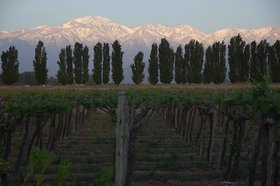
- Improving terroir recognition. Critics and collectors are waking up to the Uco Valley’s high-altitude Malbec, the Maipo Valley’s Cabernet Sauvignon, and the Aconcagua Valley’s Bordeaux blends as genuinely world-class terroir expressions rather than value alternatives.
- Catena Zapata’s Liv-ex Power 100 entry. The December 2025 milestone — first South American winery ever listed — is both a recognition of current quality and a signal that institutional investor attention is arriving.
Chile: The Investment Pioneer
Chile’s investment-grade wine comes from a handful of icon estates, almost all of them Cabernet Sauvignon-dominant Bordeaux blends planted in the country’s warmest valleys. According to Liv-ex, Almaviva accounts for around 46% of Chilean wine on the secondary market — so while Chile represents a small overall slice (0.4%) of the global secondary market, that share is rapidly growing and highly concentrated in the right names. For a deeper dive into Chilean red wines and the broader Chilean wine landscape, see our dedicated guides.
Almaviva — Chile’s Blue-Chip
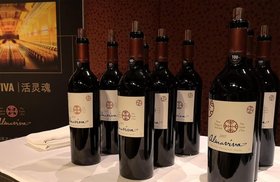
Born from a 1997 partnership between Baron Philippe de Rothschild and Concha y Toro, Almaviva produces a single Cabernet Sauvignon-dominant blend from Puente Alto in the Maipo Valley. James Suckling named it “Wine of the Decade” in 2020; the 2022 vintage received 99 points. On Liv-ex it is the most traded Chilean wine on the secondary market, with its vintage price performance showing most growth after the five-year mark — a classic long-hold investment pattern. Current release pricing ($120–$160 per bottle) versus the back-vintage Liv-ex market confirms meaningful appreciation headroom.
Seña — The Aconcagua Valley Benchmark
Founded in 1995 by Eduardo Chadwick and the late Robert Mondavi, Seña was the wine that announced Chile to the world at the 2004 Berlin Tasting. Biodynamically farmed in the Aconcagua Valley, it is the second most traded South American wine on Liv-ex. The 2019 vintage (98 Wine Advocate points, production reportedly down 5–10%) was released with significant appreciation potential built in; the milestone 2021 vintage received a perfect 100-point score — a rare achievement for any wine in the world.
Clos Apalta — The Carmenere Cult
Clos Apalta from Casa Lapostolle (Colchagua Valley) is the third most traded South American wine on Liv-ex and the country’s finest expression of Carmenere, blended with Merlot and Cabernet Sauvignon. A 96-point Wine Advocate score from 2015 began a run of four consecutive vintages at 95 points or above. Prices have yet to fully reflect this quality step-change — making recent vintages (2015–2019) particularly attractive for investors buying ahead of market recognition.
Argentina: The High-Altitude Revolution
Argentina’s investment case is built almost entirely on Malbec — and specifically on the discovery that Mendoza’s high-altitude terroirs (900 to 1,500 metres above sea level in the Uco Valley) produce Malbec of extraordinary concentration, freshness, and ageing potential. For a broader look at Argentine wine, see our dedicated guide.
Catena Zapata — The Liv-ex Pioneer
Founded in 1902 and relaunched as a prestige export brand by Nicolás Catena in the 1990s, Catena Zapata introduced high-altitude viticulture as a distinct style and is now the reference point for Argentine wine globally. Its Adrianna Vineyard in Gualtallary (approximately 1,500 metres) consistently receives 95+ point scores. The December 2025 Liv-ex Power 100 entry was a watershed: Laura Catena stated “My dream is for every wine cellar in the world to have a section for Argentine wine” — and the institutional recognition backing that ambition has now arrived.
Achaval Ferrer — The Single-Vineyard Specialist
Achaval Ferrer is celebrated for its single-vineyard Malbecs from three of Mendoza’s most storied sites: Finca Altamira, Finca Bella Vista, and Finca Mirador. Its Quimera blend and flagship Malbecs have age 15–20+ years in the best vintages, delivering the kind of longevity that underpins a real investment case. More accessible than Catena Zapata’s top cuvées, it represents a sensible supporting position.
South American Investment Wines at a Glance
| Producer |
Country / Region | Grape(s) |
Liv-ex / Market Note |
Price Range |
|---|---|---|---|---|
| Almaviva | Chile / Maipo | Cab. Sauv. dominant | #1 most traded Chilean wine | $120–$160/bottle |
| Seña | Chile / Aconcagua | Bordeaux blend | #2 most traded; 100 pts (2021) | $100–$180/bottle |
| Clos Apalta | Chile / Colchagua | Carmenere / Merlot | #3 most traded; 96+ pts recent | $80–$140/bottle |
| Catena Zapata | Argentina / Mendoza | Malbec / Cab. Sauv. | First S. American Liv-ex Power 100 (2025) | $80–$250/bottle |
| Achaval Ferrer | Argentina / Mendoza | Malbec | Single-vineyard specialist | $60–$120/bottle |
How South America Compares to Other Investment Regions
The most useful comparison is not against Bordeaux or Burgundy, but against the Super Tuscans — which South America most resembles in terms of market stage. Like the Super Tuscans in the 1990s, South America’s icons are Bordeaux-inspired blends from warmer climates that are still building global recognition and trading at a discount to their eventual potential. The Super Tuscans took 20–30 years to close the gap with their quality. South America is about a decade into that same journey, with an accelerating institutional infrastructure (La Place, Liv-ex) that the Tuscans didn’t have at the same stage.
For context on how fine wine investment works as a whole, our complete wine investing guide and guide to the 12 best investment wines provide the wider picture.
How to Invest in South American Wine
There are three broad routes, suited to different kinds of investors.
Option 1: Buy and Cellar Yourself
Source bottles through specialist merchants, auction houses, and increasingly through La Place de Bordeaux negociants on new-release campaigns. Store yourself in professional conditions. Maximum control, lowest ongoing cost, but the sourcing, storage, insurance, and resale burden falls entirely on you.
Option 2: Fine Wine Merchants and In-Bond Storage
Many UK-based fine wine merchants now offer South American allocations, particularly for Almaviva, Seña, and Catena Zapata. Buying in-bond preserves provenance and defers tax; the merchant handles storage and can facilitate resale. Better liquidity and provenance than self-storage, at a margin.
Option 3: A Managed Platform Like Vinovest
Vinovest builds managed portfolios across the world’s investment-grade wine regions, including South America. Its data-driven algorithm and specialist team source, authenticate, store, insure, and ultimately sell holdings on the investor’s behalf. Holding Almaviva and Catena Zapata alongside Bordeaux, Burgundy, Italian, and Rhône wine in a single managed portfolio gives exposure to South America’s growth story without managing the operational complexity. The model has a documented track record: over $27.5 million in capital returned to 200,000+ clients and more than 1.7 million bottles under custody. For fees and minimums, see the pricing page.
Risks to Keep in Mind
South American wine carries real investment risks. Market liquidity — while improving rapidly — is thinner than for blue-chip Bordeaux; Chile accounts for just 0.4% of global secondary market volume. Returns are heavily concentrated in a small number of producers and vintages. Currency volatility in Argentina and Chile can affect export competitiveness. And as a relatively young investment market, price discovery is less established than in Europe — which cuts both ways: more upside potential, but also more uncertainty. South American wine should sit alongside, not replace, more established regions in a diversified portfolio held for the long term. For a broader discussion of wine as an alternative asset, see our comparison of rare wine versus rare whisky investment potential.
Frequently Asked Questions
Is South American wine a good investment?
Top South American wines — led by Almaviva, Seña, and Catena Zapata — combine Bordeaux-calibre quality with prices meaningfully below equivalent Old World wines, documented appreciation, and rapidly improving market infrastructure including La Place de Bordeaux distribution and Liv-ex listing. Returns depend heavily on producer, vintage, and provenance.
Which South American wine is best for investment?
Almaviva is the most liquid and most traded Chilean wine on the secondary market, making it the natural anchor. Seña’s 2021 100-point vintage is a major investment event. From Argentina, Catena Zapata’s Adrianna Vineyard and Nicolas Catena Zapata flagship are the most collectible. For a deep dive into Almaviva, see our dedicated Almaviva guide.
How does South American wine compare to Italian investment wines?
South America is at a similar market stage to where the Super Tuscans were in the 1990s: Bordeaux-inspired blends from warmer climates with improving critic recognition and prices still below their long-term potential. The Super Tuscans took 20–30 years to close the gap. South America appears to be accelerating on a faster timeline, aided by La Place de Bordeaux and Liv-ex infrastructure.
What are the best South American wine vintages?
For Chile: 2010, 2013, 2015, 2017, 2019, and especially 2021 (Seña 100 points). For Argentina: 2006, 2010, 2013, 2016, and 2019 are widely regarded as benchmark vintages for Malbec. In both countries the top producers make excellent wine more consistently than cooler-climate regions.
South America’s investment-grade wines combine world-class quality, documented appreciation, and prices still below their long-term potential — the definition of a compelling investment thesis. To see how Almaviva, Seña, and Catena Zapata could fit alongside your other holdings, explore how wine investing works.
This article is for informational purposes only and does not constitute financial advice. Past performance is not a guarantee of future results. All investments carry risk, including the potential loss of capital.