Strongest Wine: Highest ABV Wines Ranked From 17% to 22%+ (2026)
Quick answer: The strongest wines are fortified wines. Port and Madeira reach 20–22% ABV. Dry Sherry (Oloroso) reaches 18–22%. Among unfortified wines, Amarone della Valpolicella regularly exceeds 17%, while Australian Shiraz and California Zinfandel can hit 16–17%.
Wine ranges from featherweight to formidably strong — from Moscato d'Asti at 5.5% ABV to Port wine pressing 22%. Understanding where different wines sit on the alcohol spectrum changes how you drink them, how you pair them, and for the investment-minded, which bottles reward the longest cellaring.
This guide ranks the strongest wine styles by ABV, explains what makes them so high in alcohol, and walks through the practical implications for serving size, food pairing, and investment potential.
Further reading
- Discover all about the Alcohol Content of Your Favorite Wines.
- Or, learn a quick trick to Estimate the Carbs in Your Glass of Wine.
The ABV Scale: How Wine Alcohol Is Measured
ABV (Alcohol by Volume) expresses the percentage of the liquid that is pure ethanol. Wine production regulations in most countries require ABV to appear on every bottle label, making it easy to compare.
The average table wine sits between 11.5–13.5% ABV. A standard 5 oz glass of 12% wine contains approximately 14g of pure alcohol — the same as a standard 12 oz beer or 1.5 oz of spirits. The higher the ABV, the smaller the recommended pour.
| ABV Range |
Wine Category | Examples |
|---|---|---|
| 5–8% | Very low — light sweet wines | Moscato d'Asti (5.5%), German Kabinett Riesling (8%) |
| 8–11% | Low alcohol | Vinho Verde (9–10%), German Spätlese Riesling |
| 11–12.5% | Standard light wines | Most Champagne, Prosecco, lighter whites |
| 12.5–14% | Standard table wine range | Most Burgundy, Bordeaux, Italian reds |
| 14–16% | High — warm-climate wines | California Zinfandel, Australian Shiraz, Amarone at lower end |
| 16–20% | Very high — unfortified or lightly fortified | Amarone (17%+), some Shiraz, Châteauneuf-du-Pape |
| 18–22%+ | Fortified wines | Port, Madeira, Oloroso Sherry, Marsala |
The Strongest Wines in the World: Ranked by ABV
1. Madeira — Up to 22% ABV
Madeira is a fortified wine from the Portuguese island of the same name, made from five permitted grape varieties: Sercial, Verdelho, Bual (Boal), Malmsey (Malvasia), and Tinta Negra. Neutral grape spirit is added during or after fermentation, raising ABV to 18–22% depending on style. What makes Madeira exceptional beyond its strength is virtually unlimited longevity — a well-made Madeira can improve in the bottle for 100+ years.
The most famous characteristic of Madeira is its intentional oxidation during production (called estufagem), which gives it extraordinary stability. An opened bottle of Madeira can remain good for weeks or even months.
Serving suggestion: 2 oz pour, room temperature or lightly chilled. Pairs with nuts, dried fruit, and strong aged cheeses.
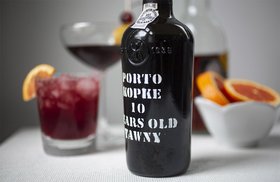
2. Port Wine — 19–22% ABV
Ruby Port and Tawny Port are the world's most recognisable fortified wines, produced in Portugal's Douro Valley. Grape spirit (aguardente) is added mid-fermentation, killing the yeast and preserving natural grape sweetness — this is why Port is both strong and sweet. The result is a wine at 19–22% ABV with concentrated dark fruit and spice flavours.
Among unfortified wines, nothing comes close to Port's strength. The most commonly encountered Port styles:
- Ruby Port (19–20% ABV): young, deep purple, fresh dark cherry and blackberry flavours
- Tawny Port (19.5–21% ABV): aged in small wooden barrels, developing nutty, caramel, dried fruit character. Finest examples (20-Year, 40-Year) are investment-grade wines
- Vintage Port (19–21% ABV): declared only in exceptional years, ages magnificently for decades. Bottles from great years (1963, 1977, 1994, 2011, 2017) trade on the fine wine secondary market
- Late Bottled Vintage (LBV): ready to drink, accessible price, 19–21% ABV
Investment note: Vintage Port from leading shippers — Quinta do Noval Nacional, Fonseca, Graham's, Taylor Fladgate — performs on the Liv-ex fine wine market. The 2011 and 2017 declared vintages are strong investment candidates.
3. Oloroso Sherry — 17–22% ABV
Sherry from Jerez, Spain ranges significantly in strength by style. The lighter Fino and Manzanilla styles (biologically aged under flor yeast) sit at 15–15.5% ABV. Oloroso — oxidatively aged without flor — is fortified to 17–22% ABV and develops rich walnut, dried fruit, toffee, and leather flavours. Palo Cortado, a rarer intermediate style, similarly reaches 17–22%.
Dry Sherries are some of the most food-friendly high-ABV wines available — Oloroso pairs exceptionally with aged cheeses, cured ham, and rich meat dishes. Sweet Pedro Ximénez Sherry (PX) is at the extreme end of sweetness (residual sugar often exceeds 250 g/L) and is commonly poured over vanilla ice cream.
4. Marsala — 17–20% ABV
Marsala is a fortified wine from Sicily, made from local white grape varieties (Grillo, Catarratto, Inzolia). The wine comes in Fine (1 year aged), Superiore (2+ years), and Vergine (5+ years) styles. ABV ranges from 17–20%. While Marsala is most familiar as a cooking wine (Chicken Marsala, Zabaglione), high-quality Marsala Vergine is a seriously underrated dessert wine with flavours of dried apricot, honey, licorice, and toasted nuts.
5. Amarone della Valpolicella — 15–17%+ ABV (Unfortified)
Amarone is the strongest major unfortified wine in the world. Produced in the Valpolicella zone of Veneto, Italy, it is made using the appassimento method: grapes are dried for 90–120 days after harvest, concentrating sugars to extraordinary levels before fermentation begins. The yeast ferments most of this sugar into alcohol, naturally producing a wine that reaches 15–17%+ ABV — with no grape spirit added.
What makes Amarone exceptional beyond its strength is structural balance. The best producers — Quintarelli, Dal Forno Romano, Bertani, Zenato — achieve wines where the alcohol is supported by high acidity, dense extract, and firm tannins, creating a profound, complex wine rather than a 'hot' one. In 2025, James Suckling awarded the Bertani 2015 Amarone a perfect 100 points, confirming the style's ongoing critical dominance.
Amarone ages remarkably well — fine examples routinely improve for 20–30 years and are traded on the secondary fine wine market as investment assets.
Serving: Decant for 2–3 hours. Serve in large Burgundy-style glasses. Pairs with rich braised beef, aged Parmigiano, truffle risotto.
6. Châteauneuf-du-Pape — 14.5–16%+ ABV
Châteauneuf-du-Pape is the most powerful of the great unfortified French appellations. Produced in the southern Rhône Valley around Avignon, the appellation permits 13 red and white grape varieties — with Grenache as the dominant force. The region's warm Mistral-influenced climate and large galets roulés (rounded river stones) that absorb heat and radiate it back to the vines produces grapes of exceptional ripeness.
Modern Châteauneuf-du-Pape routinely reaches 15–16.5% ABV, with some outliers touching 17%. Château Rayas — whose prices surged in 2025 following the death of winemaker Emmanuel Reynaud — represents the style at its most elegant despite the power. Château Pichon and Château Beaucastel produce more structured examples.
The Rhône was the top-performing investment wine region of 2025, accounting for approximately 50% of that year's top-performing wines at auction.
7. Australian Shiraz — 14.5–16.5% ABV
Shiraz (the Australian name for Syrah) from warm regions — Barossa Valley, McLaren Vale — consistently produces wines at 14.5–16.5% ABV, with some examples tipping past 17%. The combination of intense sunlight, warm growing conditions, and late harvesting creates grapes with extremely high sugar levels. Fermentation converts most of this sugar to alcohol, resulting in a wine that is explosively fruity, richly spiced, and formidably strong.
The most extreme Australian Shirazes have drawn criticism for being 'fruit bombs' — all power and no subtlety. More measured producers in cooler regions (Eden Valley, Clare Valley) produce Shiraz at 14–15% with more restrained character.
Notable producers: Penfolds Grange (consistently 14.5–15%), Two Hands, d'Arenberg, Torbreck.
8. California Zinfandel — 14.5–16%+ ABV
California Zinfandel — particularly from Lodi, Dry Creek Valley, and Paso Robles — is one of the strongest mainstream red wines regularly appearing on wine lists. Made from the Croatian Tribidrag grape, late-harvested Zinfandel grapes develop very high sugar levels that ferment into wines at 15–16%+ ABV. The wine's signature character (jammy blackberry, boysenberry, baking spice, vanilla from oak) makes the alcohol easy to miss — dangerously so.
Zinfandel from Sonoma County tends toward more restraint (14–15% ABV) while Lodi and Central Valley producers more commonly produce the 15.5–16.5% range. Old Vine Zinfandel, made from vines 50+ years old, typically produces more complex, balanced wines despite similar ABV levels.
9. Barossa Valley Grenache / Rhône Blends — 14–16% ABV
Grenache is the world's most widely planted red grape and achieves exceptional ripeness in warm climates. Barossa Valley Grenache (Australia) and Priorat Garnacha (Spain) regularly reach 15–16% ABV naturally. The GSM blend (Grenache-Syrah-Mourvèdre), produced in both the Rhône Valley and the New World, combines Grenache's high alcohol with Syrah's spice and Mourvèdre's structure to create powerful but balanced wines.
10. Late Harvest / Dessert Wines (Natural High ABV) — 12–16% ABV
Late harvest wines — made from grapes left on the vine well past standard harvest to concentrate sugars — produce naturally sweet, high-alcohol wines. Eiswein (Ice Wine) and German Trockenbeerenauslese are produced from frozen or botrytis-affected grapes with extraordinary sugar concentrations. Because fermentation cannot convert all this sugar to alcohol (yeast eventually die in high-alcohol environments), the wines typically end at 12–16% ABV with significant residual sweetness.
Why Are Some Wines So Much Stronger Than Others?
Climate and Grape Ripeness
Warm climates produce riper grapes with higher sugar levels. During fermentation, yeast converts sugar to alcohol. More sugar = more potential alcohol. This is why Australian Shiraz from the Barossa hits 16%, while Burgundy Pinot Noir from cool Côte de Nuits sits at 13%.
Fortification
Fortified wines have grape spirit (usually neutral brandy) added during or after fermentation. This raises ABV to levels natural fermentation cannot reach (yeast die at approximately 16–16.5% ABV in normal conditions). Port, Sherry, Madeira, and Marsala are all fortified. The timing of fortification determines sweetness: adding spirit before fermentation completes = sweeter wine (Port); adding after = drier wine (Fino Sherry).
Appassimento (Grape Drying)
Amarone's extraordinary strength comes not from fortification but from drying. Grapes lose 30–40% of their weight through evaporation, concentrating sugars to levels that, when fully fermented, produce 15–17%+ ABV. No spirit is added. This makes Amarone unique — it has the strength of a fortified wine with the structure of a great unfortified red.
Modern Yeast Technology
Until the 1950s, yeast would die at around 13.5% ABV, limiting how strong a wine could become through natural fermentation. Modern yeast strains can survive in alcohol levels up to 16.5% ABV, enabling the production of extreme natural wines that were not commercially possible before.
Serving Size for High-ABV Wines
High-alcohol wines require smaller pours. A standard 'drink' in the US contains approximately 14g of pure alcohol — equivalent to 5 oz of 12% wine. Adjust accordingly:
| Wine Type | ABV |
Standard Drink Volume |
|---|---|---|
| Prosecco / light wine | 11% | 5.5 oz (163ml) |
| Average table wine | 12% | 5 oz (148ml) |
| Bold red (Shiraz, Zinfandel) | 15% | 4 oz (118ml) |
| Amarone | 17% | 3.5 oz (104ml) |
| Port / Sherry | 20% | 3 oz (88ml) |
| Madeira | 22% | 2.5 oz (74ml) |
High-ABV Wines as Investments
Several of the strongest wines are also among the most investment-worthy:
- [object Object] — declared vintages from top shippers (Graham's, Fonseca, Quinta do Noval Nacional) are genuinely investment-grade, particularly 2011 and 2017
- [object Object] — top producers (Quintarelli, Dal Forno Romano) produce wines that improve for 20–30 years and trade on the secondary market
- [object Object] — the leading 2025 investment region; Château Rayas prices surged significantly following the death of Emmanuel Reynaud in November 2025
- [object Object] — 20-Year and 40-Year Tawnies from Ramos Pinto, Graham's, and Taylor Fladgate are consistent collectibles
Vinovest's managed wine portfolio includes access to investment-grade Port, top Rhône producers, and Italian collectibles including Amarone alongside more liquid Bordeaux and Burgundy holdings.
Frequently Asked Questions
What wine has the highest alcohol content?
Among commercially available wines, fortified wines have the highest alcohol content. Madeira and Oloroso Sherry can reach 22% ABV, and Port wine typically sits at 19–22%. Among unfortified wines, Amarone della Valpolicella is the strongest at 15–17%+ ABV.
Is wine stronger than beer?
Yes — wine is considerably stronger than standard beer. Most beers are 4–6% ABV, while the average table wine is 12–14%. However, a standard 12 oz beer and a standard 5 oz glass of wine contain roughly the same amount of alcohol (approximately 14g). The strength difference is offset by serving size.
What is the strongest red wine?
Among unfortified reds, Amarone della Valpolicella regularly exceeds 17% ABV — making it the strongest widely-available natural red wine. Australian Shiraz from the Barossa Valley and California Zinfandel from Lodi commonly reach 15.5–16.5% ABV. Fortified reds like Ruby Port (19–22% ABV) are technically stronger.
Does higher alcohol mean better wine?
Not at all. Alcohol level is a stylistic characteristic, not a quality indicator. Moscato d'Asti at 5.5% ABV and a 30-Year Tawny Port at 21% ABV are both outstanding wines in their respective contexts. What matters is balance — whether the alcohol is supported by acidity, tannin, extract, and fruit character rather than standing out as harsh or 'hot'.
Why does fortified wine have so much alcohol?
Fortified wines have grape spirit (brandy) added to the base wine. Natural yeast-driven fermentation stops at around 16–16.5% ABV because yeast die in high-alcohol environments. Adding neutral spirit bypasses this limit, raising ABV to 18–22%. In Port, the spirit is added before fermentation completes, preserving natural grape sweetness. In Dry Sherry, it is added after fermentation, resulting in a dry but very strong wine.
Last updated: May 2026 | Vinovest editorial team | ABV data sourced from Wine Folly, Spinchill, CyAlcohol, and producer technical sheets